Title: Post covid-19 pandemic influence on quality of life of dentists working at MOH Saudi Arabia- A cross-sectional study
Number of survey resonses: 2070
Elecronic Questionnaires
Continuing professional development (CPD): Participation and perception
among practicing dentists in the public sector in Khartoum state – Sudan
2018
Wisam Omer Gabani *
GJMEDPH 2019; Vol. 8, issue 2
*Corresponding Author
Wisam Omer Gabani
Khartoum State, Sudan
wisamgabani@hotmail.com
ABSTRACT
In order to keep up to date with knowledge, technology and clinical
procedures, practitioners need to continue to learn throughout life.
Conflict of Interest—none
Objectives
To describe the participation pattern and assess the perception and
barriers of dentists in the public sector in Khartoum state/ Sudan
towards the Continuing Professional Development (CPD).
Funding—none
Materials and Methods
A total of 261 dentists working in the public sector, participated in the study. Self administered questionnaire
were distributed after giving them brief idea about the topic. Analysis was done by using SPSS version 22. Chi
square test was used to find associations.
Results
The response rate was 93.2%, out of which 73.6% were females. The mean age was 32.4 years. General
practitioners were 61%, 26.8% were specialists and 11.9% were registrars. 41.8% of the dentists work in public
sector only. Eighty two percent from the participants had attended CPD activities before. Lectures and
conferences were the most continuing educational activities attended, while reading journals and e-learning
were the least. Esthetic dentistry and implant were the most preferable topics. Courses with hands on were
perceived as the most effective mode of delivery (75.9%). The topic of interest and presence of knowledge gab
were the most encouraging factors for attending CPD and cost perceived as the most common barrier.
Conclusion
The majority of the dental practitioners working in the public sector in Khartoum state attended CPD at least
once and had positive perception towards it.
Keywords: Barriers, Continuing Professional Development, Dentists, Participation, Perception
INTRODUCTION
Continuous Professional Development (CPD) for
health professions, is increasingly becoming
recognized as important in order to maintain and
develop their competencies.1 CPD should support
specific changes in practice and include gaining
knowledge and improving patient care.2 There are a
variety of definitions regarding the CPD. The
Academy of Medical Royal College (AoMRC) defined
1
www.gjmedph.com Vol. 8, No. 2, 2019
CPD as “a continuing process, outside formal
undergraduate and postgraduate training that
enables individual doctors to maintain and improve
standards of medical practice through the
development of knowledge, skills, attitudes and
behaviour”.3 It is an ongoing learning process
building on initial education to ensure competence
regarding current and future work duties; it goes
beyond the traditional designation for doctor’s
ISSN#- 2277-9604
Original Articles
continuous medical education which include medical
knowledge and skills and it expands content from
clinical to holistic topics such as interpersonal
communication skills, ethics, practice management,
professionalism, and extends learning places from
the classical conference room to practice settings.4
Graduates from dental colleges are up to date with
the best practice at the time they graduate.5 Some of
this knowledge becomes out of date as new
information and technology appear. In addition,
dental practice relies heavily on clinical experiences
that cannot be found in textbooks or research
laboratories; hence dental continuing education is
essential for any practicing dentist.5 The current
practices of CPD in Sudan are fragmented and
lacking coordination and most of the activities are
organized by the CPD providers in a nonorchestrated fashion,6 hence many Sudanese dental
professionals are not able to utilize the benefits of
the continuing education programs. This study may
guide the organizers of CPD programs to formulate
appropriate approaches, to cover broad range of
topics appropriate to the individual practice and
patients’ needs and to fill knowledge gaps.7
dentists in the public sector in Khartoum state/Sudan
towards Continuing Professional Development.
The study objectives are to determine the current
participation of dentists working in the public sector
in Khartoum State in Continuing Professional
Development, to assess dentists’ perceptions
towards CPD, to findout the factors that lead to the
selection of different CPD activities, and to findout
the most common barriers to attending CPD
activities.
MATERIAL AND METHODS
This was a cross-sectional study conducted in the
public sector that providing dental services in
Khartoum state /Sudan which includes: Public Dental
Clinics in Khartoum State, Khartoum Dental Teaching
Hospital, Hag Elsafi Specialized Dental Centre and
Dental Department in Omdurman Hospital. All
practicing dentists that have permanent registration
in the Sudan Medical Council were included.
Exclusions were the dentists who have leave during
the time of data collection. The study was conducted
among 280 dentists distributed as shown below in
Table (1). The names of the dentists were obtained
from a registered list from their place of work.
The aim of the study is to determine the participation
pattern and assess the perception of practicing
Table 1 Distribution of Dentists in Different Study Areas
Study Area
Number of Dentists
Public Dental Clinics in Khartoum State
158
Khartoum Dental Teaching Hospital
88
Dental Department in Omdurman Hospital
12
Hag Elsafi Dental Specialized Centre
22
Total
280
Self-administered questionnaire was used for data
collection after obtaining written informed consent
before filling the questionnaire. The questionnaire is
part of a project conducted under the auspices of the
Academy of Medical Royal Colleges (AoMRC) and
funded by the General Medical Council (GMC) about
effectiveness of CPD. The questionnaire consisted of
four sections that were designed to investigate
demographic characteristics of the dentists,
participation pattern, perception and barriers to
continuing professional development. The data was
2
www.gjmedph.com Vol. 8, No. 2, 2019
analyzed using the Statistical Package for Social
Sciences (SPSS) version 22 for Microsoft Windows.
Association between variables presented as cross
tabulation by using Chi square test. Ethical clearance
was obtained from the ethical committee from
Sudanese Medical Specialization Board; and approval
from Research Department; Ministry of Health Khartoum state, Approval from Oral Health
Directorate, Ministry of Health – Khartoum State and
from Khartoum Dental Teaching Hospital.
ISSN#- 2277-9604
Original Articles
RESULTS
There were 280 dentists working in the public sector
in Khartoum state. Out of which; seven refused to
participate in the study. The response rate was 93.2
%. The mean age group for the whole study
population was 34.2 years old. There were 26.4%
male in comparison to 73.6% female. Forty nine point
four percent of the dentists were married (Table 2).
Table 2 Personal Data
Gender
Age
Mean age
Standard deviation
Marital status
Male
Female
20 – 29 years
30 – 39 years
40 years and above
34.24
8.31
Married
Single
Widow
Divorce
Total
Dentists that work in the public sector were grouped
according to their year of graduation from dental
school in the following categories: before 2000, 20002010 and from 2011 and above. Years of experiences
also grouped into three categories: less than 5 years,
from 5-10 years and more than 10 years. Ninety one
percent of the participants graduated from Sudanese
dental colleges, with in which 62.8% graduated from
Public Sudanese Universities.
Most of the dentists who work in the public sector
(61.3%) were general practitioners, 26.8% were
specialists and 11.9% were registrars. Fifty eight
point two percent of the participants work in both
public and private sectors at the same time, 41.8%
work in the public sector only, while 30.3% work in
addition to the public sector, in one of the academic
institutions.
3
www.gjmedph.com Vol. 8, No. 2, 2019
Frequency
69
192
87
107
67
129
125
2
5
261
Percent
26.4
73.6
33.3
41
25.7
49.4
47.9
0.8
1.9
100
The results showed that 82% of the participants had
done at least one CPD activity before. There was
significant relation found between age, year of
graduation, years of experiences and attending
continuing educational activities (P value =0.001,
0.002, 0.001 respectively). As the age increased,
years of experience increases, more continuing
educational activities were attended.
It was also found that, there was significant relation
between the academic degree and attendance of
CPD (P value 0.001). The specialists were more likely
to attend CPD activities than registrars and general
practitioners.
The most CPD activity attended was lectures
(86.2%). The least were reading journals (27.1%) and
electronic learning (19.2%). (Figure 1)
ISSN#- 2277-9604
Original Articles
100%
86.9%
90%
80%
73.8%
70%
54.7%
60%
57.5%
50%
35.5%
40%
27.1%
30%
19.2%
20%
10%
0%
Conferences
Lectures
Courses
Course and
hands on
Reading
journal/book
e- learning
Discussion with
colleagues
Fig 1 Activities of CPD Attended
The majority of the dentists 64.4% preferred to have
topics in esthetic dentistry, 60.2% in implant and the
least preferable topic was removable prosthesis
(26.8%).
The majority (75.4%) preferred the courses with
hands-on as a successful and effective mode of
delivery to their favorite topics (Figure 2).
Fig 2 Preferred Mode of CPD Delivery
The most common factors that encouraging the
dentists to joined one of the CPD activities, as the
result showed was the topic itself 73.9 %, 59.8% for
4
www.gjmedph.com Vol. 8, No. 2, 2019
knowledge gab. The least influencing factor was
collecting CPD points (Figure 3).
ISSN#- 2277-9604
Original Articles
Fig 3 Factors Encouraging Dentists to Attend CPD Activity
Eighty five percent of the dentists admitted that
there were barriers that prevent them from joining
CPD. The most common barriers were cost 82.1%
and time 53.6% (Figure 4).
Fig 4 Barriers against Attending CPD
DISCUSSION
Continuing Professional Education has been
considered as important and most effective way to
ensure competence. In the field of dentistry there is
continuous improvement in knowledge and
techniques with huge pressure on the dentists to
keep up with the new information. This needs an
5
www.gjmedph.com Vol. 8, No. 2, 2019
effective continuing educational program to improve
the efficiency of dentists and dental profession.5
From the results shown above 86.2% of the dentists
attended at least one of the CPD activities before
which indicated that dentists work in the public
sector keen about continuing improvement and
looking forward to update their knowledge and
ISSN#- 2277-9604
Original Articles
practical skills. This result supported by what was
found in the Review for Continuing Professional
Development in Europe by Barnes et al who stated
that the majority of dentists participated in at least
one of the CPD activities.8 This result also agreed
with that conducted in the UK in 2002, but that was
due to the compulsory CPD for renewal of the license
in UK.
The most common CPD activities attended was
lectures followed by conferences, courses with hands
on and then courses. This may be due to that the bulk
of the participants were from Oral and Dental Health
Directorate (158 dentists) and continuing education is
part of its system where lectures were organized and
implemented based on a questionnaire filled by the
dentists to assess their training needs. This result
supported by a study done in India that dentists
preferred sponsored or free CPD activities.5 The result
also echoed that in a survey done in Europe to assess
the requirements for CPD system for graduated
dentists in 2013.9 Reading journals and electronic
learning were the least CPD activities used by the
practicing dentists in the public sector. These findings
orchestrated with the result from a survey done by
Bullok in UK.10 Not like Asian dentists who preferred
online and distance learning as a mean for continuing
professional development.8 This may be due to that
online courses could be hard to search as there was
no consistency in the terms used by the sites, and
most web pages did not state which dental boards
would accept accreditation of this form of CPD.
Seventy four point three percent of the dentists
thought that CPD should be compulsory for renewal
of the license, same result found among dentists in
Saudi Arabia11 as well as dentists work in private
sector in India in a study conducted in 2013.5 That
might be due to the concept: introduction of a
mandatory system of CPD is based on the argument
that CPD will ensure dental practitioners’ knowledge
and skills are up-to-date and by implication that CPD
contributes to high-quality dental care.8
Practicing dentists in the public sector in Khartoum
state have the right to choose topics that they prefer
as many countries have no regulations about the
content of CPD and allow their dentists to freely
6
www.gjmedph.com Vol. 8, No. 2, 2019
make their own choice of CPD topics. Some
European countries mandate that certain core topics
should be studied.8 The preferred topics were the
clinical dental topics such as restorative dentistry and
endodontics, and also preferred the new topics in the
world of dentistry like implant and esthetic dentistry
as those topics most commonly applied to now a day
patients. Same results were found by A. Giriraju in
2013 in India5 and by P. Nayak in 2017.12 This might be
due to the dentists since their graduation were
clinically oriented. On the other hand the financial
outcome from the clinical work is more than that
from preventive programs. Also esthetic dentistry
and implant were not included in the curriculum of
the under graduates.
Seventy five percent of our dentists preferred
attending courses with hands on, as it gives a much
clearer depiction of the clinical situation. Unlike
dentists in the UK who preferred reading journals
followed by attending lectures then courses with
hands on in a study conducted in 2002 by M.
Leggate1 and E. Russell.13 In Australia Abbott, et al
found that most of the dentists preferred courses and
seminars,14 while in Prato, Italy most of the dentists
read articles in Italian journals frequently together
with books.15 Short course workshops are preferred
among Iranian dentists as stated by Hamidollah
Bahador, et al in their study in 2010.16
Dentists in the present study ranked the factors that
encouraged them to participate in a CPD program as
follow: 73.9 % for the topic itself, 59.8% for
knowledge gab, 54 % for the price, 52.1% for the
certificate being offered and 50.6% for the reputation
of the speaker. In contrary to the result found in India
were only 1.9% of the participants preferred to
attend CPD programs conducted by a person of high
reputation and 63.4% influenced by the cost.5 The
least factor that influenced dentists to participate in a
CPD program was to collect credit hours/point. This
indicated that the primary professional responsibility
is addressing one’s learning needs in order to keep
up-to-date and for the benefit of the patients. On the
other hand, there might be lacks of understanding or
agreement about the issue of accreditation.
ISSN#- 2277-9604
Original Articles
Participants declared that cost is the most common
barrier (82.1%) to attend CPD activities followed by
lack of time (53.6%). Unlike a result from a study
conducted by Nayak in 2015 who stated that lack of
time is the main barrier against attending CPD
program, while the participants were neutral about
the cost.12 Also Sudani D said the majority of the
participants listed work schedule as major barrier.11 In
addition to that, most of the courses were not
affordable by the dentists as the price of any
continuing educational program determined by the
providers themselves. On the other hand in Sudan,
Considerable number of dentists in the public sector
(58.2%) works in both private and public together so
as to increase their income and improve their skills.
As a result there is no or limited time to attend CPD
program.
CONCLUSION
According to the previous results, it was
recommended that Sudan Medical Council considers
CPD as a prerequisite for recertification so as to align
different range of experiences between the graduate
dentists. Enhancing collaboration with different
academic institutions in and outside Sudan will raise
the quality of, and facilitate the process of continuing
education. Importance of the presence of a body that
controls and estimates the cost of continuing
education; according to specific criteria; in the private
training centers will facilitate engagement of dentists
in different CPD programs. Moreover, attention
should be given to reflection on learning needs while
preparing and organizing CPD activities.
REFERENCES
1. Muijs D, Lindsay G. Where are we at? An empirical
study of levels and methods of evaluating continuing
professional development. British educational
research journal. 2008 Apr 1; 34(2): 195-211.
2. Peck C, McCall M, McLaren B, Rotem T. Continuing
medical education and continuing professional
development: international comparisons. BMJ:
British Medical Journal. 2000 Feb 12; 320(7232):432.
3. Schostak J, Davis M, Hanson J, Schostak JF, Brown T,
Driscoll P, Starke I, Jenkins N. The effectiveness of
continuing professional development: a report
prepared on behalf of College of Emergency
7
www.gjmedph.com Vol. 8, No. 2, 2019
Medicine, Federation of Royal Colleges of Physicians
and Manchester Metropolitan University.
4. Filipe HP, Silva ED, Stulting AA, Golnik KC.
Continuing professional development: Best practices.
Middle East African journal of ophthalmology. 2014
Apr; 21(2):134.
5. Giriraju A, Yavagal PC, Lakshminarayan N.
Perceptions about Continuing Dental Education
Program among Private Dental Practitioners in
Davangere City, Karnataka, India-A Cross Sectional
Survey. Journal of Indian Association of Public Health
Dentistry. 2013 Jan 1; 11(4):71-6.
6. Government of Sudan Federal Ministry of Health,
Directorate General of Human Resources for Health
Development, Continuing Professional Development
Directorate. Continuing Professional Development
Policy. July 2011.
7. Giri K, Frankel N, Tulenko K, Puckett A, Bailey R, and
Ross H. Keeping up to date: continuing professional
development for health workers in developing
countries. Intra Health International. 2012 Sep.
8. Barnes E, Bullock AD, Bailey SE, Cowpe JG,
Karaharju-Suvanto T. A review of continuing
professional development for dentists in Europe.
European Journal of Dental Education. 2013 May;
17:5-17.
9. Bullock A, Bailey S, Cowpe J, Barnes E, Thomas
H, Thomas R,, et al. Continuing professional
development systems and requirements for graduate
dentists in the EU: survey results from the Dent CPD
project. European Journal of Dental Education. May
2013; 17(1): 18–22.
10. Bullock A., Firmstone V, Fielding A, Frame J D,
Thomas and Belfield C. Participation of UK dentists in
continuing professional development; British Dental
Journal. January 11. 2003; 194(1):47 – 51.
11. Al-Sudani D. Continuing professional education:
attitudes and needs of Saudi dentists. Saudi Dent J.
2000; 12:135-39.
12. Nayak PP, Prasad KV, Jyothi C, Roopa GS, Sanga R.
Preferences and barriers for continuing professional
development among dental practitioners in the twin
cities of Hubli-Dharwad, India. Journal of Indian
Association of Public Health Dentistry. 2015 Oct 1;
13(4):429.
13. .Leggate. M and Russell. E. Attitudes and Trends of
Primary Care Dentists to Continuing Professional
Development: a report from the Scottish dental
ISSN#- 2277-9604
Original Articles
practitioners survey 2000. British Dental Journal;
October 26 2002; 193(8): 465–469.
14. Abbott P, Burgess K, Wang E, Kim K. Analysis of
Dentists’ Participation in Continuing Professional
Development Courses from 2001-2006. The open
dentistry journal. 2010; 4:179.
15. Nieri M, Mauro S. Continuing professional
development of dental practitioners in Prato, Italy.
Journal of dental education. 2008 May 1; 72(5):61625.
16. Bahador Hamidollah, Pazooki Abdolreza, Kabir Ali.
Effectiveness of CPD Considering Participant’s Idea
in Iran University. Journal of the Pakistan Medical
Association, June 2010; 60(6): 435-39.
8
www.gjmedph.com Vol. 8, No. 2, 2019
ISSN#- 2277-9604
Continuing professional development (CPD): Participation and perception
among practicing dentists in the public sector in Khartoum state – Sudan
2018
Wisam Omer Gabani *
GJMEDPH 2019; Vol. 8, issue 2
*Corresponding Author
Wisam Omer Gabani
Khartoum State, Sudan
wisamgabani@hotmail.com
ABSTRACT
In order to keep up to date with knowledge, technology and clinical
procedures, practitioners need to continue to learn throughout life.
Conflict of Interest—none
Objectives
To describe the participation pattern and assess the perception and
barriers of dentists in the public sector in Khartoum state/ Sudan
towards the Continuing Professional Development (CPD).
Funding—none
Materials and Methods
A total of 261 dentists working in the public sector, participated in the study. Self administered questionnaire
were distributed after giving them brief idea about the topic. Analysis was done by using SPSS version 22. Chi
square test was used to find associations.
Results
The response rate was 93.2%, out of which 73.6% were females. The mean age was 32.4 years. General
practitioners were 61%, 26.8% were specialists and 11.9% were registrars. 41.8% of the dentists work in public
sector only. Eighty two percent from the participants had attended CPD activities before. Lectures and
conferences were the most continuing educational activities attended, while reading journals and e-learning
were the least. Esthetic dentistry and implant were the most preferable topics. Courses with hands on were
perceived as the most effective mode of delivery (75.9%). The topic of interest and presence of knowledge gab
were the most encouraging factors for attending CPD and cost perceived as the most common barrier.
Conclusion
The majority of the dental practitioners working in the public sector in Khartoum state attended CPD at least
once and had positive perception towards it.
Keywords: Barriers, Continuing Professional Development, Dentists, Participation, Perception
INTRODUCTION
Continuous Professional Development (CPD) for
health professions, is increasingly becoming
recognized as important in order to maintain and
develop their competencies.1 CPD should support
specific changes in practice and include gaining
knowledge and improving patient care.2 There are a
variety of definitions regarding the CPD. The
Academy of Medical Royal College (AoMRC) defined
1
www.gjmedph.com Vol. 8, No. 2, 2019
CPD as “a continuing process, outside formal
undergraduate and postgraduate training that
enables individual doctors to maintain and improve
standards of medical practice through the
development of knowledge, skills, attitudes and
behaviour”.3 It is an ongoing learning process
building on initial education to ensure competence
regarding current and future work duties; it goes
beyond the traditional designation for doctor’s
ISSN#- 2277-9604
Original Articles
continuous medical education which include medical
knowledge and skills and it expands content from
clinical to holistic topics such as interpersonal
communication skills, ethics, practice management,
professionalism, and extends learning places from
the classical conference room to practice settings.4
Graduates from dental colleges are up to date with
the best practice at the time they graduate.5 Some of
this knowledge becomes out of date as new
information and technology appear. In addition,
dental practice relies heavily on clinical experiences
that cannot be found in textbooks or research
laboratories; hence dental continuing education is
essential for any practicing dentist.5 The current
practices of CPD in Sudan are fragmented and
lacking coordination and most of the activities are
organized by the CPD providers in a nonorchestrated fashion,6 hence many Sudanese dental
professionals are not able to utilize the benefits of
the continuing education programs. This study may
guide the organizers of CPD programs to formulate
appropriate approaches, to cover broad range of
topics appropriate to the individual practice and
patients’ needs and to fill knowledge gaps.7
dentists in the public sector in Khartoum state/Sudan
towards Continuing Professional Development.
The study objectives are to determine the current
participation of dentists working in the public sector
in Khartoum State in Continuing Professional
Development, to assess dentists’ perceptions
towards CPD, to findout the factors that lead to the
selection of different CPD activities, and to findout
the most common barriers to attending CPD
activities.
MATERIAL AND METHODS
This was a cross-sectional study conducted in the
public sector that providing dental services in
Khartoum state /Sudan which includes: Public Dental
Clinics in Khartoum State, Khartoum Dental Teaching
Hospital, Hag Elsafi Specialized Dental Centre and
Dental Department in Omdurman Hospital. All
practicing dentists that have permanent registration
in the Sudan Medical Council were included.
Exclusions were the dentists who have leave during
the time of data collection. The study was conducted
among 280 dentists distributed as shown below in
Table (1). The names of the dentists were obtained
from a registered list from their place of work.
The aim of the study is to determine the participation
pattern and assess the perception of practicing
Table 1 Distribution of Dentists in Different Study Areas
Study Area
Number of Dentists
Public Dental Clinics in Khartoum State
158
Khartoum Dental Teaching Hospital
88
Dental Department in Omdurman Hospital
12
Hag Elsafi Dental Specialized Centre
22
Total
280
Self-administered questionnaire was used for data
collection after obtaining written informed consent
before filling the questionnaire. The questionnaire is
part of a project conducted under the auspices of the
Academy of Medical Royal Colleges (AoMRC) and
funded by the General Medical Council (GMC) about
effectiveness of CPD. The questionnaire consisted of
four sections that were designed to investigate
demographic characteristics of the dentists,
participation pattern, perception and barriers to
continuing professional development. The data was
2
www.gjmedph.com Vol. 8, No. 2, 2019
analyzed using the Statistical Package for Social
Sciences (SPSS) version 22 for Microsoft Windows.
Association between variables presented as cross
tabulation by using Chi square test. Ethical clearance
was obtained from the ethical committee from
Sudanese Medical Specialization Board; and approval
from Research Department; Ministry of Health Khartoum state, Approval from Oral Health
Directorate, Ministry of Health – Khartoum State and
from Khartoum Dental Teaching Hospital.
ISSN#- 2277-9604
Original Articles
RESULTS
There were 280 dentists working in the public sector
in Khartoum state. Out of which; seven refused to
participate in the study. The response rate was 93.2
%. The mean age group for the whole study
population was 34.2 years old. There were 26.4%
male in comparison to 73.6% female. Forty nine point
four percent of the dentists were married (Table 2).
Table 2 Personal Data
Gender
Age
Mean age
Standard deviation
Marital status
Male
Female
20 – 29 years
30 – 39 years
40 years and above
34.24
8.31
Married
Single
Widow
Divorce
Total
Dentists that work in the public sector were grouped
according to their year of graduation from dental
school in the following categories: before 2000, 20002010 and from 2011 and above. Years of experiences
also grouped into three categories: less than 5 years,
from 5-10 years and more than 10 years. Ninety one
percent of the participants graduated from Sudanese
dental colleges, with in which 62.8% graduated from
Public Sudanese Universities.
Most of the dentists who work in the public sector
(61.3%) were general practitioners, 26.8% were
specialists and 11.9% were registrars. Fifty eight
point two percent of the participants work in both
public and private sectors at the same time, 41.8%
work in the public sector only, while 30.3% work in
addition to the public sector, in one of the academic
institutions.
3
www.gjmedph.com Vol. 8, No. 2, 2019
Frequency
69
192
87
107
67
129
125
2
5
261
Percent
26.4
73.6
33.3
41
25.7
49.4
47.9
0.8
1.9
100
The results showed that 82% of the participants had
done at least one CPD activity before. There was
significant relation found between age, year of
graduation, years of experiences and attending
continuing educational activities (P value =0.001,
0.002, 0.001 respectively). As the age increased,
years of experience increases, more continuing
educational activities were attended.
It was also found that, there was significant relation
between the academic degree and attendance of
CPD (P value 0.001). The specialists were more likely
to attend CPD activities than registrars and general
practitioners.
The most CPD activity attended was lectures
(86.2%). The least were reading journals (27.1%) and
electronic learning (19.2%). (Figure 1)
ISSN#- 2277-9604
Original Articles
100%
86.9%
90%
80%
73.8%
70%
54.7%
60%
57.5%
50%
35.5%
40%
27.1%
30%
19.2%
20%
10%
0%
Conferences
Lectures
Courses
Course and
hands on
Reading
journal/book
e- learning
Discussion with
colleagues
Fig 1 Activities of CPD Attended
The majority of the dentists 64.4% preferred to have
topics in esthetic dentistry, 60.2% in implant and the
least preferable topic was removable prosthesis
(26.8%).
The majority (75.4%) preferred the courses with
hands-on as a successful and effective mode of
delivery to their favorite topics (Figure 2).
Fig 2 Preferred Mode of CPD Delivery
The most common factors that encouraging the
dentists to joined one of the CPD activities, as the
result showed was the topic itself 73.9 %, 59.8% for
4
www.gjmedph.com Vol. 8, No. 2, 2019
knowledge gab. The least influencing factor was
collecting CPD points (Figure 3).
ISSN#- 2277-9604
Original Articles
Fig 3 Factors Encouraging Dentists to Attend CPD Activity
Eighty five percent of the dentists admitted that
there were barriers that prevent them from joining
CPD. The most common barriers were cost 82.1%
and time 53.6% (Figure 4).
Fig 4 Barriers against Attending CPD
DISCUSSION
Continuing Professional Education has been
considered as important and most effective way to
ensure competence. In the field of dentistry there is
continuous improvement in knowledge and
techniques with huge pressure on the dentists to
keep up with the new information. This needs an
5
www.gjmedph.com Vol. 8, No. 2, 2019
effective continuing educational program to improve
the efficiency of dentists and dental profession.5
From the results shown above 86.2% of the dentists
attended at least one of the CPD activities before
which indicated that dentists work in the public
sector keen about continuing improvement and
looking forward to update their knowledge and
ISSN#- 2277-9604
Original Articles
practical skills. This result supported by what was
found in the Review for Continuing Professional
Development in Europe by Barnes et al who stated
that the majority of dentists participated in at least
one of the CPD activities.8 This result also agreed
with that conducted in the UK in 2002, but that was
due to the compulsory CPD for renewal of the license
in UK.
The most common CPD activities attended was
lectures followed by conferences, courses with hands
on and then courses. This may be due to that the bulk
of the participants were from Oral and Dental Health
Directorate (158 dentists) and continuing education is
part of its system where lectures were organized and
implemented based on a questionnaire filled by the
dentists to assess their training needs. This result
supported by a study done in India that dentists
preferred sponsored or free CPD activities.5 The result
also echoed that in a survey done in Europe to assess
the requirements for CPD system for graduated
dentists in 2013.9 Reading journals and electronic
learning were the least CPD activities used by the
practicing dentists in the public sector. These findings
orchestrated with the result from a survey done by
Bullok in UK.10 Not like Asian dentists who preferred
online and distance learning as a mean for continuing
professional development.8 This may be due to that
online courses could be hard to search as there was
no consistency in the terms used by the sites, and
most web pages did not state which dental boards
would accept accreditation of this form of CPD.
Seventy four point three percent of the dentists
thought that CPD should be compulsory for renewal
of the license, same result found among dentists in
Saudi Arabia11 as well as dentists work in private
sector in India in a study conducted in 2013.5 That
might be due to the concept: introduction of a
mandatory system of CPD is based on the argument
that CPD will ensure dental practitioners’ knowledge
and skills are up-to-date and by implication that CPD
contributes to high-quality dental care.8
Practicing dentists in the public sector in Khartoum
state have the right to choose topics that they prefer
as many countries have no regulations about the
content of CPD and allow their dentists to freely
6
www.gjmedph.com Vol. 8, No. 2, 2019
make their own choice of CPD topics. Some
European countries mandate that certain core topics
should be studied.8 The preferred topics were the
clinical dental topics such as restorative dentistry and
endodontics, and also preferred the new topics in the
world of dentistry like implant and esthetic dentistry
as those topics most commonly applied to now a day
patients. Same results were found by A. Giriraju in
2013 in India5 and by P. Nayak in 2017.12 This might be
due to the dentists since their graduation were
clinically oriented. On the other hand the financial
outcome from the clinical work is more than that
from preventive programs. Also esthetic dentistry
and implant were not included in the curriculum of
the under graduates.
Seventy five percent of our dentists preferred
attending courses with hands on, as it gives a much
clearer depiction of the clinical situation. Unlike
dentists in the UK who preferred reading journals
followed by attending lectures then courses with
hands on in a study conducted in 2002 by M.
Leggate1 and E. Russell.13 In Australia Abbott, et al
found that most of the dentists preferred courses and
seminars,14 while in Prato, Italy most of the dentists
read articles in Italian journals frequently together
with books.15 Short course workshops are preferred
among Iranian dentists as stated by Hamidollah
Bahador, et al in their study in 2010.16
Dentists in the present study ranked the factors that
encouraged them to participate in a CPD program as
follow: 73.9 % for the topic itself, 59.8% for
knowledge gab, 54 % for the price, 52.1% for the
certificate being offered and 50.6% for the reputation
of the speaker. In contrary to the result found in India
were only 1.9% of the participants preferred to
attend CPD programs conducted by a person of high
reputation and 63.4% influenced by the cost.5 The
least factor that influenced dentists to participate in a
CPD program was to collect credit hours/point. This
indicated that the primary professional responsibility
is addressing one’s learning needs in order to keep
up-to-date and for the benefit of the patients. On the
other hand, there might be lacks of understanding or
agreement about the issue of accreditation.
ISSN#- 2277-9604
Original Articles
Participants declared that cost is the most common
barrier (82.1%) to attend CPD activities followed by
lack of time (53.6%). Unlike a result from a study
conducted by Nayak in 2015 who stated that lack of
time is the main barrier against attending CPD
program, while the participants were neutral about
the cost.12 Also Sudani D said the majority of the
participants listed work schedule as major barrier.11 In
addition to that, most of the courses were not
affordable by the dentists as the price of any
continuing educational program determined by the
providers themselves. On the other hand in Sudan,
Considerable number of dentists in the public sector
(58.2%) works in both private and public together so
as to increase their income and improve their skills.
As a result there is no or limited time to attend CPD
program.
CONCLUSION
According to the previous results, it was
recommended that Sudan Medical Council considers
CPD as a prerequisite for recertification so as to align
different range of experiences between the graduate
dentists. Enhancing collaboration with different
academic institutions in and outside Sudan will raise
the quality of, and facilitate the process of continuing
education. Importance of the presence of a body that
controls and estimates the cost of continuing
education; according to specific criteria; in the private
training centers will facilitate engagement of dentists
in different CPD programs. Moreover, attention
should be given to reflection on learning needs while
preparing and organizing CPD activities.
REFERENCES
1. Muijs D, Lindsay G. Where are we at? An empirical
study of levels and methods of evaluating continuing
professional development. British educational
research journal. 2008 Apr 1; 34(2): 195-211.
2. Peck C, McCall M, McLaren B, Rotem T. Continuing
medical education and continuing professional
development: international comparisons. BMJ:
British Medical Journal. 2000 Feb 12; 320(7232):432.
3. Schostak J, Davis M, Hanson J, Schostak JF, Brown T,
Driscoll P, Starke I, Jenkins N. The effectiveness of
continuing professional development: a report
prepared on behalf of College of Emergency
7
www.gjmedph.com Vol. 8, No. 2, 2019
Medicine, Federation of Royal Colleges of Physicians
and Manchester Metropolitan University.
4. Filipe HP, Silva ED, Stulting AA, Golnik KC.
Continuing professional development: Best practices.
Middle East African journal of ophthalmology. 2014
Apr; 21(2):134.
5. Giriraju A, Yavagal PC, Lakshminarayan N.
Perceptions about Continuing Dental Education
Program among Private Dental Practitioners in
Davangere City, Karnataka, India-A Cross Sectional
Survey. Journal of Indian Association of Public Health
Dentistry. 2013 Jan 1; 11(4):71-6.
6. Government of Sudan Federal Ministry of Health,
Directorate General of Human Resources for Health
Development, Continuing Professional Development
Directorate. Continuing Professional Development
Policy. July 2011.
7. Giri K, Frankel N, Tulenko K, Puckett A, Bailey R, and
Ross H. Keeping up to date: continuing professional
development for health workers in developing
countries. Intra Health International. 2012 Sep.
8. Barnes E, Bullock AD, Bailey SE, Cowpe JG,
Karaharju-Suvanto T. A review of continuing
professional development for dentists in Europe.
European Journal of Dental Education. 2013 May;
17:5-17.
9. Bullock A, Bailey S, Cowpe J, Barnes E, Thomas
H, Thomas R,, et al. Continuing professional
development systems and requirements for graduate
dentists in the EU: survey results from the Dent CPD
project. European Journal of Dental Education. May
2013; 17(1): 18–22.
10. Bullock A., Firmstone V, Fielding A, Frame J D,
Thomas and Belfield C. Participation of UK dentists in
continuing professional development; British Dental
Journal. January 11. 2003; 194(1):47 – 51.
11. Al-Sudani D. Continuing professional education:
attitudes and needs of Saudi dentists. Saudi Dent J.
2000; 12:135-39.
12. Nayak PP, Prasad KV, Jyothi C, Roopa GS, Sanga R.
Preferences and barriers for continuing professional
development among dental practitioners in the twin
cities of Hubli-Dharwad, India. Journal of Indian
Association of Public Health Dentistry. 2015 Oct 1;
13(4):429.
13. .Leggate. M and Russell. E. Attitudes and Trends of
Primary Care Dentists to Continuing Professional
Development: a report from the Scottish dental
ISSN#- 2277-9604
Original Articles
practitioners survey 2000. British Dental Journal;
October 26 2002; 193(8): 465–469.
14. Abbott P, Burgess K, Wang E, Kim K. Analysis of
Dentists’ Participation in Continuing Professional
Development Courses from 2001-2006. The open
dentistry journal. 2010; 4:179.
15. Nieri M, Mauro S. Continuing professional
development of dental practitioners in Prato, Italy.
Journal of dental education. 2008 May 1; 72(5):61625.
16. Bahador Hamidollah, Pazooki Abdolreza, Kabir Ali.
Effectiveness of CPD Considering Participant’s Idea
in Iran University. Journal of the Pakistan Medical
Association, June 2010; 60(6): 435-39.
8
www.gjmedph.com Vol. 8, No. 2, 2019
ISSN#- 2277-9604
Essay Writing Service Features
Our Experience
No matter how complex your assignment is, we can find the right professional for your specific task. Achiever Papers is an essay writing company that hires only the smartest minds to help you with your projects. Our expertise allows us to provide students with high-quality academic writing, editing & proofreading services.
Free Features
Free revision policy
$10Free bibliography & reference
$8Free title page
$8Free formatting
$8How Our Dissertation Writing Service Works
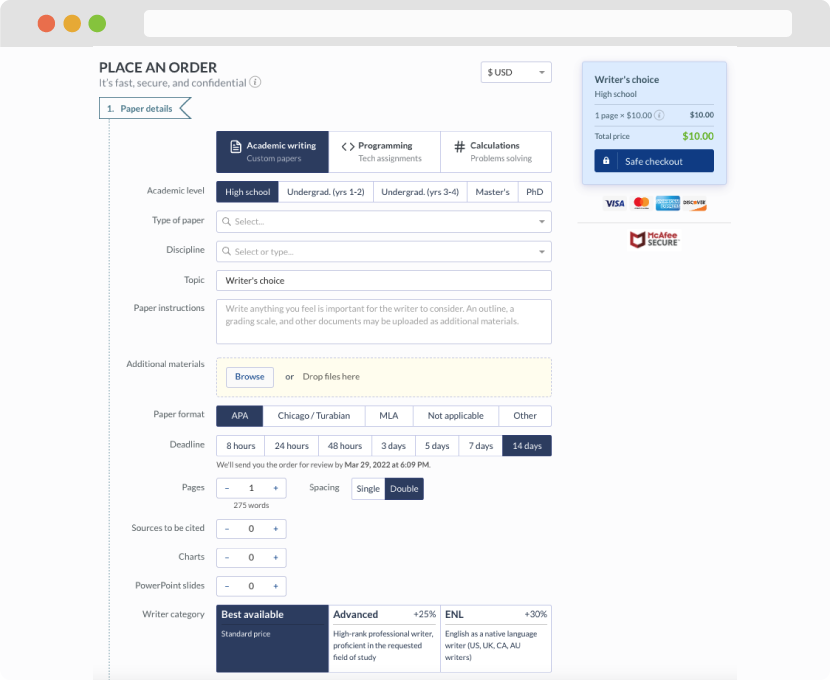
First, you will need to complete an order form. It's not difficult but, if anything is unclear, you may always chat with us so that we can guide you through it. On the order form, you will need to include some basic information concerning your order: subject, topic, number of pages, etc. We also encourage our clients to upload any relevant information or sources that will help.
Complete the order form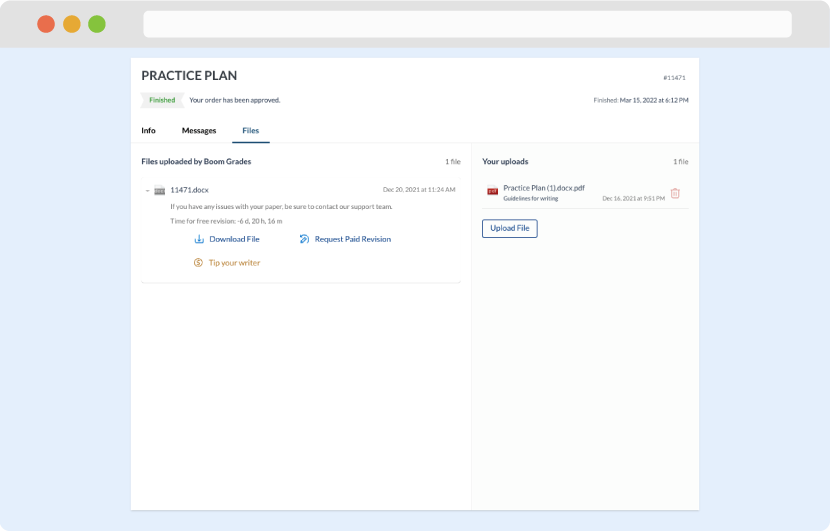
Once we have all the information and instructions that we need, we select the most suitable writer for your assignment. While everything seems to be clear, the writer, who has complete knowledge of the subject, may need clarification from you. It is at that point that you would receive a call or email from us.
Writer’s assignment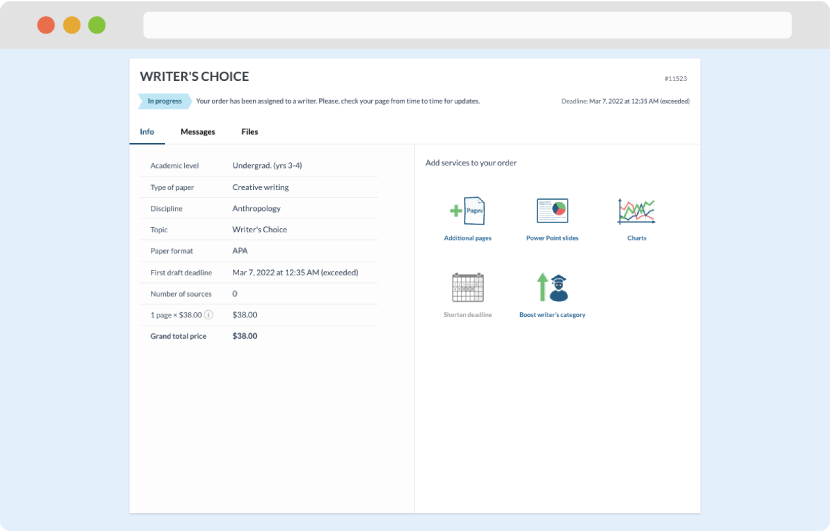
As soon as the writer has finished, it will be delivered both to the website and to your email address so that you will not miss it. If your deadline is close at hand, we will place a call to you to make sure that you receive the paper on time.
Completing the order and download