Write a 32 bit pseudo-random number generator function, using a 32 bit LFSR (Linear Feedback Shift Register) – see:
https://en.wikipedia.org/wiki/Linear-feedback_shif…
Animated graphic illustrating a 4 bit LFSR:
https://upload.wikimedia.org/wikipedia/commons/7/7f/LFSR-F4.GIF
function prototype:
unsigned long lfsr32 ( unsigned long seed );
// if argument seed ==0 it returns the next 32 bit value in the sequence
// if argument seed !=0 it is used as the initial “seed” value
You must write the function in C first, and then write your own COMMENTED assembly language version that is *different* than the code generated by a compiler.
Note that one bit shift generates one bit and 32 NEW bits must be generated for return to the caller each time the function is called.
You must write main in C that calls the ARM/AVR/IA32-x86 assembly lfsr function and displays the first twenty 32 bit values generated when starting with a seed value of 0x5AA5FF00. The function they write should use the following taps: 32 30 26 and 25
This selection of taps for the LFSR generates a maximum length pseudorandom sequence 4294967296 bits long or 4294967296/32 = 134217728 pseudorandom 32 bit numbers.
You may use Wikipedia and other resources for reference, but you must come up with your own unique and original assembly language solution, and you may NOT submit code generated by a compiler or copy from any other source.
You must submit a document of type .doc .docx or .pdf containing a description of your code, ALL the C and assembly source code pasted into the document, as well as a screen shot of the output of your program. You must also submit separate files containing the C and assembly source files so that we can reproduce your results. The code can be compiled and demonstrated using either Eclipse or Code::blocks, or at the command line using the gcc compiler.
Please include all the required files separately (not in a zip, tar or other compressed form) using the link above. You may re-submit if necessary, but include all the required files when you resubmit.
Pseudorandom Function – Submit Here
Write a 32 bit pseudo-random number generator function, using a 32 bit LFSR (Linear Feedback Shift Register) – see:
https://en.wikipedia.org/wiki/Linear-feedback shift register
Animated graphic illustrating a 4 bit LFSR:
https://upload.wikimedia.org/wikipedia/commons/7/7f/LFSR-F4.GIF
function prototype:
unsigned long Ifsr32 (unsigned long seed);
// if argument seed ==0 it returns the next 32 bit value in the sequence
// if argument seed !=0 it is used as the initial “seed” value
You must write the function in C first, and then write your own COMMENTED assembly language version that is different* than the code
generated by a compiler.
Note that one bit shift generates one bit and 32 NEW bits must be generated for return to the caller each time the function is called.
You must write main in C that calls the ARM/AVR/A32-x86 assembly Ifsr function and displays the first twenty 32 bit values generated when
starting with a seed value of Ox5AA5FF00. The function they write should use the following taps: 32 30 26 and 25
This selection of taps for the LFSR generates a maximum length pseudorandom sequence 4294967296 bits long or 4294967296/32 =
134217728 pseudorandom 32 bit numbers.
You may use Wikipedia and other resources for reference, but you must come up with your own unique and original assembly language
solution, and you may NOT submit code generated by a compiler or copy from any other source.
You must submit a document of type .doc .docx or .pdf containing a description of your code, ALL the C and assembly source code pasted
into the document, as well as a screen shot of the output of your program. You must also submit separate files containing the C and
assembly source files so that we can reproduce your results. The code can be compiled and demonstrated using either Eclipse or
Code::blocks, or at the command line using the gcc compiler.
Please include all the required files separately (not in a zip, tar or other compressed form) using the link above. You may re-submit if
necessary, but include all the required files when you resubmit.
Essay Writing Service Features
Our Experience
No matter how complex your assignment is, we can find the right professional for your specific task. Achiever Papers is an essay writing company that hires only the smartest minds to help you with your projects. Our expertise allows us to provide students with high-quality academic writing, editing & proofreading services.
Free Features
Free revision policy
$10Free bibliography & reference
$8Free title page
$8Free formatting
$8How Our Dissertation Writing Service Works

First, you will need to complete an order form. It's not difficult but, if anything is unclear, you may always chat with us so that we can guide you through it. On the order form, you will need to include some basic information concerning your order: subject, topic, number of pages, etc. We also encourage our clients to upload any relevant information or sources that will help.
Complete the order form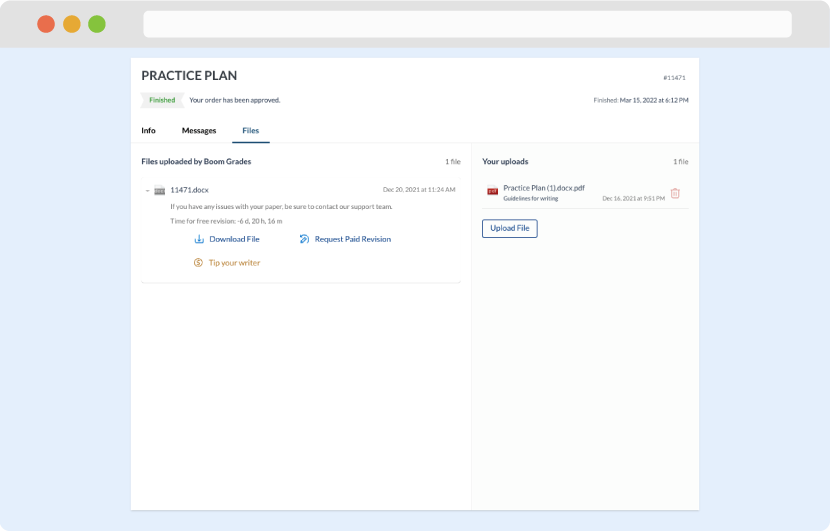
Once we have all the information and instructions that we need, we select the most suitable writer for your assignment. While everything seems to be clear, the writer, who has complete knowledge of the subject, may need clarification from you. It is at that point that you would receive a call or email from us.
Writer’s assignment
As soon as the writer has finished, it will be delivered both to the website and to your email address so that you will not miss it. If your deadline is close at hand, we will place a call to you to make sure that you receive the paper on time.
Completing the order and download