This case study is one example of using a mixed methods approach to health data analysis in which quantitative and qualitative data is combined and analyzed in a single study.
Why do you think the quantitative study showed little evidence for differences in health and social outcome measures as a result of the receipt of welfare advice?
BMC Health Services Research
BioMed Central
Research article
Open Access
Using quantitative and qualitative data in health services research –
what happens when mixed method findings conflict?
[ISRCTN61522618]
Suzanne Moffatt*, Martin White, Joan Mackintosh and Denise Howel
Address: Public Health Research Group, School of Population & Health Sciences, Faculty of Medical Sciences, William Leech Building, Framlington
Place, Newcastle upon Tyne NE2 4HH, UK
Email: Suzanne Moffatt* – s.m.moffatt@ncl.ac.uk; Martin White – martin.white@ncl.ac.uk; Joan Mackintosh – j.e.mackintosh@ncl.ac.uk;
Denise Howel – d.howel@ncl.ac.uk
* Corresponding author
Published: 08 March 2006
BMC Health Services Research2006, 6:28
doi:10.1186/1472-6963-6-28
Received: 29 September 2005
Accepted: 08 March 2006
This article is available from: http://www.biomedcentral.com/1472-6963/6/28
© 2006Moffatt et al; licensee BioMed Central Ltd.
This is an Open Access article distributed under the terms of the Creative Commons Attribution License (http://creativecommons.org/licenses/by/2.0),
which permits unrestricted use, distribution, and reproduction in any medium, provided the original work is properly cited.
Abstract
Background: In this methodological paper we document the interpretation of a mixed methods study
and outline an approach to dealing with apparent discrepancies between qualitative and quantitative
research data in a pilot study evaluating whether welfare rights advice has an impact on health and social
outcomes among a population aged 60 and over.
Methods: Quantitative and qualitative data were collected contemporaneously. Quantitative data were
collected from 126 men and women aged over 60 within a randomised controlled trial. Participants
received a full welfare benefits assessment which successfully identified additional financial and nonfinancial resources for 60% of them. A range of demographic, health and social outcome measures were
assessed at baseline, 6, 12 and 24 month follow up. Qualitative data were collected from a sub-sample of
25 participants purposively selected to take part in individual interviews to examine the perceived impact
of welfare rights advice.
Results: Separate analysis of the quantitative and qualitative data revealed discrepant findings. The
quantitative data showed little evidence of significant differences of a size that would be of practical or
clinical interest, suggesting that the intervention had no impact on these outcome measures. The
qualitative data suggested wide-ranging impacts, indicating that the intervention had a positive effect. Six
ways of further exploring these data were considered: (i) treating the methods as fundamentally different;
(ii) exploring the methodological rigour of each component; (iii) exploring dataset comparability; (iv)
collecting further data and making further comparisons; (v) exploring the process of the intervention; and
(vi) exploring whether the outcomes of the two components match.
Conclusion: The study demonstrates how using mixed methods can lead to different and sometimes
conflicting accounts and, using this six step approach, how such discrepancies can be harnessed to
interrogate each dataset more fully. Not only does this enhance the robustness of the study, it may lead
to different conclusions from those that would have been drawn through relying on one method alone and
demonstrates the value of collecting both types of data within a single study. More widespread use of
mixed methods in trials of complex interventions is likely to enhance the overall quality of the evidence
base.
Page 1 of 10
(page number not for citation purposes)
BMC Health Services Research 2006, 6:28
Background
Combining quantitative and qualitative methods in a single study is not uncommon in social research, although,
‘traditionally a gulf is seen to exist between qualitative and
quantitative research with each belonging to distinctively
different paradigms’. [1] Within health research there has,
more recently, been an upsurge of interest in the combined use of qualitative and quantitative methods, sometimes termed mixed methods research [2] although the
terminology can vary. [3] Greater interest in qualitative
research has come about for a number of reasons: the
numerous contributions made by qualitative research to
the study of health and illness [4-6]; increased methodological rigor [7] within the qualitative paradigm, which
has made it more acceptable to researchers or practitioners trained within a predominantly quantitative paradigm
[8]; and, because combining quantitative and qualitative
methods may generate deeper insights than either method
alone. [9] It is now widely recognised that public health
problems are embedded within a range of social, political
and economic contexts. [10] Consequently, a range of epidemiological and social science methods are employed to
research these complex issues. [11] Further legitimacy for
the use of qualitative methods alongside quantitative has
resulted from the recognition that qualitative methods
can make an important contribution to randomised controlled trials (RCTs) evaluating complex health service
interventions. There is published work on the various
ways that qualitative methods are being used in RCTs (e.g.
[12,13] but little on how they can optimally enhance the
usefulness and policy relevance of trial findings. [14,15]
A number of mixed methods publications outline the various ways in which qualitative and quantitative methods
can be combined. [1,2,9,16] For the purposes of this
paper with its focus on mixed methods in the context of a
pilot RCT, the significant aspects of mixed methods
appear to be: purpose, process and, analysis and interpretation. In terms of purpose, qualitative research may be
used to help identify the relevant variables for study [17],
develop an instrument for quantitative research [18], to
examine different questions (such as acceptability of the
intervention, rather than its outcome) [19]; and to examine the same question with different methods (using, for
example participant observation or in depth interviews
[1]). Process includes the priority accorded to each
method and ordering of both methods which may be concurrent, sequential or iterative. [20] Bryman [9] points out
that, ‘most researchers rely primarily on a method associated with either quantitative or qualitative methods and
then buttress their findings with a method associated with
the other tradition’ (p128). Both datasets may be brought
together at the ‘analysis/interpretation’ phase, often
known as ‘triangulation’ [21]. Brannen [1] suggests that
most researchers have taken this to mean more than one
http://www.biomedcentral.com/1472-6963/6/28
type of data, but she stresses that Denzin’s original conceptualisation involved methods, data, investigators or
theories. Bringing different methods together almost inevitably raises discrepancies in findings and their interpretation. However, the investigation of such differences may
be as illuminating as their points of similarity. [1,9]
Although mixed methods are now widespread in health
research, quantitative and qualitative methods and results
are often published separately. [22,23] It is relatively rare
to see an account of the methodological implications of
the strategy and the way in which both methods are combined when interpreting the data within a particular
study. [1] A notable exception is a study showing divergence between qualitative and quantitative findings of
cancer patients’ quality of life using a detailed case study
approach to the data. [13]
By presenting quantitative and qualitative data collected
within a pilot RCT together, this paper has three main
aims: firstly, to demonstrate how divergent quantitative
and qualitative data led us to interrogate each dataset
more fully and assisted in the interpretation process, producing a greater research yield from each dataset; secondly, to demonstrate how combining both types of data
at the analysis stage produces ‘more than the sum of its
parts’; and thirdly, to emphasise the complementary
nature of qualitative and quantitative methods in RCTs of
complex interventions. In doing so, we demonstrate how
the combination of quantitative and qualitative data led
us to conclusions different from those that would have
been drawn through relying on one or other method
alone.
The study that forms the basis of this paper, a pilot RCT to
examine the impact of welfare rights advice in primary
care, was funded under the UK Department of Health’s
Policy Research Programme on tackling health inequalities, and focused on older people. To date, little research
has been able to demonstrate how health inequalities can
be tackled by interventions within and outside the health
sector. Although living standards have risen among older
people, a common experience of growing old is worsening material circumstances. [24] In 2000–01 there were
2.3 million UK pensioners living in households with
below 60 per cent of median household income, after
housing costs. [25] Older people in the UK may be eligible for a number of income- or disability-related benefits
(the latter could be non-financial such as parking permits
or adaptations to the home), but it has been estimated
that approximately one in four (about one million) UK
pensioner households do not claim the support to which
they are entitled. [26] Action to facilitate access to and
uptake of welfare benefits has taken place outside the UK
health sector for many years and, more recently, has been
Page 2 of 10
(page number not for citation purposes)
BMC Health Services Research 2006, 6:28
introduced within parts of the health service, but its
potential to benefit health has not been rigorously evaluated. [27-29]
Methods
There are a number of models of mixed methods research.
[2,16,30] We adopted a model which relies of the principle of complementarity, using the strengths of one
method to enhance the other. [30] We explicitly recognised that each method was appropriate for different
research questions. We undertook a pragmatic RCT which
aimed to evaluate the health effects of welfare rights
advice in primary care among people aged over 60. Quantitative data included standardised outcome measures of
health and well-being, health related behaviour, psychosocial interaction and socio-economic status ; qualitative
data used semi-structured interviews to explore participants’ views about the intervention, its outcome, and the
acceptability of the research process.
Following an earlier qualitative pilot study to inform the
selection of appropriate outcome measures [31], contemporaneous quantitative and qualitative data were collected. Both datasets were analysed separately and neither
compared until both analyses were complete. The sampling strategy mirrored the embedded design; probability
sampling for the quantitative study and theoretical sampling for the qualitative study, done on the basis of factors
identified in the quantitative study.
Approval for the study was obtained from Newcastle and
North Tyneside Joint Local Research Ethics Committee
and from Newcastle Primary Care Trust.
The intervention
The intervention was delivered by a welfare rights officer
from Newcastle City Council Welfare Rights Service in
participants’ own homes and comprised a structured
assessment of current welfare status and benefits entitlement, together with active assistance in making claims
where appropriate over the following six months, together
with necessary follow-up for unresolved claims.
Quantitative study
The design presented ethical dilemmas as it was felt problematic to deprive the control group of welfare rights
advice, since there is adequate evidence to show that it
leads to significant financial gains. [32] To circumvent this
dilemma, we delivered welfare rights advice to the control
group six months after the intervention group. A singleblinded RCT with allocation of individuals to intervention (receipt of welfare rights consultation immediately)
and control condition (welfare rights consultation six
months after entry into the trial) was undertaken.
http://www.biomedcentral.com/1472-6963/6/28
Four general practices located at five surgeries across Newcastle upon Tyne took part. Three of the practices were
located in the top ten per cent of most deprived wards in
England using the Index of Multiple Deprivation (two in
the top one percent – ranked 30th and 36th most
deprived); the other practice was ranked 3,774 out of a
total of 8,414 in England. [33]
Using practice databases, a random sample of 100
patients aged 60 years or over from each of four participating practices was invited to take part in the study. Only
one individual per household was allowed to participate
in the trial, but if a partner or other adult household member was also eligible for benefits, they also received welfare rights advice. Patients were excluded if they were
permanently hospitalised or living in residential or nursing care homes.
Written informed consent was obtained at the baseline
interview. Structured face to face interviews were carried
out at baseline, six, 12 and 24 months using standard
scales covering the areas of demographics, mental and
physical health (SF36) [34], Hospital Anxiety and Depression Scale (HADS) [35], psychosocial descriptors (e.g.
Social Support Questionnaire [36] and the Self-Esteem
Inventory, [37], and socioeconomic indicators (e.g.
affordability and financial vulnerability). [38] Additionally, a short semi-structured interview was undertaken at
24 months to ascertain the perceived impact of additional
resources for those who received them.
All health and welfare assessment data were entered onto
customised MS Access databases and checked for quality
and completeness. Data were transferred to the Statistical
Package for the Social Sciences (SPSS) v11.0 [39] and
STATA v8.0 for analysis. [40]
Qualitative study
The qualitative findings presented in this paper focus on
the impact of the intervention. The sampling frame was
formed by those (n = 96) who gave their consent to be
contacted during their baseline interview for the RCT. The
study sample comprised respondents from intervention
and control groups purposively selected to include those
eligible for the following resources: financial only; nonfinancial only; both financial and non financial; and,
none. Sampling continued until no new themes emerged
from the interviews; until data ‘saturation’ was reached.
[21]
Initial interviews took place between April and December
2003 in participants’ homes after their welfare rights
assessment; follow-up interviews were undertaken in January and February 2005. The semi-structured interview
schedule covered perceptions of: impact of material and/
Page 3 of 10
(page number not for citation purposes)
BMC Health Services Research 2006, 6:28
http://www.biomedcentral.com/1472-6963/6/28
Table 1: Distribution of financial and non-financial benefit awards made to study participants by group allocation
Type of Award
Number (%) of
intervention
group (n = 59)
Number (%) of control
group (n = 58)
Number (%) of
participants
(n = 117)
Qualitative study
sub-sample
(n = 25)
Received no award
Received some type of
award(s)
Received only financial
award(s)
Received only nonfinancial award(s)
Received both financial
and non-financial awards
22 (37.3)
37 (62.7)
25 (43.1)
33 (56.9)
47 (40.2)
70 (59.8)
7*
18
13 (22.0)
19 (32.8)
32 (27.4)
7
12 (20.3)
7 (12.1)
19 (16.2)
4
12 (20.3)
7 (12.1)
19 (16.2)
7
* At first interview, it was found that four participants received an award prior to the study
or financial benefits; impact on mental and/or physical
health; impact on health related behaviours; social benefits; and views about the link between material resources
and health. All participants agreed to the interview being
audio-recorded. Immediately afterwards, observational
field notes were made. Interviews were transcribed in full.
Results
Data analysis largely followed the framework approach.
[41] Data were coded, indexed and charted systematically;
and resulting typologies discussed with other members of
the research team, ‘a pragmatic version of double coding’.
[42] Constant comparison [43] and deviant case analysis
[44] were used since both methods are important for
internal validation. [7,42] Finally, sets of categories at a
higher level of abstraction were developed.
Table 1 shows the distribution of financial and non-financial benefits awarded as a result of the welfare assessments. Sixty percent of participants were awarded some
form of welfare benefit, and just over 40% received a
financial benefit. Some households received more than
one type of benefit.
A brief semi-structured interview was undertaken (by JM)
with all participants who received additional resources.
These interview data explored the impact data of additional resources on all of those who received them, not
just the qualitative sub-sample. The data were independently coded by JM and SM using the same coding frame.
Discrepant codes were examined by both researchers and
a final code agreed.
Quantitative study
One hundred and twenty six people were recruited into
the study; there were 117 at 12 month follow-up and 109
at 24 months (five deaths, one moved, the remainder
declined).
Table 2 compares the quantitative and qualitative subsamples on a number of personal, economic, health and
lifestyle factors at baseline. Intervention and control
groups were comparable.
Table 3 compares outcome measures by award group, i.e.
no award, non-financial and financial and shows only
small differences between the mean changes across each
group, none of which were statistically significant. Other
analyses of the quantitative data compared the changes
Table 2: Comparison between participants in quantitative and qualitative components
Mean age (range)
% Males
% Living as a couple
% In Council Tax Bands A & B*
% Long term limiting illness
% Current smokers
SF-36 Physical Mean Score
SF-36 Mental
HAD-Anxiety
HAD-Depression
Quantitative Group
(n = 126)
Qualitative Study Sub-Sample
(n = 25)
70.6
56.3
55.6
72.2
64.3
19.1
27.45
51.44
5.86
4.49
74.6
44.0
52.0
76.0
76.0
8.0
25.22
53.55
5.88
3.24
* Living in residence of low value
Page 4 of 10
(page number not for citation purposes)
BMC Health Services Research 2006, 6:28
http://www.biomedcentral.com/1472-6963/6/28
Table 3: Comparison of changes at 6 months after welfare rights assessment* by award group
Health
SF36 – Physical
SF36 – Mental
HAD – Anxiety
HAD – Depression
Health related
behaviour
Fruit and vegetable intake
Protein intake
Alcohol (units)
Psycho-social
Social interaction
Self Esteem Inventory
Socio-economic
Financial vulnerability
Standard of Living Index
No benefits
(n = 46)
Non-financial benefit
(n=21)
Financial benefit
(n = 50)
Mean (SD)
Mean (SD)
Mean (SD)
P Value**
0.8 (7.6)
0.8 (8.3)
-0.4 (1.9)
0.3 (2.5)
-0.1 (5.5)
1.7 (7.5)
-0.6 (2.7)
1.6 (2.3)
1.9 (6.6)
0.3 (7.0)
-0.1 (2.8)
1.1 (2.5)
0.5
0.8
0.7
0.1
0.5 (8.3)
0.7 (5.1)
-1.1 (12.6)
-0.6 (7.6)
-0.5 (5.8)
-1.4 (9.4)
0.1 (9.9)
1.2 (5.0)
0.1 (12.4)
0.9
0.5
0.9
-0.2 (3.2)
0.5 (4.1)
-0.1 (3.6)
-0.1 (3.0)
0.2 (3.0)
0.4 (3.3)
0.8
0.3
-0.7 (3.0)
0.4 (0.8)
-0.3 (3.0)
0.1 (0.8)
-1.3 (2.7)
0.1 (1.0)
0.3
0.4
*Changes are over 0–6 months in intervention group and 6–12 months in control group
**Testing for equal mean changes using ANOVA
seen between baseline and six months (by which time the
intervention group had received the welfare rights advice
but the control group had not) and found little evidence
of differences between the intervention and control
groups of any practical importance. The only statistically
significant difference between the groups was a small
decrease in financial vulnerability in the intervention
group after six months. [45]
There was little evidence for differences in health and
social outcomes measures as a result of the receipt of welfare advice of a size that would be of major practical or
clinical interest. However, this was a pilot study, with only
the power to detect large differences if they were present.
One reason for a lack of difference may be that the scales
were less appropriate for older people and did not capture
all relevant outcomes. Another reason for the lack of differences may be that insufficient numbers of people had
received their benefits for long enough to allow any health
outcomes to have changed when comparisons were made.
Fourteen per cent of participants found to be eligible for
financial benefits had not started receiving their benefits
by the time of the first follow-up interview after their benefit assessment (six months for intervention, 12 months
for control); and those who had, had only received them
for an average of 2 months. This is likely to have diluted
any impact of the intervention effect, and might account,
to some extent, for the lack of observed effect.
Qualitative study
Twenty five interviews were completed, fourteen of whom
were from the intervention group. Ten participants were
interviewed with partners who made active contributions.
Twenty two follow-up interviews were undertaken
between twelve and eighteen months later (three individuals were too ill to take part).
Table 1 (fifth column) shows that 14 of the participants in
the qualitative study received some financial award. The
median income gain was (€84, $101) (range £10 (€15,
$18) -£100 (€148, $178)) representing a 4%-55%
increase in weekly income. 18 participants were in receipt
of benefit, either as a result of the current intervention or
because of claims made prior to this study.
By the follow-up (FU) interviews all but one participant
had been receiving their benefits for between 17 and 31
months. The intervention was viewed positively by all
interviewees irrespective of outcome. However, for the
fourteen participants who received additional financial
resources the impact was considerable and accounts
revealed a wide range of uses for the extra money. Participants’ accounts revealed four linked categories, summarised on Table 4. Firstly, increased affordability of
necessities, without which maintaining independence and
participating in daily life was difficult. This included
accessing transport, maintaining social networks and
social activities, buying better quality food, stocking up on
food, paying bills, preventing debt and affording paid
help for household activities. Secondly, occasional expenses
such as clothes, household equipment, furniture and holidays were more affordable. Thirdly, extra income was
used to act as a cushion against potential emergencies and
Page 5 of 10
(page number not for citation purposes)
BMC Health Services Research 2006, 6:28
http://www.biomedcentral.com/1472-6963/6/28
Table 4: Summary of findings from qualitative study
Necessities
I go down to town on the bus. I’ve got a four wheel trolley, it takes a lot of shopping … I get a taxi home every week and it really does help. I don’t have to think
about it.(N14, female, 84, FU)
I eat a lot more fruit and better food really. (N3, female, 74, FU)
One-off payments
My fridge-freezer was on the blink, it’s useless having these things mended, I didn’t know when I would get one, but when I looked and saw I’d got the money
back to April, I could go out and get one straight away and pay cash for it, it was an absolutely wonderful feeling. (N14, female, 84)
I had a four day holiday in Wales … it’s the first holiday I’ve had in thirty years … it was wonderful, where before you know I would never, never been able to
afford it. (N3, female 74, FU)
Emergencies
We haven’t got that much money left in the bank now … so, yes, it does help for emergencies. (N15, female, 62)
Peace of mind
I used to get so depressed that I couldn’t afford this that and the other, and now you know, I think to myself, oooh look at my statement I can afford that, that’s
lovely, it makes me feel good. (N14, female, 82)
to increase savings. Fourthly, all participants described the
easing of financial worries as bringing ‘peace of mind’.
resources to maintaining health and contributing to a
sense of well-being.
Without exception, participants were of the view that extra
money or resources would not improve existing health
problems. The reasons behind these strongly held views
about individual health conditions was generally that
their poor health was attributed to specific health conditions and a combination of family history or fate, which
were immune to the effects of money. Most participants
had more than one chronic condition and felt that
because of these conditions, plus their age, additional
money would have no effect.
Money does have a lot to do with health if you are poor. It would
have a lot to do with your health … I don’t buy loads and loads
of luxuries, but I know I can go out and get the food we need
and that sort of thing. I think that money is a big part of how a
house, or how people in that house are. (N13, female, 72)
However, a number of participants linked the impact of
the intervention with improved ways of coping with their
conditions because of what the extra resources enabled
them to do:
Mrs T: Having money is not going to improve his health, we
could win the lottery and he would still have his health problems.
Mr T: No, but we don’t need to worry if I wanted …. Well I
mean I eat a lot of honey and I think it’s very good, very healthful for you … at one time we couldn’t have afforded to buy these
things. Now we can go and buy them if I fancy something, just
go and get it where we couldn’t before.
Mrs T: Although the Attendance Allowance is actually his
[partners], it’s made me relax a bit more …I definitely worry
less now (N15, female, 62 and partner)
Despite the fact that no-one expected their own health
conditions to improve, most people believed that there
was a link between resources and health in a more abstract
sense, either because they experienced problems affording
necessities such as healthy food or maintaining adequate
heat in their homes, or because they empathised with
those who lacked money. Participants linked adequate
Comparing the results from the two datasets
When the separate analyses of the quantitative and qualitative datasets after the 12 month follow-up structured
interviews were completed, the discrepancy in the findings became apparent. The quantitative study showed little evidence of a size that would be of practical or clinical
interest, suggesting that the intervention had no impact
on these outcome measures. The qualitative study found
a wide-ranging impact, indicating that the intervention
had a positive effect. The presence of such inter-method
discrepancy led to a great deal of discussion and debate, as
a result of which we devised six ways of further exploring
these data.
(i) Treating the methods as fundamentally different
This process of simultaneous qualitative and quantitative
dataset interrogation enables a deeper level of analysis
and interpretation than would be possible with one or
other alone and demonstrates how mixed methods
research produces more than the sum of its parts. It is
worth emphasising however, that it is not wholly surprising that each method comes up with divergent findings
since each asked different, but related questions, and both
are based on fundamentally different theoretical paradigms. Brannen [1] and Bryman [9] argue that it is essential to take account of these theoretical differences and
caution against taking a purely technical approach to the
use of mixed methods, a simple ‘bolting together’ of techniques. [17] Combining the two methods for crossvalidation (triangulation) purposes is not a viable option
because it rests on the premise that both methods are
Page 6 of 10
(page number not for citation purposes)
BMC Health Services Research 2006, 6:28
http://www.biomedcentral.com/1472-6963/6/28
Number of times cited
30
25
20
15
10
5
Necessities
*
Occasional Expenses
Peace of mind
Savings
Emergencies
Paying their way
House
Maintenance
Presents/treating
family
Equipment
Holidays/trips
Furniture
Clothes/shoes
Adequte warmth
Preventing debt
Extra help
Paying bills
Social Activity
Food
Transport
0
Capacity to Peace of
cope with
mind
crisis
Reasons for no interview
5 interviewed by JM prior to decision being taken to record interview, however 3 of these cases were
interviewed by SM at follow up and these data were included in the analysis
2 said they had not received any benefits as a result of taking part in the study
2 lost due to technical problems
1 was unwell
1 was too tired
1 too confused
Figure
Use
of additional
1
resources at 2 year follow up (N = 35)*
Use of additional resources at 2 year follow up (N = 35)*.
examining the same research problem. [1] We have
approached the divergent findings as indicative of different aspects of the phenomena in question and searched
for reasons which might explain these inconsistencies. In
the approach that follows, we have treated the datasets as
complementary, rather than attempt to integrate them,
since each approach reflects a different view on how social
reality ought to be studied.
(ii) Exploring the methodological rigour of each component
It is standard practice at the data analysis and interpretation phases of any study to scrutinise methodological rigour. However, in this case, we had another dataset to use
as a yardstick for comparison and it became clear that our
interrogation of each dataset was informed to some extent
by the findings of the other. It was not the case that we
expected to obtain the same results, but clearly the divergence of our findings was of great interest and made us
more circumspect about each dataset. We began by examining possible reasons why there might be problems with
each dataset individually, but found ourselves continually
referring to the results of the other study as a benchmark
for comparison.
With regard to the quantitative study, it was a pilot, of
modest sample size, and thus not powered to detect small
differences in the key outcome measures. In addition
there were three important sources of dilution effects:
firstly, only 63% of intervention group participants
received some type of financial award; secondly, we found
that 14% of those in the trial eligible for financial benefits
did not receive their money until after the follow up
assessments had been carried out; and thirdly, many had
received their benefits for only a short period, reducing
the possibility of detecting any measurable effects at the
time of follow-up. All of these factors provide some explanation for the lack of a measurable effect between intervention and control group and between those who did and
did not receive additional financial resources.
The number of participants in the qualitative study who
received additional financial resources as a result of this
Page 7 of 10
(page number not for citation purposes)
BMC Health Services Research 2006, 6:28
intervention was small (n = 14). We would argue that the
fieldwork, analysis and interpretation [46] were sufficiently transparent to warrant the degree of methodological rigour advocated by Barbour [7,17] and that the
findings were therefore an accurate reflection of what was
being studied. However, there still remained the possibility that a reason for the discrepant findings was due to differences between the qualitative sub-sample and the
parent sample, which led us to step three.
(iii) Exploring dataset comparability
We compared the qualitative and quantitative samples on
a number of social and economic factors (Table 2). In
comparison to the parent sample, the qualitative subsample was slightly older, had fewer men, a higher proportion with long-term limiting illness, but fewer current
smokers. However, there was nothing to indicate that
such small differences would account for the discrepancies. There were negligible differences in SF-36 (Physical
and Mental) and HAD (Anxiety and Depression) scores
between the groups at baseline, which led us to discount
the possibility that those in the quantitative sub sample
were markedly different to the quantitative sample on
these outcome measures.
(iv) Collection of additional data and making further comparisons
The divergent findings led us to seek further funding to
undertake collection of additional quantitative and qualitative data at 24 months. The quantitative and qualitative
follow-up data verified the initial findings of each study.
[45] We also collected a limited amount of qualitative
data on the perceived impact of resources, from all participants who had received additional resources. These data
are presented in figure 1 which shows the uses of additional resources at 24 month follow-up for 35 participants
(N = 35, 21 previously in quantitative study only, 14 in
both). This dataset demonstrates that similar issues
emerged for both qualitative and quantitative datasets:
transport, savings and ‘peace of mind’ emerged as key
issues, but the data also showed that the additional
money was used on a wide range of items. This follow-up
confirmed the initial findings of each study and further,
indicated that the perceived impact of the additional
resources was the same for a larger sample than the original qualitative sub-sample, further confirming our view
that the positive findings extended beyond the fourteen
participants in the qualitative sub-sample, to all those
receiving additional resources.
http://www.biomedcentral.com/1472-6963/6/28
investigated this further in the quantitative dataset and
found that 75 people (59.5%) had received benefits prior
to the study; if the first benefit was on health grounds, a
later one may have been because their health had deteriorated further.
(vi) Exploring whether the outcomes of the quantitative and
qualitative components match
‘Probing certain issues in greater depth’ as advocated by
Bryman (p134) [1] focussed our attention on the outcome measures used in the quantitative part of the study
and revealed several challenges. Firstly, the qualitative
study revealed a number of dimensions not measured by
the quantitative study, such as, ‘maintaining independence’ which included affording paid help, increasing and
improving access to facilities and managing better within
the home. Secondly, some of the measures used with the
intention of capturing dimensions of mental health did
not adequately encapsulate participants’ accounts of feeling ‘less stressed’ and ‘less depressed’ by financial worries.
Probing both datasets also revealed congruence along the
dimension of physical health. No differences were found
on the SF36 physical scale and participants themselves did
not expect an improvement in physical health (for reasons of age and chronic health problems). The real issue
would appear to be measuring ways in which older people
are better able to cope with existing health problems and
maintain their independence and quality of life, despite
these conditions.
Qualitative study results also led us to look more carefully
at the quantitative measures we used. Some of the standardised measures were not wholly applicable to a population of older people. Mallinson [47] also found this with
the SF36 when she demonstrated some of its limitations
with this age group, as well as how easy it is to, ‘fall into
the trap of using questionnaires like a form of laboratory
equipment and forget that … they are open to interpretation’. The data presented here demonstrate the difficulties
of trying to capture complex phenomena quantitatively.
However, they also demonstrate the usefulness of having
alternative data forms on which to draw whether complementary (where they differ but together generate insights)
or contradictory (where the findings conflict). [30] In this
study, the complementary and contradictory findings of
the two datasets proved useful in making recommendations for the design of a definitive study.
Discussion
(v) Exploring whether the intervention under study worked as
expected
The qualitative study revealed that many participants had
received welfare benefits via other services prior to this
study, revealing the lack of a ‘clean slate’ with regard to the
receipt of benefits, which we had not anticipated. We
Many researchers understand the importance, indeed the
necessity, of combining methods to investigate complex
health and social issues. Although quantitative research
remains the dominant paradigm in health services
research, qualitative research has greater prominence than
before and is no longer, as Barbour [42] points out
Page 8 of 10
(page number not for citation purposes)
BMC Health Services Research 2006, 6:28
http://www.biomedcentral.com/1472-6963/6/28
regarded as the ‘poor relation to quantitative research that
it has been in the past’ (p1019). Brannen [48] argues that,
despite epistemological differences there are ‘more overlaps than differences’. Despite this, there is continued
debate about the authority of each individual mode of
research which is not surprising since these different
styles, ‘take institutional forms, in relation to cultures of
and markets for knowledge’ (p168). [49] Devers [50]
points out that the dominance of positivism, especially
within the RCT method, has had an overriding influence
on the criteria used to assess research which has had the
inevitable result of viewing qualitative studies unfavourably. We advocate treating qualitative and quantitative
datasets as complementary rather than in competition for
identifying the true version of events. This, we argue, leads
to a position which exploits the strengths of each method
and at the same time counters the limitations of each. The
process of interpreting the meaning of these divergent
findings has led us to conclude that much can be learned
from scientific realism [51]which has ‘sought to position
itself as a model of scientific explanation which avoids the
traditional epistemological poles of positivism and relativism’ (p64). This stance enables investigators to take
account of the complexity inherent in social interventions
and reinforces, at a theoretical level, the problems of
attempting to measure the impact of a social intervention
via experimental means. However, the current focus on
evidence based health care [52] now includes public
health [53,54] and there is increased attention paid to the
results of trials of public health interventions, attempting
as they do, to capture complex social phenomena using
standardised measurement tools. We would argue that at
the very least, the inclusion of both qualitative and quantitative elements in such studies, is essential and ultimately more cost-effective, increasing the likelihood of
arriving at a more thoroughly researched and better
understood set of results.
Competing interests
Conclusion
7.
The findings of this study demonstrate how the use of
mixed methods can lead to different and sometimes conflicting accounts. This, we argue, is largely due to the outcome measures in the RCT not matching the outcomes
emerging from the qualitative arm of the study. Instead of
making assumptions about the correct version, we have
reported the results of both datasets together rather than
separately, and advocate six steps to interrogate each dataset more fully. The methodological strategy advocated by
this approach involves contemporaneous qualitative and
quantitative data collection, analysis and reciprocal interrogation to inform interpretation in trials of complex
interventions. This approach also indicates the need for a
realistic appraisal of quantitative tools. More widespread
use of mixed methods in trials of complex interventions is
likely to enhance the overall quality of the evidence base.
The author(s) declare that they have no competing interests.
Authors’ contributions
SM and MW had the original idea for the study, and with
the help of DH, Adam Sandell and Nick Whitton developed the proposal and gained funding. JM collected the
data for the quantitative study, SM designed and collected
data for the qualitative study. JM, DH and MW analysed
the quantitative data, SM analysed the qualitative data. All
authors contributed to interpretation of both datasets. SM
wrote the first draft of the paper, JM, MW and DH commented on subsequent drafts. All authors have read and
approved the final manuscript.
Acknowledgements
We wish to thank: Rosemary Bell, Jenny Dover and Nick Whitton from
Newcastle upon Tyne City Council Welfare Rights Service; all the participants and general practice staff who took part; and for their extremely helpful comments on earlier drafts of this paper, Adam Sandell, Graham
Scambler, Rachel Baker, Carl May and John Bond. We are grateful to referees Alicia O’Cathain and Sally Wyke for their insightful comments. The
views expressed in this paper are those of the authors and not necessarily
those of the Department of Health.
References
1.
2.
3.
4.
5.
6.
8.
9.
10.
11.
12.
13.
14.
Brannen J: Mixing Methods: qualitative and quantitative
research. Aldershot, Ashgate; 1992.
Tashakkori A, Teddlie C: Handbook of Mixed Methods in Social
and Behavioural Research. London, Sage; 2003.
Morgan DL: Triangulation and it’s discontents: Developing
pragmatism as an alternative justification for combining
qualitative and quantitative methods.: ; Cambridge, 11-12
July.. ; 2005.
Pill R, Stott NCH: Concepts of illness causation and responsibility: some preliminary data from a sample of working class
mothers. Social Science and Medicine 1982, 16:43-52.
Scambler G, Hopkins A: Generating a model of epileptic stigma:
the role of qualitative analysis. Social Science and Medicine 1990,
30:1187-1194.
Townsend A, Hunt K, Wyke S: Managing multiple morbidity in
mid-life: a qualitative study of attitudes to drug use. BMJ
2003, 327:837-841.
Barbour RS: Checklists for improving rigour in qualitative
research: the case of the tail wagging the dog? British Medical
Journal 2001, 322:1115-1117.
Pope C, Mays N: Qualitative Research in Health Care. London,
BMJ Books; 2000.
Bryman A: Quantity and Quality in Social Research. London,
Routledge; 1995.
Ashton J: Healthy cities. Milton Keynes, Open University Press;
1991.
Baum F: Researching Public Health: Behind the QualitativeQuantitative Methodological Debate. Social Science and Medicine 1995, 40:459-468.
Donovan J, Mills N, Smith M, Brindle L, Jacoby A, Peters T, Frankel S,
Neal D, Hamdy F: Improving design and conduct of randomised trials by embedding them in qualitative research:
(ProtecT) study. British Medical Journal 2002, 325:766-769.
Cox K: Assessing the quality of life of patients in phase I and
II anti-cancer drug trials: interviews versus questionnaires.
Social Science and Medicine 2003, 56:921-934.
Lewin S: Mixing methods in complex health service randomised controlled trials: research ‘best practice’. Mixed
Methods in Health Services Research Conference 23rd
November 2004, Sheffield University. .
Page 9 of 10
(page number not for citation purposes)
BMC Health Services Research 2006, 6:28
15.
16.
17.
18.
19.
20.
21.
22.
23.
24.
25.
26.
27.
28.
29.
30.
31.
32.
33.
34.
35.
36.
37.
38.
39.
40.
41.
42.
43.
Cresswell JW: Mixed methods research and applications in
intervention studies.: ; Cambridge, July 11-12. ; 2005.
Cresswell JW: Research Design. Qualitative, Quantitative and
Mixed Methods Approaches. London, Sage; 2003.
Barbour RS: The case for combining qualitative and quanitative approaches in health services research. Journal of Health
Services Research and Policy 1999, 4:39-43.
Gabriel Z, Bowling A: Quality of life from the perspectives of
older people. Ageing & Society 2004, 24:675-691.
Koops L, Lindley RL: Thrombolysis for acute ischaemic stroke:
consumer involvement in design of new randomised controlled trial. BMJ 2002, 325:415-418.
O’Cathain A, Nicholl J, Murphy E: Making the most of mixed
methods. Mixed Methods in Health Services Research Conference 23rd November 2004, Sheffield University. .
Denzin NK: The Research Act. New York, McGraw-Hill Book
Company; 1978.
Roberts H, Curtis K, Liabo K, Rowland D, DiGuiseppi C, Roberts I:
Putting public health evidence into practice: increasing the
prevalance of working smoke alarms in disadvantaged inner
city housing. Journal of Epidemiology & Community Health 2004,
58:280-285.
Rowland D, DiGuiseppi C, Roberts I, Curtis K, Roberts H, Ginnelly L,
Sculpher M, Wade A: Prevalence of working smoke alarms in
local authority inner city housing: randomised controlled
trial. British Medical Journal 2002, 325:998-1001.
Vincent J: Old Age. London, Routledge; 2003.
Department for Work and Pensions: Households below average
income statistics 2000/01. London, Department for Work and
Pensions; 2002.
National Audit Office: Tackling Pensioner Pverty: Encouraging
take-up of entitlements. London, National Audit Office; 2002.
Paris JAG, Player D: Citizens advice in general practice. British
Medical Journal 1993, 306:1518-1520.
Abbott S: Prescribing welfare benefits advice in primary care:
is it a health intervention, and if so, what sort? Journal of Public
Health Medicine 2002, 24:307-312.
Harding R, Sherr L, Sherr A, Moorhead R, Singh S: Welfare rights
advice in primary care: prevalence, processes and specialist
provision. Family Practice 2003, 20:48-53.
Morgan DL: Practical strategies for combining qualitative and
quantitative methods: applications to health research. Qualitative Health Research 1998, 8:362-376.
Moffatt S, White M, Stacy R, Downey D, Hudson E: The impact of
welfare advice in primary care: a qualitative study. Critical Public Health 2004, 14:295-309.
Thomson H, Hoskins R, Petticrew M, Ogilvie D, Craig N, Quinn T,
Lindsey G: Evaluating the health effects of social interventions. British Medical Journal 2004, 328:282-285.
Department for the Environment TR: Measuring Multiple Deprivation at the Small Area Level: The Indices of Deprivation.
London, Department for the Envrionment, Trransport and the
Regions; 2000.
Ware JE, Sherbourne CD: The MOS 36 item short form health
survey (SF-36). Conceptual framework and item selection.
Medical Care 1992, 30:473-481.
Snaith RP, Zigmond AS: The hospital anxiety and depression
scale. Acta Psychiatrica Scandinivica 1983, 67:361-370.
Sarason I, Carroll C, Maton K: Assessing social support: the
social support questionnaire. Journal of Personality and Social Psychology 1983, 44:127-139.
Ward R: The impact of subjective age and stigma on older
persons. Journal of Gerontology 1977, 32:227-232.
Ford G, Ecob R, Hunt K, Macintyre S, West P: Patterns of class inequality in health through the lifespan: class gradients at 15,
35 and 55 years in the west of Scotland. Social Science and Medicine 1994, 39:1037-1050.
SPSS.: v. 11.0 for Windows [program]. Chicago, Illinois, ; 2003.
STATA.: Statistical Software [program]. 8.0 version. Texas,
College Station; 2003.
Ritchie J, Lewis J: Qualitative Research Practice. A Guide for
Social Scientists. London, Sage; 2003.
Barbour RS: The Newfound Credibility of Qualitative
Research? Tales of Technical Essentialism and Co-Option.
Qualitative Health Research 2003, 13:1019-1027.
Silverman D: Doing qualitative research. London, Sage; 2000.
http://www.biomedcentral.com/1472-6963/6/28
44.
45.
46.
47.
48.
49.
50.
51.
52.
53.
54.
Clayman SE, Maynard DW: Ethnomethodology and conversation analysis. In Situated Order: Studies in the Social Organisation of
Talk and Embodied Activities Edited by: Have PT and Psathas G. Washington, D.C., University Press of America; 1994.
White M, Moffatt S, Mackintosh J, Howel D, Sandell A, Chadwick T,
Deverill M: Randomised controlled trial to evaluate the health
effects of welfare rights advice in primary health care: a pilot
study. In Report to the Department of Health, Policy Research Programme Newcastle upon Tyne, University of Newcastle upon Tyne;
2005.
Moffatt S: “All the difference in the world”. A qualitative
study of the perceived impact of a welfare rights service provided in primary care. , University College London; 2004.
Mallinson S: Listening to reposndents: a qualitative assessment of the Short-Form 36 Health Status Questionnaire.
Social Science and Medicine 2002, 54:11-21.
Brannen J: Mixing Methods: The Entry of Qualitative and
Quantitative Approaches into the Research Process. International Journal of Social Research Methodology 2005, 8:173-184.
Green A, Preston J: Editorial: Speaking in Tongues- Diversity in
Mixed Methods Research. International Journal of Social Research
Methodology 2005, 8:167-171.
Devers KJ: How will we know “good” qualitative research
when we see it? Beginning the dialogue in Health Services
Research. Health Services Research 1999, 34:1153-1188.
Pawson R, Tilley N: Realistic Evaluation. London, Sage; 2004.
Miles A, Grey JE, Polychronis A, Price N, Melchiorri C: Current
thinking in the evidence-based health care debate. Journal of
Evaluation in Clinical Practice 2003, 9:95-109.
Pencheon D, Guest C, Melzer D, Gray JAM: Oxford Handbook of
Public Health Practice. Oxford, Oxford University Press; 2001.
Wanless D: Securing Good Health for the Whole Population.
London, HMSO; 2004.
Pre-publication history
The pre-publication history for this paper can be accessed
here:
http://www.biomedcentral.com/1472-6963/6/28/prepub
Publish with Bio Med Central and every
scientist can read your work free of charge
“BioMed Central will be the most significant development for
disseminating the results of biomedical researc h in our lifetime.”
Sir Paul Nurse, Cancer Research UK
Your research papers will be:
available free of charge to the entire biomedical community
peer reviewed and published immediately upon acceptance
cited in PubMed and archived on PubMed Central
yours — you keep the copyright
BioMedcentral
Submit your manuscript here:
http://www.biomedcentral.com/info/publishing_adv.asp
Page 10 of 10
(page number not for citation purposes)
Essay Writing Service Features
Our Experience
No matter how complex your assignment is, we can find the right professional for your specific task. Achiever Papers is an essay writing company that hires only the smartest minds to help you with your projects. Our expertise allows us to provide students with high-quality academic writing, editing & proofreading services.
Free Features
Free revision policy
$10Free bibliography & reference
$8Free title page
$8Free formatting
$8How Our Dissertation Writing Service Works
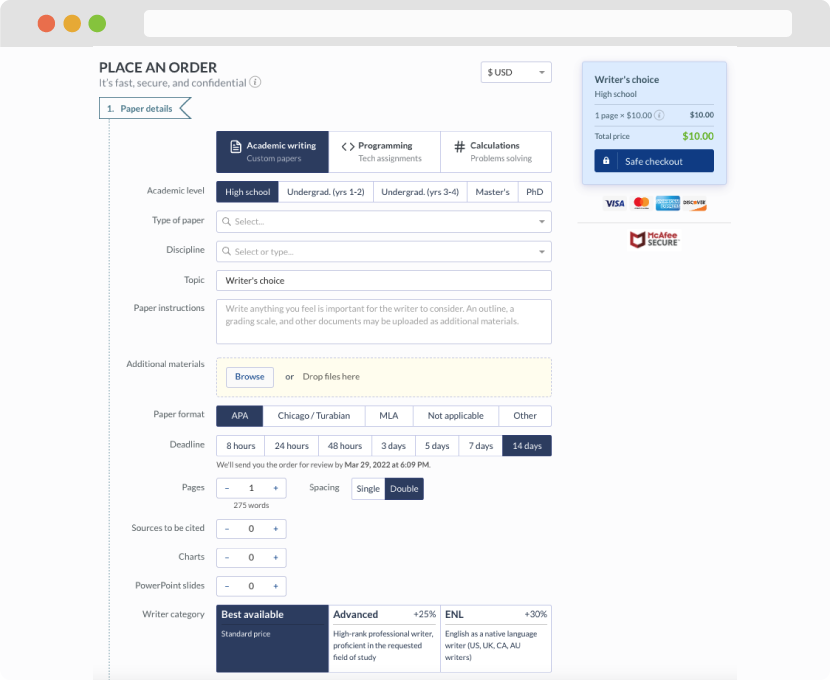
First, you will need to complete an order form. It's not difficult but, if anything is unclear, you may always chat with us so that we can guide you through it. On the order form, you will need to include some basic information concerning your order: subject, topic, number of pages, etc. We also encourage our clients to upload any relevant information or sources that will help.
Complete the order form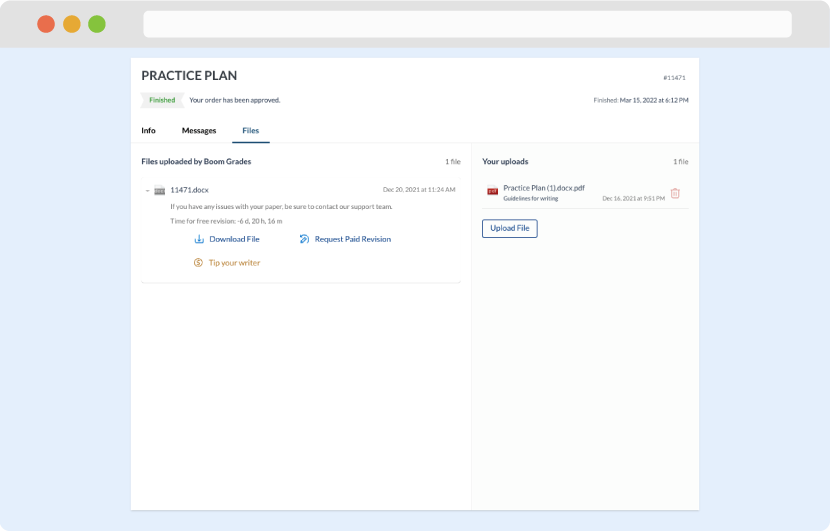
Once we have all the information and instructions that we need, we select the most suitable writer for your assignment. While everything seems to be clear, the writer, who has complete knowledge of the subject, may need clarification from you. It is at that point that you would receive a call or email from us.
Writer’s assignment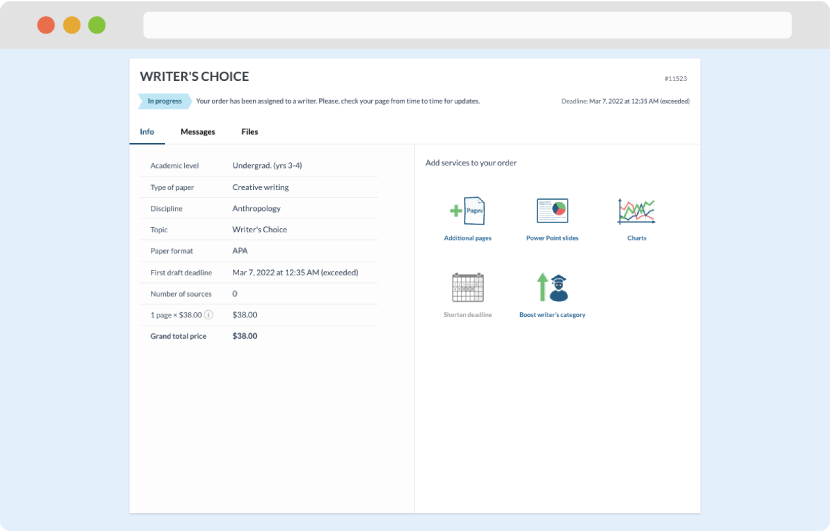
As soon as the writer has finished, it will be delivered both to the website and to your email address so that you will not miss it. If your deadline is close at hand, we will place a call to you to make sure that you receive the paper on time.
Completing the order and download