Read Waring et al (2016) and create a max. two-page summary. Include the following information:
What is the foreshadowed problem?
Qualitative research does not use a research hypothesis because of the emergent nature of the research. Instead, foreshadowed problems are used, which are stated as broad, anticipated research questions to be reformulated during the data collection. The questions or statements focus on the “what” and “how” of the situation (the phenomena being studied) – and avoid any causal inference.
3. How were data collected?
4. What was the method of data analysis?
5. What transcription notation system was employed?
6. Summarize the key findings of the study. (Use bullet points)
7. To what extent the findings of this study are generalizable?
Session 10_Qualitative Research and Case Study
Research Literacy (A&HL 5575)
Qualitative Research
! Qualitative procedures demonstrate a different approach and are
less structured and more flexible.
! The core Concepts in qualitative research:
” How “reality” is conceived in qualitative research ? (ontology)
” How knowledge can be acquired? (epistemology)
Vafaee, A&HL5575 (Class 10)
2
Qualitative Research Key Characteristics
! Key Characteristics of the Qualitative Research:
” Emergent design
” Holistic account
” Natural Setting
” Participants’ meanings
” Interpretive (researcher is the key “measurement device”)
” Multiple sources of data
” Inductive data analysis
” Grounded theory
” Small sample size
Vafaee, A&HL5575 (Class 10)
3
Qualitative Research Approaches and Methods
!
Narrative inquiry
!
Case study
!
Ethnography
!
Action research
Vafaee, A&HL5575 (Class 10)
4
Qualitative data collection methods
! Observation
” Complete observers
” Participant observers
! Open-response items on questionnaires
! Interviews
! Verbal reports
! Discourse analysis
Vafaee, A&HL5575 (Class 10)
5
Reliability in Qualitative Research
! Reliability in Qualitative Research indicates that the researcher’s
approach is consistent across different researchers and different parts
of a project.
! Procedures to establish reliability:
” Check transcripts for accuracy
” Make sure that there is not a drift in the definition of codes
” For team research, coordinate the communication among the
coders by regular documented meetings and by sharing the
analysis.
” Cross-check codes developed by different researchers by
comparing results that are independently derived.
” Single researchers find another person who can cross-check their
codes, and report intercoder agreement.
Vafaee, A&HL5575 (Class 10)
6
Validity in Qualitative Research
Qualitative validity means that the researcher checks for the accuracy of the
findings by employing certain procedures.
! Qualitative validity is established based on determining whether the findings
are accurate from the standpoint of the researcher, the participant, or the
readers of an account.
! Procedures to establish validity:
” Triangulate
” Use member checking
” Use rich, thick description
” Clarify the bias
” Present negative or discrepant information
” Spend prolonged time in the field
” Use peer debriefing
” Use an external auditor
!
Vafaee, A&HL5575 (Class 10)
7
Generalizability in Qualitative Research
Qualitative generalization is a term that is used in a limited way in
qualitative research
! In fact, the value of qualitative research lies in the particular description and
themes developed in context of a specific site.
! Particularity rather than generalizability is the hallmark of qualitative
research.
! However, there are a few discussions in the qualitative literature about
generalizability, especially as applied to case study research in which the
inquirer studies several cases.
!
”
For example, Yin (2003) explains that qualitative case study results can be
generalized to some broader theory. The generalization occurs when qualitative
researchers study additional cases and generalize findings to the new cases. It is
the same as the replication logic used in experimental research. However, to
repeat a case study’s findings in a new case setting requires good documentation
of qualitative procedures, such as a protocol for documenting the problem in
detail and the development of a thorough case study database.
Vafaee, A&HL5575 (Class 10)
8
Useful Sources
Books:
!
!
!
!
!
!
Qualitative Research in Applied Linguistics: A Practical Introduction
Reflections on Qualitative Research in Language and Literacy Education
Qualitative Inquiry and Research Design: Choosing Among Five Approaches
Qualitative Inquiry in TESOL
README FIRST for a Userʹs Guide to Qualitative Methods
An Introduction to Qualitative Research: Learning in the Field
Articles:
!
!
Lazaraton, A. (1995). Qualitative research in applied linguistics: A progress report. TESOL Quarterly, 29(3),
455–472.
Lazaraton, A. (2003). Evaluative criteria for qualitative research in applied linguistics: Whose criteria and
whose research? The Modern Language Journal, 87(i), 1–12.
Computer Applications:
MAXqda: It helps researchers systematically evaluate and interpret qualitative texts.
Atlas.ti: It enables a researcher to organize text. graphic, audio, and visual data files, along with coding, memos and
findings, into a project.
QSR Nvivo: It features the popular software program N6 (or Nud.ist) and Nvivo concept mapping in combination.
Hyper RESEARCH: It is an easy-to-use qualitative software package enabling users to code, retrieve, build theories,
and conduct analyses of the data.
Vafaee, A&HL5575 (Class 10)
9
Case Study
! It is a research approach in which the object of inquiry is set in a
natural context, is unique and bounded.
! The purpose of case studies is to enhance our understanding of a
phenomena, process, person or group, not to experiment and
generalize to other populations.
! By doing a case study we demonstrate our interest in in-depth
portrayals of a phenomena associated with particular people of sites,
rather than in a broader, more superficial sampling of the phenomena.
! Case studies are longitudinal and use multiple data sources and have
small sample sizes.
! Case studies can be intrinsic or instrumental.
Vafaee, A&HL5575 (Class 10)
10
Advantages of Case Studies
!
They allow the researcher to focus on the individual in a way that is
rarely possible in group research.
! They provide insights into the complexities of particular cases in their
particular contexts.
! They can be conducted with more than one individual learner or more
than one existing group of learners for the purpose of comparing and
contrasting their behaviors within their particular context.
! Case studies clearly have the potential for rich contextualization that
can shed light on the complexities of the second language learning
process.
Vafaee, A&HL5575 (Class 10)
11
Caveats of Case Studies
! The researcher must be careful about the generalizations drawn from
the study. Any generalizations from the individual or small group (or
classroom) to the larger population of second language learners must
be made tentatively and with extreme caution.
! Case studies may provide valuable insights into certain aspects of
second language learning, but single case studies are not easily
generalizable.
Vafaee, A&HL5575 (Class 10)
12
Threats to the Quality of Case Studies
! Insufficient self-reflexivity
! Insufficient methodological reflexivity
! Insufficient triangulation
! Insufficient description
Vafaee, A&HL5575 (Class 10)
13
Linguistics and Education 33 (2016) 28–39
Contents lists available at ScienceDirect
Linguistics and Education
journal homepage: www.elsevier.com/locate/linged
Responding artfully to student-initiated departures in the
adult ESL classroom
Hansun Zhang Waring ∗ , Elizabeth Reddington, Nadja Tadic
Teachers College, Columbia University, United States
a r t i c l e
i n f o
Article history:
Available online 5 January 2016
Keywords:
Classroom discourse
Teacher talk
Conversation analysis
Teacher control
Learner participation
TESOL
a b s t r a c t
Teachers constantly endeavor to strike a balance between the arguably competing tasks of
maintaining control on the one hand and encouraging student participation on the other
(Paoletti & Fele, 2004). How precisely such a balance is accomplished, however, remains
largely a mystery. Based on videotaped data from the adult English as a Second Language
(ESL) classroom, we describe two teacher practices for responding to student-initiated
departures, where teacher control is maintained in the service of participation and learning.
Findings of this conversation analytic study contribute to a growing understanding of how
certain learner contributions in the language classroom may be tactfully and efficiently
handled while offering increasing specificity for strengthening the foundations of language
teacher education.
© 2015 Elsevier Inc. All rights reserved.
Introduction
Much has been written about the structure of classroom talk that embodies teacher control over topic initiation, topic
development, and speaking rights (e.g., Cazden, 1988; Edwards & Mercer, 1987; Lemke, 1990; McHoul, 1978; Mehan, 1979;
Nystrand, 1997). Although few have explicitly articulated the necessity of such control, as Mehan (1979) reminds us, the
teacher’s concern for social order “is more of a means to an end”—“a utilitarian stance adopted for the practical purposes
of achieving educational objectives” (p. 81), such as following a given day’s lesson plan and pursuing the larger goals of
the curriculum. In many educational contexts today, encouraging active student participation is also seen as integral to
achieving these objectives. As Paoletti and Fele (2004) have convincingly argued, teachers constantly endeavor to strike a
difficult balance between the potentially competing tasks of maintaining control on the one hand and soliciting student
participation on the other (p. 78) (also see Emanuelsson & Sahlstrom, 2008, on the “price of participation”). How precisely
such a balance is achieved, however, remains a largely unanswered question. In this paper, we examine this question in the
context of the adult English as a Second Language (ESL) classroom, an instructional setting in which managing participation
arguably calls for a degree of artfulness on the part of the teacher, given the diverse linguistic and cultural backgrounds
and life experiences that students bring to class (Center for Applied Linguistics, 2010). Using the microanalytic tools of
Conversation Analysis (CA), we make an attempt at detailing (1) the methods with which the teacher responds to student
contributions that initiate a departure from the pedagogical trajectory that he or she is pursuing, and (2) how such methods
enable the teacher to maintain control over that trajectory while still validating student participation and advancing learning.
∗ Corresponding author at: Box 66, Teachers College, Columbia University, 525 W. 120 Street, New York, NY 10027 United States. Tel.: +1 2126788128.
E-mail address: hz30@tc.columbia.edu (H.Z. Waring).
http://dx.doi.org/10.1016/j.linged.2015.12.001
0898-5898/© 2015 Elsevier Inc. All rights reserved.
H.Z. Waring et al. / Linguistics and Education 33 (2016) 28–39
29
In contemporary theories of second language acquisition (SLA) from both the interactionist and sociocultural perspectives,
communication in the target language is viewed as essential to language learning (Lantolf & Pavlenko, 1995; Long, 1996).
Therefore, a key consideration for language teachers in particular is whether the ways in which they seek to maintain order
in classroom talk contribute to creating a classroom culture where student participation is promoted. Our study, then, makes
a specific contribution to the growing enterprise of “CA for SLA” (Firth & Wagner, 1997; Markee & Kasper, 2004) oriented
classroom discourse research, with its interests in describing the nature of classroom talk and the relationship between talk
and language learning (e.g., Hellermann, 2008; Lee, 2008; Markee, 2008; Richards, 2006; Seedhouse, 2008; Walsh, 2006;
Waring, 2013a), and to the analysis of classroom interaction more generally.
Background
Classroom talk has been widely discussed as a form of institutional talk, and it is often described and understood in terms
of the asymmetries that distinguish it from ordinary conversation (Markee & Kasper, 2004). As teachers and students orient
to institutional goals, tasks, and identities in the classroom, their talk is responsive to particular constraints on what may
appropriately be said, by whom, and how (Drew & Heritage, 1992). Despite the prevalence of teacher control over classroom
talk as manifested in a range of implicit ‘ground rules’ (e.g., teachers ask display questions to which they already know the
answers and are entitled to the ‘final word’ on student contributions in feedback/evaluation turns), educational researchers
studying classroom discourse have observed that students also violate these rules for various purposes, such as building and
maintaining their social roles and relationships, saving face, and developing their understandings (Edwards & Mercer, 1987;
Lemke, 1990; Mehan, 1979).
Work in content classes in elementary and high school settings has addressed how teachers respond to departures from
the interactional rules governing classroom talk. Mehan (1979), for instance, identifies several improvisational strategies
used by an elementary school teacher to address violations of individual nomination procedures, including “getting through,”
or accepting the response of an unselected student in order to move through a trouble spot in the lesson, and opening the floor
to other respondents when a nominated student fails to reply. Lemke (1990) examines how a high school science teacher
responded to violations of unwritten classroom rules, such as engaging in side talk, by interrupting students and using
humor to soften admonitions. Oyler (1996) goes a step further by showing how moving away from typical procedure- and
content-based classroom discourse rules can be conducive to learning. She argues that, by following rather than resisting
certain spontaneous learner initiations during read-aloud activities, a first-grade teacher gained greater insight into her
students’ understandings and managed to position them not merely as passive consumers but as producers of knowledge
(p. 152).
Recent conversation analytic work in applied linguistics has also begun to address how teachers handle certain unexpected or ‘disorderly’ learner contributions. Li (2013), for example, shows how in a Chinese as a foreign language classroom,
the teacher responds to a student’s challenging deviation by unilaterally abandoning the ongoing task to maintain her epistemic authority, and as a result, misses certain pedagogical opportunities. Fagan (2012) reports on a novice ESL teacher’s
practices of responding to unexpected learner contributions by glossing over them or assuming the role of information
provider. In contrast, as detailed in a later study (Fagan, 2013), the expert teacher manages learner questions that are not
easily answerable or learner assertions that manifest some misalignment with the teacher agenda by modeling exploration or
offering accounts. Lehtimaja (2011) shows how teachers in a Finnish as a second language class play along when reproached
by students while still accomplishing pedagogical work. Finally, Waring (2013b) considers how teachers in a community
ESL program manage the “chaos” of multiple “competing voices” in response to teacher elicitations (p. 317) by maintaining
and/or restoring turn-taking order while encouraging student participation.
The present study extends this research in the adult ESL classroom, focusing specifically on moments in teacher-fronted
interaction in which one or more students enact a ‘veering off’ from the pedagogical trajectory being pursued by the teacher.
Compared to classrooms with younger students, in which knowledge and status asymmetries are taken for granted, adult ESL
learners bring to the classroom a broad spectrum of life experiences and professional expertise, which potentially render
them more or less ‘equals’ of the instructor in many respects, with the exception of the domain of the second language.
There may, accordingly, be a greater demand for ‘artful’ responses sensitive to the largely symmetrical relationship between
adults than in other instructional contexts. In particular, then, our interest is in describing the teachers’ delicate maneuvers
to maintain control while still promoting participation and learning.
Data and method
The data include 66 hours of video-taped adult ESL classroom interaction from 17 different classes taught by 20 different
teachers (with some co-teaching) at a community English program. As a lab school for the Teaching English to Speakers of
Other Languages (TESOL) program in a graduate school of education in the United States, the program offers ESL classes at the
beginning, intermediate, and advanced levels to members of the local community with a mix of international students, stayat-home moms, and immigrants who hold full-time jobs, representing a great variety of first language backgrounds and life
experiences. The teachers included master teachers as well as student teachers who were taking a TESOL practicum course
as part of their MA studies. The master teachers, who had more than 10 years of teaching experience, served as models for
the MA student teachers and fulfilled the staffing needs of the program. The student teachers typically have two to five years
30
H.Z. Waring et al. / Linguistics and Education 33 (2016) 28–39
of experience in various adult ESL and/or English as a foreign language (EFL) settings as well since oftentimes, they decide
to pursue a graduate degree in TESOL after having been inspired by their teaching experiences. All of the participants were
given pseudonyms. Of the 17 classes, one was videotaped for an entire semester and the others for one two-hour session
each. The data were transcribed using a notation system developed by Jefferson (2004) with some slight modifications to
accommodate our particular data set (see Appendix).
The analysis is conducted within a conversation analytic (CA) framework. CA aims to uncover and specify the tacit
practices of social interaction. Analysts work with audio or video recordings of naturally-occurring interaction (as opposed
to interviews, field notes, native intuitions, or experimental methodologies) along with transcripts of these recordings. A
CA transcript captures a full range of interactional details, such as volume, pitch, pace, intonation, overlap, inbreath, smiley
voice, the length of silence as well as nonverbal conduct (see Appendix). It is in these minute details that evidence is located
for how social actions such as requesting, complaining, or story-telling are accomplished. Analysis is guided by the central
question, why that now?, i.e., why a particular bit of talk is produced in that particular way at that particular time? The goal
is to uncover the meaning of interaction from the participants’ perspective, and this is done through close scrutiny of how
each turn is produced and received as evidenced in such details as prosody, word choice, timing, sequential position, and
the like. The two broad sets of practices to be reported below are the result of such turn-by-turn analysis. The advantage of
uncovering the methods of social interaction in this way is that we get a sense of how a particular practice is produced and
treated by the participants themselves in real time. And this is precisely why we believe that CA is well-suited to our project
given our interest in faithfully capturing how teachers handle specific interactional contingencies in ongoing classroom
talk.
Since Goffman’s (1981) participation framework is also invoked at various points during our analysis, a brief explication
is in order. According to Goffman (1981), hearers within the perceptible range of an utterance can take on a number of
roles: addressed ratified hearer, unaddressed ratified hearer, overhearer, and eavesdropper (the latter two are also referred
to as bystanders). While the utterance is intended for the ratified participants (addressed or unaddressed), it reaches the
overhearer by chance and the eavesdropper through the latter’s ‘illegitimate’ effort. It is possible to shift one’s footing
or alignment within a participation framework. As Goffman (1981) writes, “[a] change in footing implies a change in
the alignment we take up to ourselves and the others present as expressed in the way we manage the production or
reception of an utterance” (p. 128). Relatedly, a dominating conversation is one conducted among ratified participants
(e.g., in our data, students participating in the ongoing class activity), and sideplay refers to “respectfully hushed words”
exchanged among bystanders (p. 134) (e.g., students disengaging from the ongoing activity and engaging in side talk amongst
themselves).
In reviewing the videos and transcripts, we identified instances in whole-class interaction in which there was an observable misalignment between teacher and student orientations to the task at hand. More specifically, one or more students
appeared to make a move that initiated a departure from the pedagogical trajectory pursued by the teacher, as evidenced
in prior turns, and invoked a response from the teacher. Thus, we observe student-initiated departures when a particular
bit of talk is produced or treated by the participants themselves as unexpected or surprising via such indicators as laughter,
noticeable silence, or explicit or implicit reprimand—when, for example, a selected student does not respond, an unselected
student takes the floor, a projected answer is not given, or an answer accepted as correct by the teacher is questioned.
A total of 77 such cases were identified, and we observed that the teachers responded in a wide variety of ways. Given
our focus on ‘artful’ management in this particular study, we have excluded cases of rather conventional tactfulness that do
not warrant further explication, where the teacher simply softens certain directives or admonishments with, for example,
laughter. We have also excluded cases where the teacher responses are perhaps less artful, e.g., cases of direct injunction,
immediate backdown, and rejection or bypassing of student initiatives. In the following extract, for example, one student
takes on the feedback turn in overlap with the teacher (T) and disagrees with the teacher (line 54). In response, the teacher
quickly backs down and accepts the student’s answer (line 55) and closes the sequence (line 57).
(1) no, not cake
49
50
51
52
53
54
55
56
57
Abby:
Jose:
Molly:
T:
Jose:
T:
Molly:
T:
cheese.
(1.5)
◦
Rig[ht.◦ ]
[c ]ake.
hmh hmh hmh [Yes.]
[NO,] not cake.
>You were right.it sounds like a /z:/.< Okay.
>An’ what does this word mean.< May. Refuse.
(0.5)
Refuse. reject ( )
Okay.=May, you have many voices. [huh huh]
[hah hah] hah hah hh
May, what do you think it is.
(
)
O:kay?-((nods)) and
Reject means ↑what.-((turns to class))
((arm out in recognition))-Deny:. ((nods)) Reject.
O:r-((arms point to L))
◦
Turn down.◦
◦
Okay.◦ >Great.< Good synonym.=All of those. ((turns to BB))
So the first one we agree. Reject, deny:, turn down,
((looks down to paper and reads)) mo:re refuse.
Note that the learner-initiated response of refuse reject offers what the teacher asks for in line 34, but at the same time,
it displaces May, the addressee from whom the teacher is seeking the answer. While the unselected responders may be
treating May’s silence in line 35 as an occasion to volunteer their own responses, the silence is ultimately treated by the
teacher as a departure. In line 37, the teacher acknowledges the volunteered helping voices with okay but immediately
directs an ironic comment to the nominated student: May, you have many voices. By attributing the power of many voices to
May, who obviously does not possess such powers, the teacher makes evident the fact that May as the selected next speaker
has not yet answered while the other, unselected parties have. That this statement of irony is produced and received as
humorous is evidenced in the teacher’s own turn-ending laugh tokens (line 37) as well as the overlapping laughter from
the class. Though delivered in a light-hearted manner, the teacher’s ironic remark also serves to mark the departure from
his agenda (i.e., May, the selected party, has not responded). In fact, it precedes a renewed directive for May to respond
(e.g., see the stress on you in line 39, which implicitly invites the contrast ‘not others’). Although not clearly audible, we
get the sense that May does provide a response in line 40, which is accepted by the teacher in the next line before he
opens the floor to the rest of the class, physically turning toward the other students and issuing an invitation to reply
(lines 41–42).
Note that the teacher could have taken several other actions in this situation, such as accepting the other responses
and moving on, or simply nominating May again (Mehan, 1979). With the use of ironic teasing, which is directed to
May but also refers obliquely to the others (many voices), the departure from the teacher’s allocation of turns is rendered more prominent. One might argue that although May is the addressee, the teacher’s turn is designed as much to
be heard by the unaddressed others (Goffman, 1981) (i.e., the many voices) as a reminder of the current participation framework. As can be seen, this playful reminder succeeds in gaining recognition from the class as evidenced in the subsequent
laughter.
Thus, in this case, ironic teasing is deftly engaged to call attention to learner conduct that does not align with the teacher
directive and to successfully secure a completion of that directive from its originally designated recipient. The space for May
32
H.Z. Waring et al. / Linguistics and Education 33 (2016) 28–39
to participate, despite her less than immediate response, is protected, and participation on the part of the other learners
is also validated. Once May has responded and the teacher’s original trajectory has been restored, the teacher ultimately
embraces the participation of the many voices, opening the floor to all participants and retroactively accepting the previously
offered choral responses (lines 41–47).
In the next extract, we find a student-initiated departure that is of a more obvious kind. This extract comes from the same
class as the previous one, from the beginning of a lesson, when T1 is doing roll call and making inquiries about the students’
personal lives and weekend activities on the main classroom floor (see also Extract 4). By asking personal questions in this
opening sequence, the teacher blends the institutional and conversational frames (Waring, 2014) and transforms students’
personal lives and interests into topics relevant to be shared with the whole class. However, rather than attending to the
ongoing interactions on the main classroom floor, two students, Freida and Jasmin, have apparently engaged in side talk
(Lemke, 1990) or “sideplay” in Goffman’s (1981) terms, thus abandoning their roles as ratified participants in the whole-class
interaction and becoming bystanders.
(3) gossiping
270
271
272
273
274
275
276
277
278
279
280
281
282
283
T1:
Freida:
T1:
Freida:
Rodrigo:
LL:
T1:
Freida:
T1:
Freida:
T1:
So:, ↑very nice {◦ (syl syl) good◦ .-((looks down))}
.hhhh {FRIE:DA.–((looks up at Freida))}
(syl)-((raises hand))
So tell me what are you and Jasmin gossiping
◦
about over there.◦ -((checks in book))
uhhhehehhh about- the: [(.) our ↑d]ogs?
[kids.
]
[hehheheheheh
]
[about your [dogs?]
[Yes, ]
ask he:r if she works (.) u:h (syl syl syl)?
mhm?
↑Yes she do(hhh)es hehehheh
and how are your kids doing.
In lines 270–271, a conversational sequence between T1 and another student is brought to a close, and the teacher resumes
the attendance-taking: He calls Freida’s name, and she raises her hand in response. At this point, instead of proceeding with
a more general inquiry about Freida’s personal life, the teacher refers to her and Jasmin’s prior side talk in lines 273–274—So
tell me what are you and Jasmin gossiping ◦ about over there,◦ thus calling attention to the departure from the official, ongoing
activity. By labeling their side conversation gossiping, rather than using the more neutral talking for example, T1 characterizes
the talk as not only less serious in nature but also as a kind of talk that is not typically associated with the classroom setting.
In fact, there is a tinge of ironic teasing in T1’s use of the term, as it is unlikely that the students were actually engaging
in ‘gossip’ in the common sense of talking about non-present others. The teacher’s ironic use of the term is also reflected
in his treatment of Freida and Jasmin’s talk as subject matter for sharing. As gossip tends to focus on critically examining
the personal lives of others (Cameron, 1996), it is ordinarily managed with delicacy; it is done in a hushed manner among
friends, not shared with a large audience (Bergmann, 1987/1993). Nevertheless, the teacher elicits the topic of Freida and
Jasmin’s talk on the main classroom floor, appropriating it into the official task at hand. Thus, even though the teacher
highlights the students’ departure from the ongoing class activity, he does so light-heartedly—mildly teasing the students
for being engaged in a private conversation, yet promoting and validating that conversation as he mainstreams sideplay into
a dominating conversation (Goffman, 1981).
Freida initially laughs in response to T1’s question (line 275), potentially registering the teasing nature of the inquiry or
the inapposite nature of the action that led to it, before offering a brief response, which elicits more laughter from the rest of
the class. The teacher continues to pursue more output from Freida on the topic of the “gossip” via a clarification request and
a continuer in lines 278 and 281, respectively. It is only after Freida provides a turn-by-turn report on the side conversation
(lines 280, 282) that T1 proceeds with the kind of general personal inquiry that he typically makes while taking attendance
(line 283).
In both cases above, the teacher uses ironic teasing as a resource for conveying his noticing of certain problematic aspects
of learner talk but without doing so punitively. Such subtle noticing allows the teacher to restore ‘order,’ be it seeking
a response from a particular student or reigning in side talk, in a way that furthers participation and opportunities for
learning.
Invoke learning orientation
In the prior section, a touch of humor is used to manage student-initiated departures that are in some way misaligned with
the teacher’s allocation of turns or the task at hand. In this section, we observe two cases in which the teacher arguably takes
a more serious approach, through the invocation of learning. Like the previous extract, the next comes from the beginning
of one of T1’s advanced classes, when he is checking attendance and asking about the students’ personal lives and weekend
activities. At the beginning of the following extract, T1 poses his “weekend” question to Freida in line 120. Note that her
response to the question is somewhat delayed (lines 121–122), and what eventually emerges in line 122 is W↑ork!—a less
rosy report than the fun activities shared earlier by others such as visiting friends (not shown):
H.Z. Waring et al. / Linguistics and Education 33 (2016) 28–39
(4) of course not
119
120
121
122
123
124
125
126
127
128
129
130
131
132
133
134
135
136
137
138
139
140
141
142
143
144
145
146
147
148
149
150
T1:
Freida:
T1:
Freida:
T1:
Freida:
T1:
Freida:
T1:
Freida:
LL:
T1:
Freida:
T1:
L:
Freida:
T1:
Freida:
T1:
Freida:
T1:
Freida:
T1:
→
→
33
[◦ ever]thing goes well.◦ .hh ◦ n↑i:ce.=ni:ce.◦
>◦ how about you Freida,◦ <
(0.2)
My weekend?=
=Your weekend.-((checks in book))=
=W↑o:rk.
(0.8)-((T1 looks up from roll book))
All weekend?
All weekend, (twenty-four) hours per weekend,
A:ll the weekends.
Wh:::y.
hh.hhhhhh >because I work w↑eekend.<
Wow. >okay do you enjoy it?<
(0.5)
O(h)F COU(h)RSE N(h)OT(hhh) hehheh
HAHAHHHAHAHHHEHIHIH
hahhahhahhahah .hhh [BUT,]
[( h↑a ]ve to:.,
Money: is important. .hh You need money.
(right.)
[That’s why] I took it. hihhhh
[So
]
G↑ood. >Good good good good.< .hh do
you u:h use a lot of English? on your job?
((nods))
>Because< I uh: we must (syl syl)- talking
talking talking to the: ◦ baby so◦
[ ((nods)) ]
we have to< talk talk talk, and she talk talk talk too.
[Oh g↑ood.]
In line 126, T1 takes issue with the one-word response work with an extreme case formulation (Pomerantz, 1986), all
weekend?, which also implicitly orients to the norm of the weekend being the time off from work. In lines 127–128, instead
of backing down from her one-word report, Freida confirms it, which incurs T1’s stressed and lengthened why in line 129.
In line 131, T1 marvels at Freida’s weekend work schedule and goes on to ask whether she enjoys it.
There is a hearable gap after T1’s question (line 132)—the kind of silence typically found before tokens of surprise
(Wilkinson & Kitzinger, 2006). While the teacher’s do you enjoy it? prefers a yes response (Sacks, 1987), in line 133, Freida
produces just the opposite—a loud O(h)F COU(h)RSE N(h)OT, infused with and followed by laughter. By laughing and formulating the no-response as a matter of course, Freida treats the answer to the teacher’s question as self-evident—and thus
the question itself as a ‘silly question.’ Although laughter can be used to mitigate a challenge (Jacknick, 2013), in this case,
along with the surprise-prefacing silence and the unmitigated delivery of of course not, it is used, one might argue, to further
convey disbelief, if not ridicule (Billig, 2005).
In line 134, the class responds to Freida’s invitation to laugh with an eruption of loud laughter, which at the same time
registers her dismissive treatment of the teacher’s question as unexpected. The teacher initially responds by joining in
the laughter affiliatively in line 135. His loud BUT immediately thereafter gets absorbed in overlap as Freida proceeds to
emphasize that her weekend work is a matter of necessity rather than fun (line 136), and the teacher is put in the position
of conceding that this is in fact the case in line 137 (Money: is important.). Freida has arguably succeeded here in ‘upstaging’
the teacher and shifting asymmetrical teacher-student interaction to something more like the give-and-take of ordinary
conversation among participants with equal conversational rights.
Of particular interest to us is what the teacher does next in the face of this student-initiated departure. Observe that in line
141, it looks as if he is bringing the sequence to a close, but he reopens it with another yes/no question—one that reframes
the nature of Freida’s weekend work from a matter of survival to a matter of learning—a trajectory that he was perhaps
initiating with the BUT in line 135 earlier. By asking whether Freida uses a lot of English on her job, T1 manages to highlight
the relevance of Freida’s work to language learning. He thus returns to a topic tied to the official business of the class. By
invoking the institutional business of learning, T1 also manages to obtain a positive and more extended telling from Freida
(not fully shown here), thereby reengaging and validating the latter’s participation and securing the kind of contribution
that he was initially pursuing with his weekend inquiries. A potentially sensitive issue and negative event now takes on
a bright side as Freida moves out of the shadow of her initial one-word response to embrace an extended opportunity of
language use.
The student-initiated departure in the next segment involves directly questioning the appropriateness of a sentence that
the teacher has already announced to be the ‘final answer.’ In other words, the student calls attention to a mistake made
by the teacher in his area of expertise: the course content. The class is working on the “as. . . as. . .” structure. In line 256,
T1 takes issue with the truth value of the sentence provided by a student and points out in lines 261–262 that the correct
version should be in the negative, before beginning an account in line 264:
34
H.Z. Waring et al. / Linguistics and Education 33 (2016) 28–39
(5) change the sentence
256
T1:
257
258
L:
259
T1:
260
L:
T1:
261
262
263
T1:
264
265
266
267
LL:
T1:
268
269
270
271
Rodrigo:→
272
273
L:
274
Rodrigo:
275
276
T1:
277
Rodrigo:
278
279
T1:
280
281
Rodrigo:
282
T1:
Rodrigo:
283
284
285
286
287
288
((lines omitted))
296
297
298
299
300
301
302
303
304
305
→
→
T1:
Mayo:
T1:
T1:
Coke ha:s as much food as Pepsi? Is that true?
(0.4)
[Noo.]
[Oppo]site, what’s the opposite.
(Doesn’t.)
((smiles and writes on BB ‘doesn’t have’)) This is the
sentence that you’re looking for.
((some murmuring among students))
So what we also want to think about (.) i:s
((circles the word ‘is’ in the first sentence)) changing the
verb. The verb is not always going to be be:.
Ooh.
The verb can change to anything depending on the
meaning (.) of your sentence. So the verb can
change at any (.) point, depending on what you need
to talk about.
But the second one, Coke doesn’t have as much food
as Pepsi.
(Does it) make sense, ([ ])
[Just-] (that’s not) what it
says, you know?
((nods))
Because that mean that Coke (.)
has food=
Mmhmm,
=but it has less than Pepsi.
Mmmhmmm.
(And here is says that Coke have >only soda.Did we learn anything else.<
◦
The most important ( )◦ Heh heh heh heh heh.
((raises hand)) The most important (is)/(thing).
(0.2) I like chocolate [( ) ]
[Yeah] [me too. ]
[You like chocolate.]=
=Me too.
→
Tina:
T2:
Tina:
T2:
Rosa:
LL:
T2:
You [learned] that from the a:rticle.
[() ]
((smiles))
A’right. What else (0.2) would we like to learn
about the- (.) chocolate.
(0.2)
We didn’t learn anything about the process.
Maybe how to grow up?
How to gro:::wYeah.
T2:
Tina:
T2:
Rosa:
Similar to Freida in Extract 3, Betty and Tina initiate a shift to a more ‘conversational’ frame (Waring, 2014) by expressing
personal preferences, instead of answering the teacher’s question in accordance with the task, and Tina ‘usurps’ the turn
traditionally reserved for the teacher to provide feedback in order to do affiliation (line 07). In response to this departure from
the IRF pattern of interaction and task at hand, in line 08, the teacher first repeats Betty’s announcement before attributing
the source of her liking to reading the article: You learned that from the article (line 10)—an ironic statement given that one’s
personal liking is clearly not something to be learned from reading an informational article. By stating the obviously untrue,
the teacher brings to light, with some subtlety, what is problematic with Betty’s comment. Although the irony is not as
ostensibly light-hearted (i.e., it is not marked by hearable laughter on the part of the teacher), it appears to be treated as
such by the participants as indicated by the learner smiles in line 12. At the same time, the mention of the word learned also
serves as a gentle reminder of what the task at hand is—answering the question of Did we learn anything (line 03). Keeping
the focus on learning, in line 13, the teacher proceeds to the would like to learn question and offers a candidate answer (line
15) that models what would be a fitted response here, which Tina provides by building on the teacher’s modeling in line
17. In this case then, the teacher makes a subtle observation, with ironic teasing, on the misfit nature of a learner response,
and by invoking a learning orientation at the same time, this single remark allows him to return to his original trajectory
of questioning immediately thereafter—one that keeps in focus the pedagogical goal of the moment. A distinction is thus
drawn between expressing one’s personal opinion and reading to learn, and in particular, Tina’s participation is skillfully
molded to focus her on the task of learning to gather specific information from a reading passage in a second language.
Our final extract, from another intermediate-level class, involves a student-initiated departure of the same type as that in
Extract 3—disengagement from the official task at hand to engage in a side activity. The extract is taken from the beginning of
a class where students are taking turns sharing how they spent their weekend. As Halloween took place over that particular
weekend, most of the students’ stories focused on their celebrations of the holiday. Prior to the segment, as one student,
Maria, was sharing her Halloween experience, T3 noticed that three students—Cindy, Noriko, and Sarah—had shifted from
being unaddressed ratified hearers to being bystanders in relation to the ongoing activity (Goffman, 1981), as they started
looking at a phone and talking quietly among themselves. Upon the completion of Maria’s story (just prior to the start of
the segment below), T3 offers an acknowledgement and assessment (lines 01–02), closing down the sequence, and turns to
Cindy, Noriko, and Sarah (line 03):
(7) wanna share
01
02
03
04
05
06
07
08
09
10
11
T3:
LL:
Luisa:
LL:
T3:
→
((gaze at Maria, smiles and nods))-Okay, very ((gaze
at Cindy, Noriko and Sarah))-good. .hh ((mock scowls))$↑what are you three . exactly.$
((gaze at Cindy, Noriko and Sarah))
hhh
hhhhh
((gazes at Cindy, Noriko and Sarah))-{$what are you
looking- ((shakes head, smiles))} at.$
(2.0)-((Cindy, Noriko and Sarah still looking at phone and
talking))
((Cindy, Noriko and Sarah look up))
36
H.Z. Waring et al. / Linguistics and Education 33 (2016) 28–39
12
13
T3:
LL:
[hhhh]
[hhhh]
14
15
16
17
18
19
20
T3:
Cindy:
T3:
Cindy:
Noriko:
Cindy:
$so what’s going o:n. wanna sha:re?$
(what?)
( )
hh (
)
(telling) that I was in a wedding this
↑weekend, so I was (showing pictures.)
T3:
Cindy:
T3:
Cindy:
LL:
T3:
Cindy:
T3:
Cindy:
Was it a Hallowee:n the:med wedding? ((smiles))
no.
{((shakes head))- n(h)o(h).} (.) ((smiles))- 0 that
would’ve been fun.=okay,0 ↑whose wedding was it.
my cousin’s wedding.
your ↑cousin’s wedding. (.) ((tilts head))- >did you
have fun?<
$#of course.#$
((smiles))- o: (h):h(h)o(h)h(h)o.
it was (.) amazing.
$o:::kay,$ where was it.
m::: Jersey?
New Jersey? (.) ((nods))- tsk okay.
(0.2)
I saw my family.
((tilts head))- aww, all your family. that’s
pretty cool. did you da:nce? ((smiles))
y(h)eah.
hhhhh
hhh (was-) what kind of music was it.
it was more American?
mhm,
bu::t, people li- liked the music though,
T3:
◦
21
22
23
24
25
26
27
28
29
30
31
32
33
34
35
36
37
38
39
40
41
42
43
((lines omitted))
70
71
Cindy:
T3:
Cindy:
T3:
Cindy:
T3:
Cindy:
T3:
Cindy:
T3:
well: (.) make an impression I guess.◦ Noriko did
you go somewhere for Halloween?
In line 03, in a smiley voice, the teacher queries as an “eavesdropper” (Goffman, 1981): ↑what are you three . exactly.
The emphasis on you clearly singles out the three students from the rest of the class, highlighting the possibility of their
conduct being incompatible with that of the latter group. At the same time, with the raised pitch, the lengthened
as well as the stress on exactly, the teacher also constructs her question in a way that conveys heightened interest. This
expression of interest immediately draws the attention of the other students, who then direct their gaze to the sidetalkers still engaged in their private conversation. Laughter from the class ensues, registering the teacher’s noticing of
the private conversation as humorous. Continuing in the same amused and intrigued tone, in line 07, the teacher reinitiates her query, reformulating the initial doing into looking at as the three look at their phone while continuing their
talk. It is not until two seconds later that the three look up, meeting the overlapping laughter from the teacher and the
rest of the class, at which point the teacher, with the same smiley voice and now the full attention of the three, produces a third version of her original question: so what’s going o:n, followed by an invitation to share (line 14), sharing
on the main classroom floor being the official activity at the time. The three students’ ‘misconduct’ is now rendered fully
public.
After a delay caused by a possible repair initiation from Cindy (line 15), the teacher issues her query, in slower pace,
for the fourth time, accentuating her interest in what the students are talking about this time, in response to which Cindy
reports sharing photos of a wedding she attended over the weekend. Immediately thereafter, the teacher asks whether it was
a Hallowee:n the:med wedding (line 21). What becomes foregrounded in the elongated and stressed delivery of Hallowee:n
the:med, given the implausibility of the suggestion, is the three’s failure to attend to the Halloween stories the rest of the
class has been sharing so far (although Cindy’s response is fitted to the larger activity of reporting on weekend activities).
The irony of a Halloween-themed wedding is further alluded to in the teacher’s smile immediately following the question.
Thus, the teacher brings to the fore, as she did with share earlier, the learning task at the moment. Respond with ironic teasing
and invoke learning orientation are then melded in a single question as the teacher subtly takes note of the problematic
nature of the learner conduct, after which the private wedding conversation gets heard on the main classroom floor (lines
23–43; not fully shown), and the side-talkers’ participation becomes ratified in the official space of the classroom. In this
case, the teacher is able to restore order and at the same time promote learner participation by following the students’ lead
and legitimizing what would otherwise be considered off-task talk. What began as sideplay is now mainstreamed as part of
the official class activity.
In the two cases above, the learners either volunteer an unfitted response to a teacher elicitation or initiate an entire
conversation outside the main floor, in response to which the teacher fuses ironic teasing with invocation of learning in a
way that marks the problematic nature of the learner conduct vis a vis the official learning task at hand, and at the same time,
restores the pedagogical focus and mainstreams learner participation that might have otherwise remained ‘underground.’
H.Z. Waring et al. / Linguistics and Education 33 (2016) 28–39
37
Discussion and conclusion
One routine task faced by teachers is working with various kinds of student contributions that initiate a shift from the
current pedagogical trajectory, actions such as initiating a side-conversation, pointing out a teacher mistake, offering a
response that undermines a teacher question, or volunteering responses when the teacher is seeking contributions from
someone else. In this paper, we have illustrated two sets of resources that teachers (in adult ESL classrooms) have at their
disposal to manage such moments: respond with ironic teasing and invoke learning orientation. In responding with ironic
teasing, the teacher says the opposite of what he or she means or believes in a teasing tone (e.g., May, you have many voices).
In invoking learning orientation, the teacher makes reference, either implicitly or explicitly, to the pedagogical task at hand
or the broader goal of language learning (e.g., And you learned that from the article.). These practices are used either separately
or in combination to subtly mark the departure from and/or (re)direct focus to the pedagogical trajectory pursued by the
teacher. As illustrated above, engaging these practices allows the teachers to efficiently restore order, further their agendas,
and promote student participation and learning opportunities.
These findings contribute to the burgeoning literature on how certain unexpected or ‘disorderly’ learner contributions are managed through the tactful use of teacher control in the language classroom. It is crucial to underscore that
we are not simply showing how control is maintained. We are showing how it is maintained in the service, not to the
detriment, of participation and learning. The challenge of achieving an optimal balance between control and empowerment is not unique to the institutional context of the classroom. In navigating the dilemma between care and control,
for instance, the care staff in residents’ meetings with people with learning disabilities would often behave in ways that
disenfranchise the latter’s voices and reinforce their stigmatized identities, thus defeating the purpose of empowerment
(Antaki, Finlay, & Walton, 2007; Jingree, Finlay, & Antaki, 2006). In our case, the difficulty of maintaining control while
simultaneously promoting participation is in part evidenced in the fact that the practices reported above are relatively
rare finds in our large dataset, exercised by a small number of teachers. Most teachers in the dataset are novices, and
it is not a coincidence, we believe, that T1 emerged as the ‘star’ of this report given his status as a master teacher in
this program (aside from the fact that we simply have gathered more data from his class). One might also note that the
advanced proficiency level of T1’s students is in part what makes it possible for the students to initiate departures in
the first place, and to parse responses that are less direct, and for us to witness the teachers’ subtle management work.
Thus, there seems to be a real need to document, describe, and disseminate what expert teachers do to manage the competing demands of the (adult) language classroom. We hope to have made a small but substantive contribution to this
endeavor.
Recent work on CA and language teaching has yielded important insights into the use of epistemic status checks (ESCs)
in response to student visual cues (Sert, 2013), the variable functions of third turn repeats in form-and-accuracy versus
meaning-and-fluency contexts (Park, 2014), the maintenance of the instructional space via self-talk during moments of
trouble (Hall & Smotrova, 2013), the management of competing voices (Waring, 2013b), and the creation of space for
learning through practices such as increased wait-time, extended learner turns, and increased planning time, and managing
learner contributions in a positive and open way (Walsh & Li, 2013). Our study contributes to this burgeoning body of work
on the contingent management of learner contributions. We hope to have offered an empirical account of what responsive
teaching can look like in our instructional context, as teachers engage productively with student contributions that may
deviate from their intended pedagogical trajectory.
A prevailing theme in classroom discourse research more broadly has been the value of mitigating teacher control in
favor of greater learner voice (e.g., Aukerman, 2007; Canagarajah, 1997; Cazden, 1988; Christoph & Nystrand, 2001; Foster,
1989; Gutierrez, Rymes, & Larson, 1995; Heath, 1983; Lemke, 1990; Rex, 2000; Shuy, 1988; Skidmore, 2000). Indeed, the
challenge of democratizing the classroom and unleashing its creative energies remains relevant and pressing for scholars
and practitioners alike. Within this dominant conversation, however, we should perhaps be reminded that the urgency to
reduce teacher control should not diminish the necessity and importance of that control. After all, an important facet of
teachers’ professional competence lies in their ability to maintain control as the “custodians of classroom order” (Paoletti &
Fele, 2004, p. 72), in the service of the broader goal of facilitating learning. We hope that the current study has served as a
useful reminder in this regard. In our data, we find cases in which teacher assertions of control preserve a ‘quiet’ student’s
right to speak, reign in off-topic side talk, and re-focus learners on the task at hand. We hope to have demonstrated that
control need not be exercised at the expense of learner voice, and that in fact, it can be done in the interest of advancing that
voice.
Pedagogically, such knowledge can be valuable for the purposes of teacher education. As potentially derailing
student initiations are inevitable, teachers should be prepared to respond to them with a view toward creating
an environment that remains conducive to participation and learning. As such, we hope to have offered a useful
description of some specific tools with which order may be maintained in a way that supports participation and learning.
To sound a final cautionary note, however, we cannot help but wonder what would have transpired had teacher control
not been maintained in at least some of the above cases. On the larger landscape, the question of whether, when, how, to
what extent, and even why one ought to exercise control in constantly evolving classroom interaction remains very much
open-ended.
38
H.Z. Waring et al. / Linguistics and Education 33 (2016) 28–39
Acknowledgements
This paper began as two separate course papers written by the second and third authors for Classroom Discourse—a course
taught by the first author in Fall 2013. Without compromising the original spirit of the course papers, we have since then
significantly reconceptualized and restructured the arguments and analyses and done so with a much larger dataset. Earlier
versions of this paper were presented at the NYS TESOL Applied Linguistics Winter Conference (ALWC 2014), the 14th
International Pragmatics Conference (IPrA 2015), and the International Institute of Ethnomethodology and Conversation
Analysis (IIEMCA 2015). Our multiple revisions were in part shaped by the feedback from the audience members at those
presentations as well as members of our Discourse Doctoral Seminar. The three anonymous reviewers at Linguistics and
Education and the editor David Poveda have also done a brilliant job with helping us reach greater clarity in framing our
issue, sharpening our analysis, and interpreting our findings. As always, the first author would like to thank the ESL students
and teachers for letting her and her camera into their classrooms.
Appendix.
.
?
,
::
word
word
WORD
◦
word◦
↑word
↓word
>word<
<
hh
.hh
(hh)
[]
[]
=
(2.4)
(.)
()
(syl syl)
((gazing toward the ceiling))
{((words))-words}
(try 1)/(try 2)
$word$
#word#
T
L/LL
BB
(period) falling intonation.
(question mark) rising intonation.
(comma) continuing intonation.
(hyphen) abrupt cut-off.
(colon(s)) prolonging of sound.
(underlining) stress.
The more underlining, the greater the stress.
(all caps) loud speech.
(degree symbols) quiet speech.
(upward arrow) raised pitch.
(downward arrow) lowered pitch.
(more than and less than) quicker speech.
(less than & more than) slowed speech.
(less than) jump start or rushed start.
(series of h’s) aspiration or laughter.
(h’s preceded by period) inhalation.
(h’s in parentheses) inside word boundaries.
(lined-up brackets) beginning and ending of
simultaneous or overlapping speech.
(equal sign) latch or contiguous utterances of the same speaker.
(number in parentheses) length of a silence in 10ths of a second.
(period in parentheses) micro-pause, 0.2 second or less.
(empty parentheses) non-transcribable segment of talk.
number of syllables in uncertain transcription
(double parentheses) non-speech activity or transcriptionist comment.
dash to indicate co-occurrence of nonverbal behavior and verbal elements; curly brackets to mark the beginning
and ending of such co-occurrence when necessary.
(two parentheses separated by a slash) alternative hearings.
(dollar signs) smiley voice.
(number signs) squeaky voice.
teacher
unidentifiable learner(s)
blackboard
References
Antaki, C., Finlay, W. M. L., & Walton, C. (2007). The staff are your friends: Intellectually disabled identities in official discourse and interactional practice.
British Journal of Social Psychology, 46, 1–18.
Aukerman, M. S. (2007). When reading it wrong is getting it right: Shared evaluation pedagogy among struggling fifth grade readers. Research in the Teaching
of English, 42(1), 56–103.
Bergmann, J. R. (1993). Discreet indiscretions: The social organization of gossip (J. Bednarz, Jr., Trans.). New York: Walter de Gruyter (Original work published
1987).
Billig, M. (2005). Laughter and humor: Towards a social critique of humor. London: Sage.
Boxer, D., & Cortés-Conde, F. (1997). From bonding to biting: Conversational joking and identity display. Journal of Pragmatics, 27, 275–294.
Cameron, D. (1996). Performing gender identity: Young men’s talk and the construction of heterosexual masculinity. In S. Johnson, & U. H. Meinhof (Eds.),
Language and masculinity (pp. 203–217). Cambridge, MA: Wiley-Blackwell.
Canagarajah, A. S. (1997). Safe houses in the contact zone: Coping strategies of African-American students in the academy. College Composition and
Communication, 48, 173–196.
Cazden, C. B. (1988). Classroom discourse: The language of teaching and learning. Portsmouth, NH: Heinemann.
Center for Applied Linguistics. (2010). Education for adult English language learners: Trends, research, and promising practices. Washington, DC: Author.
Christoph, J. N., & Nystrand, M. (2001). Taking risks, negotiating relationships: One teacher’s transition toward a dialogic classroom. Research in the Teaching
of English, 36, 249–286.
Drew, P., & Heritage, J. (1992). Analyzing talk at work: An introduction. In P. Drew, & J. Heritage (Eds.), Talk at work (pp. 3–65). Cambridge: Cambridge
University Press.
Edwards, D., & Mercer, N. (1987). Common knowledge: The development of understanding in the classroom. London and New York: Methuen.
H.Z. Waring et al. / Linguistics and Education 33 (2016) 28–39
39
Emanuelsson, J., & Sahlstrom, F. (2008). The price of participation: Teacher control versus student participation in classroom interaction. Scandinavian
Journal of Educational Research, 52(2), 205–223.
Fagan, D. S. (2012). Dealing with unexpected learner contributions in whole group activities: An examination of novice language teacher discursive practices.
Classroom Discourse, 3(2), 107–128.
Fagan, D. S. (2013). Managing learning contributions in the adult ESL classroom. A conversation analytic and ethnographic exploration of teacher practices and
cognition (unpublished doctoral dissertation). Teachers College, Columbia University.
Firth, A., & Wagner, J. (1997). On discourse, communication, and (some) fundamental concepts in SLA research. The Modern Language Journal, 81, 285–300.
Foster, M. (1989). “It’s cookin’ now”: A performance analysis of the speech events of a Black teacher in an urban community college. Language in Society,
18, 1–29.
Goffman, E. (1981). Forms of talk. Philadelphia: University of Pennsylvania Press.
Gutierrez, K. D., Rymes, B., & Larson, J. (1995). Script, counter-script, and underlife in the classroom: James Brown vs. Brown vs. Board of Education. Harvard
Educational Review, 65(3), 445–471.
Hall, J. K., & Smotrova, T. (2013). Teacher self-talk: Interactional resource for managing instruction and eliciting empathy. Journal of Pragmatics, 47, 75–92.
Heath, S. B. (1983). Ways with words. Cambridge: Cambridge University Press.
Hellermann, J. (2008). Social practices for language learning. Clevedon, UK: Multilingual Matters.
Jacknick, C. (2013). “Cause the textbook says. . .”: Laughter and student challenges in the ESL classroom. In P. Glenn, & L. Holt (Eds.), Studies of laughter in
interaction (pp. 185–200). London: Bloomsbury.
Jefferson, G. (2004). Glossary of transcript symbols with an introduction. In G. Lerner (Ed.), Conversation analysis: Studies from the first generation (pp. 13–31).
Amsterdam: John Benjamins.
Jingree, T., Finlay, W. M. L., & Antaki, C. (2006). Empowering words, disempowering actions: An analysis of interactions between staff members and people
with learning disabilities in residents’ meetings. Journal of Intellectual Disability Research, 5(3), 212–226.
Lantolf, J. P., & Pavlenko, A. (1995). Sociocultural theory and second language acquisition. Annual Review of Applied Linguistics, 15, 108–124.
Lee, Y.-A. (2008). Yes-no questions in the third-turn position: Pedagogical discourse processes. Discourse Processes, 45(3), 237–262.
Lehtimaja, I. (2011). Teacher-oriented address terms in students’ reproach turns. Linguistics and Education, 22, 348–363.
Lemke, J. L. (1990). Talking science: Language, learning, and values. Norwood, NJ: Ablex.
Li, H. (2013). Student deviations and missed learning opportunities in an IRF sequence: A single case analysis. L2 Journal, 5, 68–92.
Long, M. H. (1996). The role of the linguistic environment in second language acquisition. In W. C. Ritchie, & T. K. Bhatia (Eds.), Handbook of second language
acquisition (pp. 413–468). New York: Academic Press.
Markee, N. (2008). Toward a learning behavior tracking methodology for CA-for-SLA. Applied Linguistics, 29(3), 404–427.
Markee, N., & Kasper, G. (2004). Classroom talks: An introduction. The Modern Language Journal, 88(4), 491–500.
McHoul, A. (1978). The organization of turns at formal talk in the classroom. Language in Society, 7(2), 183–213.
Mehan, H. (1979). Learning lessons: Social organization in the classroom. Cambridge, MA: Harvard University Press.
Nystrand, M. (1997). Opening dialogue: Understanding the dynamics of language and learning in the English classroom. New York: Teachers College Press.
Oyler, C. (1996). Sharing authority: Student initiations during teacher-led read-alouds of information books. Teaching and Teacher Education, 12(2), 149–160.
Paoletti, I., & Fele, G. (2004). Order and disorder in the classroom. Journal of Pragmatics, 14(1), 69–85.
Park, Y. (2014). The roles of third-turn repeats in two L2 classroom interactional contexts. Applied Linguistics, 35(2), 145–167.
Pomerantz, A. (1986). Extreme case formulations: A way of legitimizing claims. Human Studies, 9, 219–229.
Rex, L. (2000). Judy constructs a genuine question: A case for interactional inclusion. Teaching and Teacher Education, 16(2), 315–333.
Richards, K. (2006). Being the teacher: Identity and classroom conversation. Applied Linguistics, 27(1), 51–77.
Sacks, H. (1987). On the preferences for agreement and contiguity in sequences in conversation. In G. Button, & J. R. E. Lee (Eds.), Talk and social organization
(pp. 54–69). Clevedon: Multilingual Matters.
Seedhouse, P. (2008). Learning to talk the talk: Conversation analysis as a tool for induction of trainee teachers. In S. Garton, & K. Richards (Eds.), Professional
discourse encounters in TESOL: Discourses of teachers in teaching (pp. 42–57). New York, NY: Palgrave Macmillan.
Sert, O. (2013). ‘Epistemic status check’ as an interactional phenomenon in instructed learning settings. Journal of Pragmatics, 45, 13–28.
Shuy, R. (1988). Identifying dimensions of classroom language. In J. L. Green, & J. O. Harker (Eds.), Multiple perspective analyses of classroom discourse (pp.
115–134). Norwood, NJ: Ablex.
Skidmore, D. (2000). From pedagogical dialogue to dialogical pedagogy. Language and Education, 14(4), 283–296.
Walsh, S. (2006). Investigating classroom discourse. New York, NY: Routledge.
Walsh, S., & Li, L. (2013). Conversations as space for learning. International Journal of Applied Linguistics, 23(2), 247–266.
Waring, H. Z. (2013a). ‘How was your weekend?’: Developing the interactional competence in managing routine inquiries. Language Awareness, 22(1), 1–16.
Waring, H. Z. (2013b). Managing competing voices in the language classroom. Discourse Processes, 50(5), 316–338.
Waring, H. Z. (2014). Managing control and connection in the language classroom. Research in the Teaching of English, 49(1), 52–74.
Waring, H. Z. (2015). Theorizing pedagogical interaction: Insights from conversation analysis. New York: Routledge.
Wilkinson, S., & Kitzinger, C. (2006). Surprise as an interactional achievement: Reaction tokens in conversation. Social Psychology Quarterly, 69(2), 150–182.
Essay Writing Service Features
Our Experience
No matter how complex your assignment is, we can find the right professional for your specific task. Achiever Papers is an essay writing company that hires only the smartest minds to help you with your projects. Our expertise allows us to provide students with high-quality academic writing, editing & proofreading services.
Free Features
Free revision policy
$10Free bibliography & reference
$8Free title page
$8Free formatting
$8How Our Dissertation Writing Service Works
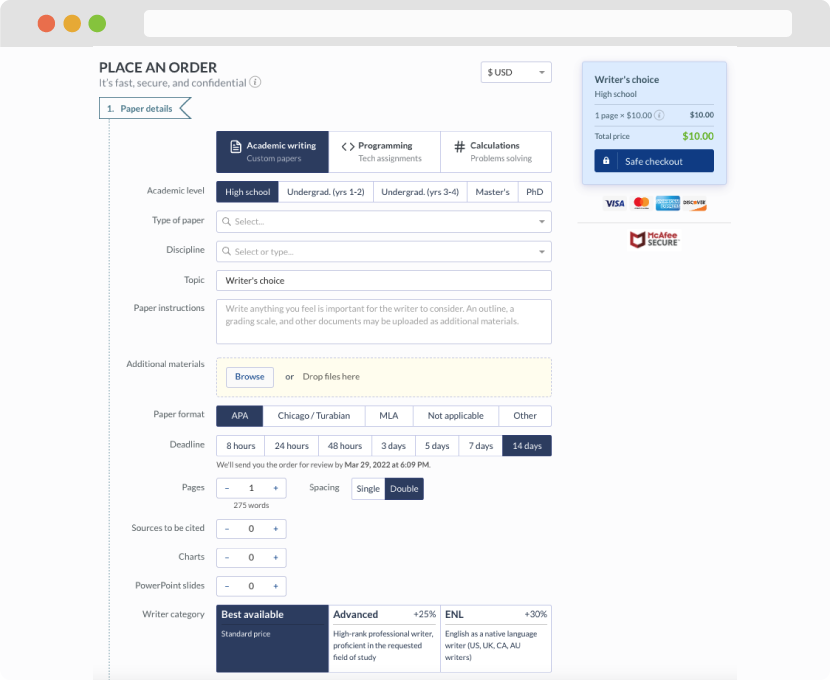
First, you will need to complete an order form. It's not difficult but, if anything is unclear, you may always chat with us so that we can guide you through it. On the order form, you will need to include some basic information concerning your order: subject, topic, number of pages, etc. We also encourage our clients to upload any relevant information or sources that will help.
Complete the order form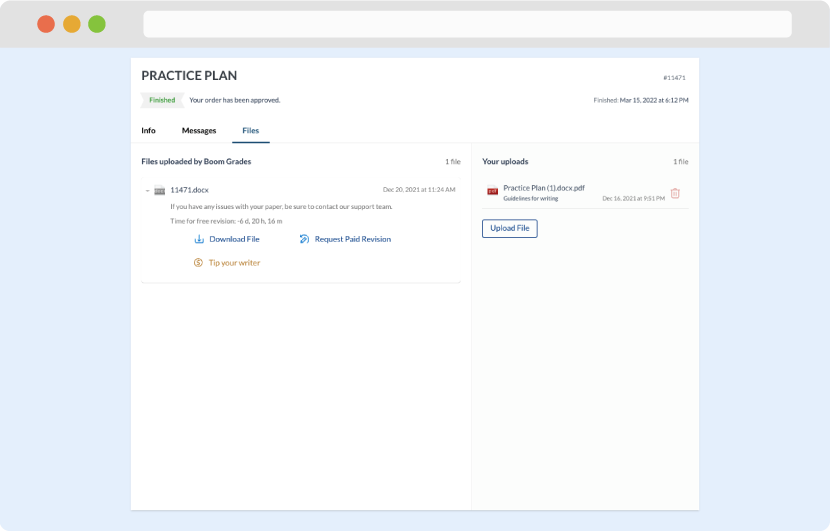
Once we have all the information and instructions that we need, we select the most suitable writer for your assignment. While everything seems to be clear, the writer, who has complete knowledge of the subject, may need clarification from you. It is at that point that you would receive a call or email from us.
Writer’s assignment
As soon as the writer has finished, it will be delivered both to the website and to your email address so that you will not miss it. If your deadline is close at hand, we will place a call to you to make sure that you receive the paper on time.
Completing the order and download