Assignment:
Scholar Practitioner Assignment: Addressing Co-Occurring Disorders
It is no coincidence that mental disorders and addiction often appear together because they share causative neurological roots hence, co-occurring disorders. Individuals with mental disorders often turn to mood-altering chemicals and behaviors in an attempt to self-medicate, making them more vulnerable to addiction.
The rates of co-occurring disorders are high. A differential diagnosis, or a diagnostic decision that differentiates between two similar disorders is needed to be able to differentiate between the two. As a helping professional you should be familiar with the appropriate diagnostic and treatment strategies needed to manage all aspects of these disorders.
For this Assignment, review the “SPP Treatment Plan Template” located in the resources and use this template for this Assignment.
Consider the following scenario:
Maria is a 44-year-old hearing-impaired Latina female who was admitted to the inpatient treatment facility for alcohol dependence where you are a substance abuse counselor. During her admission, Maria expressed reluctance to undergo treatment, stating that her family did not approve of counseling or psychiatric services because they see it as a sign of weakness. During her admission, she began crying hysterically. She stated that her husband left her and that her two teenage children were home alone. Maria was inebriated, under emotional distress, and ended up being carried to her assigned room by two staff members.
Your psychosocial intake assessment revealed she is also manifesting signs and symptoms of a major depressive disorder. You know that Maria needs help with her alcohol addiction, but you also know that her depression might be a cause or an effect of alcoholism.
Assignment:
Create a 30-day addiction treatment plan for Maria in the scenario.
Must contain at least 4 references and citations from the following materials:
Week 7: Special Populations and Co-Occurring Disorders
Addressing the needs of special populations and co-occurring disorders can be a challenging aspect of working in addictions. This week, you analyze challenges in treating special populations. Then, you evaluate strategies for addressing co-occurring disorders by creating a 30-day addiction treatment plan for a client.
Learning Objectives
Students will:
· Analyze special population challenges in treatment of addictions
· Evaluate strategies for overcoming challenges in treating special populations
· Evaluate addiction treatment plans for special populations
Learning Resources
Note:
To access this week’s required library resources, please click on the link to the Course Readings List, found in the
Course Materials
section of your Syllabus.
Required Readings
Doweiko, H. E. (2019). Concepts of chemical dependency (10th ed.). Stamford, CT: Cengage.
· Chapter 19, “Hidden Faces of Substance Use Disorders” (pp. 251-259)
Coleman-Cowger, V. H. (2012). Mental health treatment need among pregnant and postpartum women/girls entering substance abuse treatment. Psychology of Addictive Behaviors, 26(2), 345–350.
Center for Behavioral Health Statistics and Quality. (2012, January 12). Older adult substance abuse treatment admissions have increased; Number of special treatment programs for this population has decreased. Data Spotlight, Drug and Alcohol Information System. Retrieved from http://www.samhsa.gov/data/spotlight/WEB_SPOT_043/WEB_SPOT_043
Substance Abuse & Mental Health Services Administration , Center for Behavioral Health Statistics and Quality. (2012). Older adult substance abuse treatment admissions have increased; number of special treatment programs for this population has descreased. Retrieved from website: http://www.samhsa.gov/data/spotlight/WEB_SPOT_043/WEB_SPOT_043
U.S. Department of Health and Human Services Substance Abuse and Mental Health Services Administration. (2005). Substance abuse treatment for persons with co-occurring disorders (DHHS Publication No. SMA 05-3992). Retrieved from https://www.ncbi.nlm.nih.gov/books/NBK64197/
Document: SPP Treatment Plan Template (Word document)
Use this document to complete this week’s Assignment.
Assignment: Scholar Practitioner Assignment: Addressing Co-Occurring Disorders
It is no coincidence that mental disorders and addiction often appear together because they share causative neurological roots hence, co-occurring disorders. Individuals with mental disorders often turn to mood-altering chemicals and behaviors in an attempt to self-medicate, making them more vulnerable to addiction.
The rates of co-occurring disorders are high. A differential diagnosis, or a diagnostic decision that differentiates between two similar disorders is needed to be able to differentiate between the two. As a helping professional you should be familiar with the appropriate diagnostic and treatment strategies needed to manage all aspects of these disorders.
For this Assignment, review the “SPP Treatment Plan Template” located in the resources and use this template for this Assignment.
Consider the following scenario:
Maria is a 44-year-old hearing-impaired Latina female who was admitted to the inpatient treatment facility for alcohol dependence where you are a substance abuse counselor. During her admission, Maria expressed reluctance to undergo treatment, stating that her family did not approve of counseling or psychiatric services because they see it as a sign of weakness. During her admission, she began crying hysterically. She stated that her husband left her and that her two teenage children were home alone. Maria was inebriated, under emotional distress, and ended up being carried to her assigned room by two staff members.
Your psychosocial intake assessment revealed she is also manifesting signs and symptoms of a major depressive disorder. You know that Maria needs help with her alcohol addiction, but you also know that her depression might be a cause or an effect of alcoholism.
Assignment:
Create a 30-day addiction treatment plan for Maria in the scenario.
Must contain at least 4 references and citations from the following materials:
Doweiko, H. E. (2019). Concepts of chemical dependency (10th ed.). Stamford, CT: Cengage.
· Chapter 19, “Hidden Faces of Substance Use Disorders” (pp. 251-259)
Coleman-Cowger, V. H. (2012). Mental health treatment need among pregnant and postpartum women/girls entering substance abuse treatment. Psychology of Addictive Behaviors, 26(2), 345–350.
Center for Behavioral Health Statistics and Quality. (2012, January 12). Older adult substance abuse treatment admissions have increased; Number of special treatment programs for this population has decreased. Data Spotlight, Drug and Alcohol Information System. Retrieved from http://www.samhsa.gov/data/spotlight/WEB_SPOT_043/WEB_SPOT_043
Substance Abuse & Mental Health Services Administration , Center for Behavioral Health Statistics and Quality. (2012). Older adult substance abuse treatment admissions have increased; number of special treatment programs for this population has descreased. Retrieved from website: http://www.samhsa.gov/data/spotlight/WEB_SPOT_043/WEB_SPOT_043
U.S. Department of Health and Human Services Substance Abuse and Mental Health Services Administration. (2005). Substance abuse treatment for persons with co-occurring disorders (DHHS Publication No. SMA 05-3992). Retrieved from https://www.ncbi.nlm.nih.gov/books/NBK64197/
Essay Writing Service Features
Our Experience
No matter how complex your assignment is, we can find the right professional for your specific task. Achiever Papers is an essay writing company that hires only the smartest minds to help you with your projects. Our expertise allows us to provide students with high-quality academic writing, editing & proofreading services.
Free Features
Free revision policy
$10Free bibliography & reference
$8Free title page
$8Free formatting
$8How Our Dissertation Writing Service Works
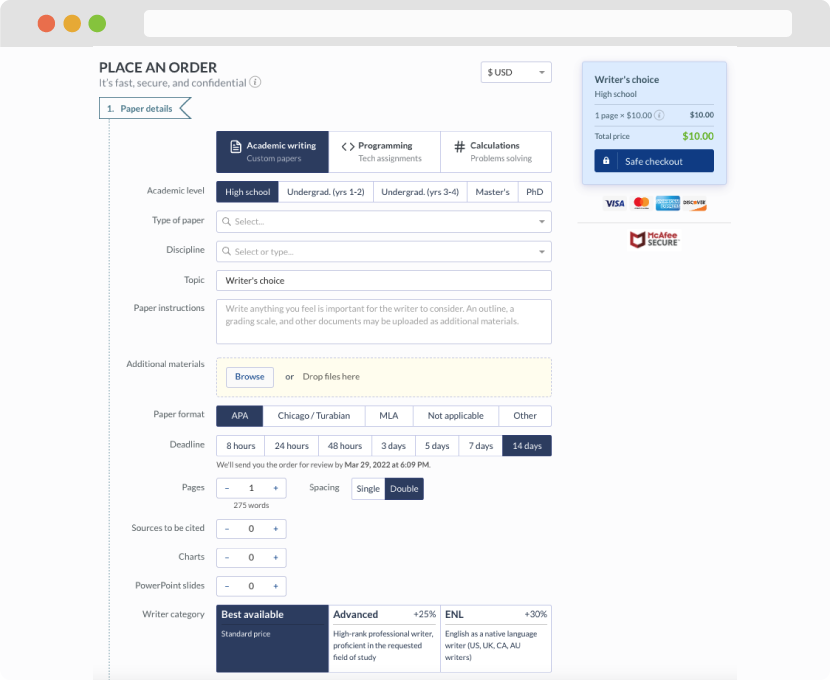
First, you will need to complete an order form. It's not difficult but, if anything is unclear, you may always chat with us so that we can guide you through it. On the order form, you will need to include some basic information concerning your order: subject, topic, number of pages, etc. We also encourage our clients to upload any relevant information or sources that will help.
Complete the order form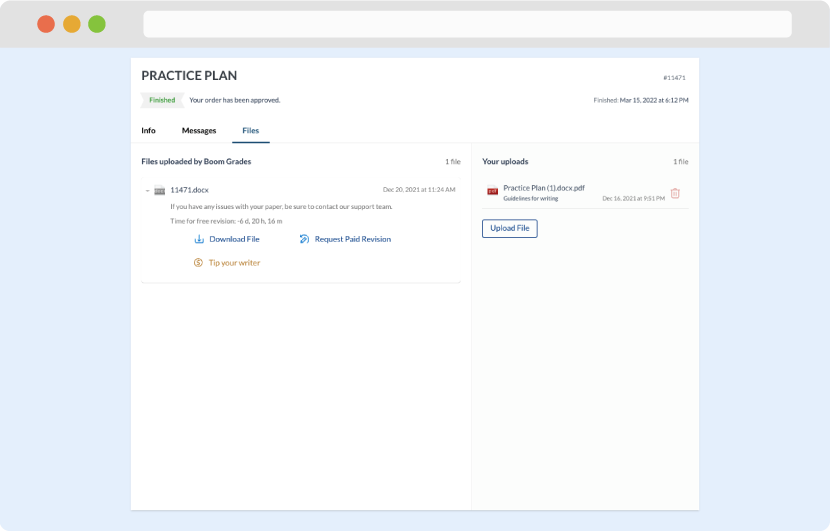
Once we have all the information and instructions that we need, we select the most suitable writer for your assignment. While everything seems to be clear, the writer, who has complete knowledge of the subject, may need clarification from you. It is at that point that you would receive a call or email from us.
Writer’s assignment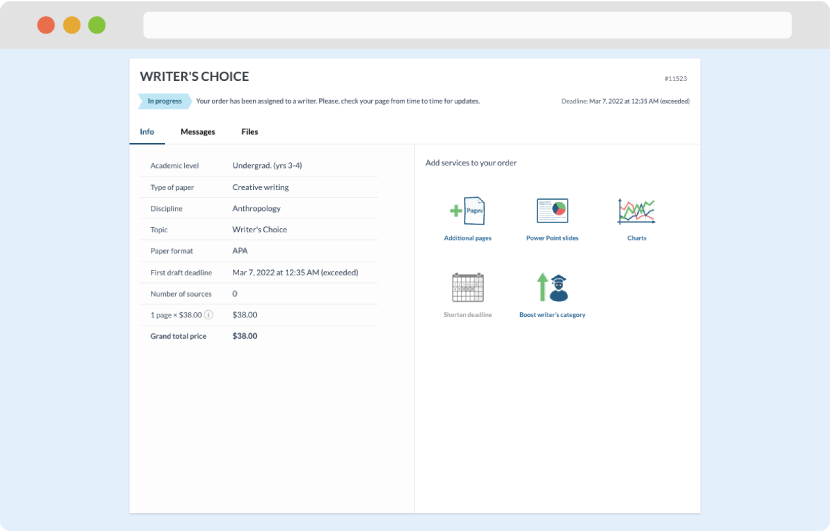
As soon as the writer has finished, it will be delivered both to the website and to your email address so that you will not miss it. If your deadline is close at hand, we will place a call to you to make sure that you receive the paper on time.
Completing the order and download