I am in UK so choose a social marketing campaign based on UK
How to set out your campaign plan.
Further reading Chapter 6 of the course text.
1. Remember it is NOT an Essay so use headings ( aligned to the grading criteria)
2. Word Count: 2500 words excluding References and Appendices. Remember
Appendices do not receive a mark they, are there for supporting material. Anything
relevant to your campaign should be in the main document.
For example:
‘A full application of Porter’s 5 Forces ( xxx ) is evidence in Appendix 1 .
3. All tables, figures, headings, subheadings references/ citations in the main plan count.
The plan should be structured as follows (same as grading criteria-see Moodle)
Title of Campaign (perhaps the slogan or hashtag you have devised?)
Campaign Aims
Set out the broad aim of the campaign- State the behaviour or other factors that the
intervention sought or is seeking to influence.
Campaign Objectives (what would you like the campaign to have achieved by short -6
months /medium-12 months and long term -18 months )
SMART (Specific, measurable, achievable, realistic and time bound) goals including
attitudinal and behaviour change
You should all be familiar with writing SMART objectives. They are short concise statements
that will align to attitudinal or behavioural aims of the campaign.
For example ( and in no particular order):
Objective #? (to raise awareness of the value of the behaviour change intervention)
To achieve 20% of young men 15 yrs -18 years to download anti-tobacco App within 6
months of the start of the intervention campaign .
Objective #?
Increase social media impressions across all platforms among the target audience by 30%
by the end of the quarter (date).
Objective #?
Establish partnership with 3 sporting influencers within 3 months and develop discount
codes for their followers who take up exercise at Blah Blah Gyms UK.
Objective #?
Increase recycling behaviour of target group by 25% by increasing website traffic with 3
new blog within 6 months of the campaign.
Situational Analysis
This is the information you have presented in the mini milestone plus other relevant research.
Conduct systematic research to analyse the marketing environment, social, technological,
economic and legal perspective. All relevant data, evidence and experience of the issue has
been gathered to inform planning. A range of sources have been included.
Depending on your word count PESTLE analysis could be included in the appendix in a
chart format and just choose a few salient points to discuss in the main body of the plan..
Target group
Who/type of behaviour you wish to change. Evidence of secondary research, including,
audience knowledge, attitudes, practices and behaviours in relation to wicked problem.
Target group focus, segmentation and insight. State the target group that is the focus of this
intervention campaign. Detail segments of the target group selected. State the key sights from
customer research that drove the approach. A range of sources have been included.
Demographic (use bullet points)
xxxxxx xxxxxxxxxxxxxxxxxx( smith and Jones, 2018)
xxxxxxxxxxxxxxxxxxxxxxx ( Statistica, 1990)
Psychographic /behavioural
xxxxxx xxxxxxxxxxxxxxxxxx( Fletcher and Brown, 2017)
xxxxxxxxxxxxxxxxxxxxxxx ( Statistica, 2017)
Geographic
xxxxxxxxxxxxxxxxx ( Portsmouth City Council Annual report , 2018)
Citizen Orientation/ Behavioural theory
Here you could include the work you have prepared for seminar 7
Here apply only one of the following Theory of Planned behaviour/ Health Belief Model of
Diffusion of innovation
Full justification of behaviour change model/s and theory has been used to segment/target
the audience and inform the intervention. State how a citizen/customer orientation has driven
the approach. This may include research on attitudes, beliefs, behaviours or incidence rates,
co-creation efforts and approaches.
• The first construct is the attitude towards the act or behaviour eg
smoking/gambling/degradation of the environment (any wicked problem) You may
have evidence from published sources if so include the citation ( eg : Research
suggests the target group feel alienated and lonely and unable to alter their mental
health state (Smith and Jones, 2020) .
• That is, an individual’s belief of whether a certain behaviour or act makes a positive
or negative contribution to that person’s life.
• A second construct is called subjective norm: this construct focuses on everything
around the individual. In other words his or her social network, cultural norms, group
beliefs about the behaviour and so on ( eg : Research suggests the target group is
heavily influenced by their peers (Smith and Smith, 2019) .
• A third construct is called perceived behavioural control: a person’s belief of how
easy or hard it is to adopt the new behaviour or act in a certain way (Published
literature suggests the target group feel unable to alter their mental health state
(Smith and Jones, 2020).
TPB is able to predict:
• if a person has a positive attitude towards eg: giving up smoking
• whether they are surrounded by favourable social norms to offer support eg: to reduce
alcohol intake
• If they have a high level of perceived behavioural control to change behaviour eg:
drink driving
These are the best predictors for forming a behavioural intention.
(This knowledge will help you design intervention activities for childhood obesity eg: to
meet the second construct -roadshows as schools / free exercise classes before and after
school/ bring –a-long- a – parent sessions too).
The Social Offering: Exchange and value
Use the work you have done for your mini milestone 2
State the products, ideas, understanding, services, experiences, systems and environments
that your campaign/program is seeking to influence. Your secondary research will help
you identify what the audience value and what the target audience has to give up (e.g.
financial, physical, time-related costs) to get the benefits or value proposed, and this is
built into the intervention approach (e.g. incentives, recognition, reward and/or
disincentives are built in)
Competition Analysis and barriers to change
You could apply a Porter’s 5 forces framework
State the competition analysis undertaken – who are the competitors? What is the benefit
they offer your target market and how did you tackle them?
Factors competing with the desired behaviour are considered and addressed (e.g. environment,
economic factors, psychological, media/consumer-related factors, physiological factors such as
addiction).
Intervention mix
Set out all the interventions types that you applied. (Control, Inform, Design, Educate,
Support). An integrated approach is evidenced by the presence of a valued ‘proposition’
product or service to the target audience that is offered and promoted through a co-ordinated
approach to information, education, service design and execution, through the social
marketing tools. Interventions may involve both active (downloads an App) and passive
(advertising) decision making. This is an overview of your social marketing intervention mix.
This should cover more than a just a communication mix – see page 194-195 in course text
Strategic Social Marketing) See the mini lectures 30/11 and 7/12.
List the tools you have used. How and why? Use headings and bullet points and citations in
support where possible. You could always present the IM in a chart if you would prefer .
Social Media campaign
Instagram – Target group are users of Instagram, Twitter (Smith and Jones, 2016)
To Inform (using stats) and educate about the value of quitting smoking with demonstrations
about how to use nicotine patches.
Number of likes, shares will help measuring the success of the campaign against the
objectives.
Story telling
Use of blogs and success storied
ETC
Planning, Results and Learning
Which planning model did you use and why? In seminar we applied STELa ( see page 179-
182 of course text) Set out the methods for evaluation of the campaign ( click through, likes,
success against objectives). What mechanism have you built into your intervention mix to
evaluate behaviour change (has your target grouped stopped smoking/switched to cardboard
packaging?? Also set out the expected learnings from the program. For example the
expectation is that target group will know where to access the vaccination programme
because the points of access ( GP surgeries) were used in the social media campaign) .
Indicate the flow of learning from the programme- was value co-created throughout wider
society ?
Ethical check list
Tick the boxes as they apply.
Most questions you have could be answered by the course book or looking back over the
course content on Moodle.
If you have any questions please ask your tutor when we return.
PORTSMOUTH LAW SCHOOL /
Marketing SUBJECT GROUP
[Social Marketing]
[U30933]
Assessment Information
[2020/21]
Module Co-ordinator
[Judith Fletcher-Brown]
This module will be assessed using two items: a Social Marketing Intervention Campaign Plan and
three mini milestone presentations. These two elements of assessment are
Assessment 1 Social Marketing Intervention Plan
Weighting: 80%
Learning Outcomes Assessed: LO1, LO2 & LO3
Word Count: 2500 words excluding References and Appendices. Remember Appendices do not
receive a mark they, are there for supporting material. Anything relevant to your campaign should
be in the main document.
Details of Assessment 1
Select a social marketing wicked problem of your choice and develop a social marketing intervention
campaign plan.
The wicked problem you chose can be something that interests you, like cleaner oceans or
encouraging people to stop smoking. It doesn’t have to be a large scale wicked problem but it does
have to be a problematic act of behaviour that you believe needs to change to benefit society. For
example stopping litter in your postcode, the dropping of cigarette ends or something related to
COVID.
The plan you develop and submit must follow the recommended format, and use appropriate
headings as detailed below.
Section What should be included
Campaign Aims
and Objectives
Situational
analysis:
Set out the aims / objectives of the intervention campaign you are
presenting. State the behaviour or other factors that the intervention
sought or is seeking to influence. Specific, actionable and measurable goals
including behaviour have been set (consider , short, medium and long
term).
Conduct systematic research to analyse the marketing environment, social,
technological, economic and legal perspective. All relevant data, evidence
and experience of the issue has been gathered to inform planning. A range
of sources have been included.
Target group focus Evidence of primary or secondary formative research, including, audience
knowledge, attitudes, practices and behaviours in relation to topic area.
Target group focus, segmentation and insight. State the target group that is
the focus of this intervention campaign. Detail segments of the target group
selected. State the key sights from customer research that drove the
approach. A range of relevant sources are present. Correct marketing terms
are evident.
Citizen
Orientation/
Behavioural theory
Full justification of behaviour change model/s and theory has been used to
segment/target the audience and inform the intervention. State how a
citizen/customer orientation has driven the approach. This may include
research on attitudes, beliefs, behaviours or incidence rates, co-creation
efforts and approaches.
The Social
Offering: Exchange
and value
State the products, ideas, understanding, services, experiences, systems
and environments that your campaign/program is seeking to influence.
Analysis has been completed of what audience value and what the target
audience has to give up (e.g. financial, physical, time-related costs) to get
the benefits or value proposed, and this is built into the intervention
approach (e.g. incentives, recognition, reward and/or disincentives are built
in)
Competition
Analysis and
barriers to change
State the competition analysis undertaken – who are the competitors?
What is the benefit they offer your target market and how did you tackle
them?
Factors competing with the desired behaviour are considered and
addressed (e.g. environment, economic factors, psychological,
media/consumer-related factors, physiological factors such as addiction).
Intervention mix Set out all the interventions types that you applied. (Control, Inform,
Design, Educate, Support). An integrated approach is evidenced by the
presence of a valued ‘proposition’ product or service to the target audience
that is offered and promoted through a co-ordinated approach to
information, education, service design and execution, and supported by
systems and policy. Interventions may involve both active and passive
decision making. .This is an overview of your social marketing intervention
mix. This should cover more than a just a communication mix. Set out all the
interventions types that you applied. (Control, Inform, Design, Educate,
Support- see page 194-195 in course text Strategic Social Marketing)
Planning, Results
and Learning
Which planning model did you use and why? ( see page 179-182 of course
text) Set out the methods for evaluation of the campaign. What mechanism
have you built into your intervention mix to evaluate behaviour change?
These must relate directly to the programmes objectives. Also set out the
expected learnings from the program. For example the expectation is that
target group will know where to access the vaccination programme.
Indicate the flow of learning from the programme.
Ethical check list Ensure that you indicate using the provided checklist which of the following
your outlines campaign addresses
Deliver interventions that have measurable positive social and individual
outcomes
Reduce the impact of potential harm of the intervention as much as
possible
Treat all target groups and partners fairly
Develop interventions that deliver the greatest good for the greatest
number of people
Recognise and support the autonomy of the target audiences
Academic Writing
& References
Please follow the referencing conventions used by UoP
The lectures and seminars during the teaching block will provide guidance and help you to
understand exactly what is required within each section of your plan. Chapter 6 of the n course text
Strategic Social Marketing also provides more detail on each stage of the plan.
U30933 Social Marketing Intervention Campaign grading criteria
Criteria (weighting) 70+
Excellent
60-69
Very good
50-59
Satisfactory
40-49
Basic
<40% Fail
Campaign Aims and
Objectives
Situational
Analysis
(10 marks)
Excellent Aims and
SMART Objectives
Short, Med and Long
included.
The behaviour the
intervention sought or is
seeking to influence is
thoroughly explained
Very good Aims and
SMART Objectives
Short, Med and Long
included but may not be
coherent.
The behaviour that the
intervention sought or is
seeking to influence is
Clearly stated but it lacks
the polish/detail or 70+
Satisfactory Aims but
incomplete SMART
Objectives
Short, Med and Long may
not all be included.
The behaviour the
intervention sought or is
seeking to influence is
described and lacks detail.
Basic Aims but
incomplete SMART
Objectives .
Short, Med and Long are
confused or omitted.
The behaviour the
intervention sought or is
seeking to influence is
weak.
Campaign goals/outcomes
are not understood
and/incomplete
The behaviour the
intervention sought or is
seeking to influence is
poor.
Excellent Systematic
scoping has been done to
analyse environment. All
social, technological,
economic and legal
perspectives have been
considered. All relevant
data and evidence of the
wicked problem has been
gathered to inform
planning. A broad range
of sources have been
included.
Very good scoping has
been done to analyse
macro environments. All
environments have been
considered. Good range of
data and evidence of the
wicked problem has been
gathered to inform
planning. A range of
sources have been
included but not the
breadth of 70+
Satisfactory analysis of all
macro environments. Data
and evidence of the
wicked problem has been
gathered from a few
sources only.
Basic analysis of macro
environments. Only a few
environments have been
considered. Sparse data
and evidence of the
wicked problem has been
gathered.
The situational analysis is
incoherent and without
substance.
Formative
Audience
Research
(10 marks)
Excellent evidence of
secondary research,
including, audience
knowledge, attitudes,
practices and behaviours
in relation to wicked
problem.
Target group focus,
segmentation and insight.
Detail segments of the
Very good evidence of
secondary research,
including, audience
knowledge, attitudes,
practices and behaviours
in relation to wicked
problem.
Target group focus,
segmentation and insight
is not the breadth of 70+
Satisfactory evidence of
secondary research but
incomplete. The
following may not be
present, audience
knowledge, attitudes,
practices and behaviours
in relation to wicked
problem.
Target group focus,
Basic but weak evidence
of secondary research and
likely to be incomplete.
The following may not be
present, audience
knowledge, attitudes,
practices and behaviours
in relation to wicked
problem.
Target group focus,
The audience research is
incoherent and without
substance and lacks detail.
target group selected. Key
sights from customer
research that drove the
approach are included. A
broad range of relevant
sources are present.
Correct marketing terms
are evident.
Some very good segments
of the from customer
research that drove the
approach are included. A
range of relevant sources
are present. Mostly
correct marketing terms
are evident.
segmentation and insight.
Few sources are present.
Few marketing terms
evident.
segmentation and insight
is poor.
One or two sources are
present.
Marketing terms are not
evident.
Citizen Orientation/
Behavioural theory
(10 marks)
Excellent justification of
behaviour change model/s
and theory has been used
to segment/target the
audience and inform the
intervention and clearly
links to above insight.
Explanation about how
co-creation could be
achieved.
Nearly full justification of
behaviour change model/s
and theory has been used
to segment/target the
audience and inform the
intervention and clearly
links to above insight.
Explanation about how
co-creation could be
achieved but not the
polish of 70+
Satisfactory inclusion of
behaviour change model/s
and theory has been used
to segment/target the
audience and inform the
intervention but few links
to above insight. Little
discussion about how co-
creation could be
achieved.
Basic inclusion of
behaviour change model/s
and theory has been used
to segment/target the
audience and inform the
intervention but weak
links to above insight.
Weak discussion about
how co-creation could be
achieved.
Incorrect or no inclusion
of behaviour change
model/s and theory has
been used to
segment/target the
audience and inform the
intervention but No links
to above insight. No
discussion about how
co-creation could be
achieved.
The Social Offering-
Exchange and value
(10 marks)
Excellent analysis of
what audience value and
what the target audience
has to give up (e.g.
financial, physical, time-
related costs) to get the
benefits or value
proposed. Innovative
ideas are built into the
intervention approach.
(e.g. incentives,
recognition, reward
and/or disincentives are
built in).
Very good analysis of
what audience value and
what the target audience
has to give up (e.g.
financial, physical, time-
related costs) to get the
benefits or value
proposed. Some very
good ideas are built into
the intervention approach.
(e.g.incentives,
recognition, reward
and/or disincentives are
built in).
Satisfactory analysis of
what audience value and
what the target audience
has to give up (e.g.
financial, physical, time-
related costs) to get the
benefits or value
proposed. Expected ideas
are built into the
intervention approach.
(e.g. incentives,
recognition, reward
and/or disincentives are
built in).
Basic analysis of what
audience value and what
the target audience has to
give up (e.g. financial,
physical, time-related
costs) to get the benefits
or value proposed. Few
ideas are built into the
intervention approach.
(e.g. incentives,
recognition, reward
and/or disincentives are
built in).
Weak understanding and
inappropriate intervention
ideas.
Competition and
barriers to change
(10 marks)
Excellent competition
analysis undertaken –
who are the competitors?
What is the benefit they
offer your target market
Very good competition
analysis undertaken –
who are the competitors?
What is the benefit they
offer your target market
Satisfactory competition
analysis undertaken –
who are the competitors?
Some of the following
may be included: What is
Basic the competition
analysis undertaken –
who are the competitors?
Few of the following
included: What is the
Little or no inclusion.
and how did you tackle
them? Factors competing
with the desired
behaviour are considered
and addressed (e.g.
environment, economic
factors, psychological,
media/consumer-related
factors, physiological
factors eg addiction).
and how did you tackle
them? Factors competing
with the desired
behaviour are considered
and addressed (e.g.
environment, economic
factors, psychological,
media/consumer-related
factors, physiological
factors eg addiction).
However, not the breadth
of understanding of 70+
the
benefit they offer your
target market and how did
you tackle them? Factors
competing with the
desired behaviour are
considered and addressed
(e.g. environment,
economic factors,
psychological,
media/consumer-related
factors, physiological
factors eg addiction).
benefit they offer your
target market and how did
you tackle them? Factors
competing with the
desired behaviour are
considered and addressed
(e.g. environment,
economic factors,
psychological,
media/consumer-related
factors, physiological
factors eg addiction).
Intervention mix
(20 marks)
Excellent interventions
(Control, Inform, Design,
Educate, Support). An
integrated approach is
evidenced by the presence
of a valued ‘proposition’
product or service to the
target audience that is
offered and promoted
through a co-ordinated
approach to information,
education, service design
Very good interventions
(Control, Inform, Design,
Educate, Support). An
integrated approach is
evidenced by the presence
of a valued ‘proposition’
product or service to the
target audience that is
offered & promoted
through a less co-
ordinated approach to
information, education,
service design
Satisfactory interventions
(Control, Inform, Design,
Educate, Support). An
integrated approach is
evidenced by the presence
of a valued ‘proposition’
product or service to the
target audience. Adhoc
approach to information,
education, service design
Basic interventions
(Control, Inform, Design,
Educate, Support). An
integrated approach is
evidenced by the presence
of a valued ‘proposition’
product or service to the
target audience. No clear
strategic approach to
information, education,
service design
Little or no inclusion of
interventions. No strategic
approach.
Planning, Results and
Learning
(10 marks)
Excellent application of
planning model
Methods for evaluation of
the campaign clearly set
out. Mechanism to
evaluate intervention mix
behaviour change clearly
set out and relate directly
to the programmes
objectives. Also set out
the expected learnings
from the program. Short-,
medium- and long-term
Very good application of
planning model
Methods for evaluation of
the campaign set out.
Mechanism to evaluate
intervention mix
behaviour change is
included and relate
directly to the
programmes objectives.
Also set out the expected
learnings from the
program. Some Short-,
Satisfactory application
of planning model
Methods for evaluation of
the campaign are vague.
Mechanism to evaluate
intervention mix
behaviour change is weak
and not related directly to
the programme’s
objectives. The expected
learnings from the
program are unclear.
Short-, medium- and
Basic or incomplete
application of planning
model
Methods for evaluation of
the campaign are not
included. Mechanism to
evaluate intervention mix
behaviour change is weak
and not linked to the
programmes objectives.
The expected learnings
from the program are
unclear. Short-, medium-
Fails to include any
substantial information or
what is included is
incoherent and not linked
to a planning model or
objectives.
evaluation ideas are
identified.
medium- and long-term
evaluation ideas are
identified.
long-term evaluation
ideas are not clear.
and long-term evaluation
ideas are missing
Ethics
(5 marks)
The ethical implications
of the plan are clear, and
the programme is
designed in such a way to
address relevant issues.
Student has completed
the check list and is
included in submission.
Most of the ethical
implications of the plan
are clear but some boxes
unchecked, and the
programme is designed in
such a way to address
relevant issues. Student
has completed the check
list and is included in
submission.
The ethical implications
of the plan are
satisfactory, and the
programme is designed in
such a way to address
relevant issues. Student
has completed some of
the check list and is
included in submission.
The ethical implications
of the plan are basic, and
the programme is
designed in such a way to
address relevant issues.
Student has completed
few of the check list and
is included in submission.
The ethics list is not
included in submission
Format, presentation and
structure
(5 marks)
Excellent document that
includes all sections of the
campaign plan.
Relevant and innovative
relevant sourced
materials.
Articulate, well written
and well presented with
excellent spelling and
grammar.
Referencing according to
convention throughout
with complete and
accurate reference list.
Very good document that
includes all sections of the
campaign plan but lacks
polish of excellent grade.
Relevant sourced
materials with some
additional sources
included.
Demonstrates very good
academic writing skills.
Well-presented
throughout with very
few/no spelling/
grammatical mistakes.
Mostly referenced
according to convention.
Satisfactory document
that includes all sections
of the campaign plan
but lacks the detail of the
next level.
Readable work which is
generally well presented
although there may be
some spelling/ formatting
mistakes.
Generally referenced
according to convention.
Basic document. Most
sections are included.
Minimal detail and lacks
innovative campaign
planning
Limited structure and
writing style.
Presentation could be
improved.
Weak referencing.
The purpose of the
assignment is not
understood and explained.
Poorly written and
presented. Lacks
structure and clarity. May
have a number of
mistakes.
Inadequate referencing.
Details of Assessment 2
Mini Milestone Presentation
Weighting: 20%
Learning Outcomes Assessed: LO1, LO2 & LO3
Details of Assessment
To support the development of your social marketing intervention plan Three mini
milestones have been built into the seminar programme which you must attend and be
prepared to discuss your wicked problem Attendance is compulsory and counts for 20% of
module grade. Check the lecture and seminar schedule for specific dates and content that
must be prepared for each mini milestone. As we progress through the module there will be
more explanation about these opportunities to present your campaign ideas and receive
feedback from your tutor.
Marking
Criteria
Excellent (70+) Very Good
(60+)
Satisfactor
y
(50+)
Basic
(40+)
Fail (below 40) Mark
Assigned
Completed
Mini
Milestone
Presentations
All Mini
Milestone
Presentations
were completed
on time.
(20 marks)
Two of three
Milestone
Presentations
were
completed
on time. (14
marks)
One
Milestone
Presentations
was
completed
on time. (7
marks)
None of the
Milestone
Presentations
were completed
on time.
(0 marks)
/20
Essay Writing Service Features
Our Experience
No matter how complex your assignment is, we can find the right professional for your specific task. Achiever Papers is an essay writing company that hires only the smartest minds to help you with your projects. Our expertise allows us to provide students with high-quality academic writing, editing & proofreading services.
Free Features
Free revision policy
$10Free bibliography & reference
$8Free title page
$8Free formatting
$8How Our Dissertation Writing Service Works
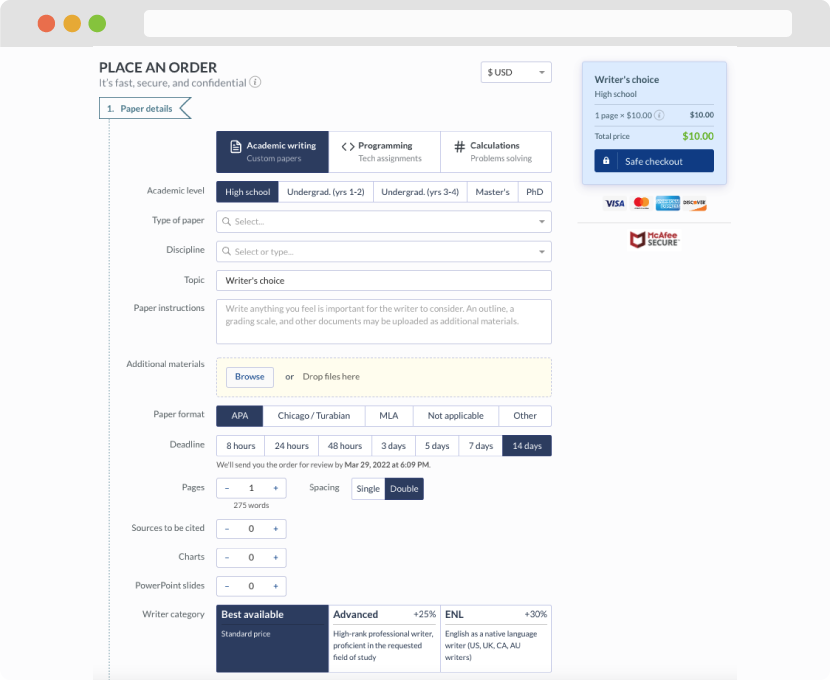
First, you will need to complete an order form. It's not difficult but, if anything is unclear, you may always chat with us so that we can guide you through it. On the order form, you will need to include some basic information concerning your order: subject, topic, number of pages, etc. We also encourage our clients to upload any relevant information or sources that will help.
Complete the order form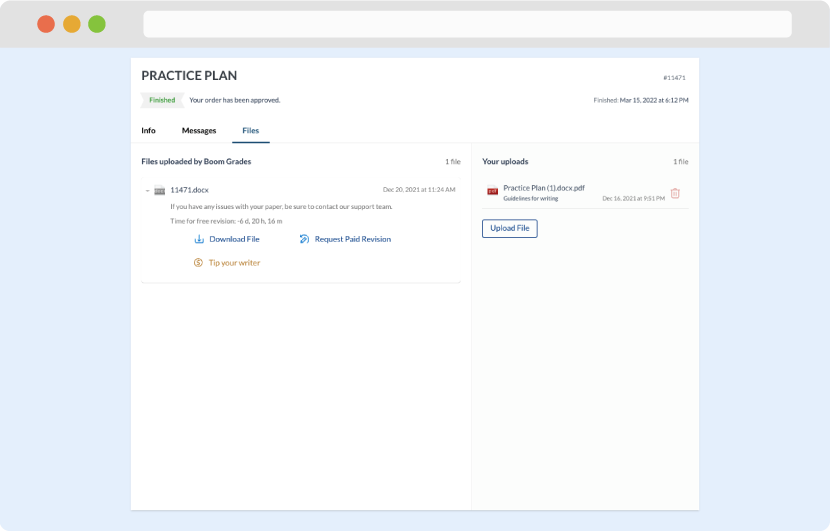
Once we have all the information and instructions that we need, we select the most suitable writer for your assignment. While everything seems to be clear, the writer, who has complete knowledge of the subject, may need clarification from you. It is at that point that you would receive a call or email from us.
Writer’s assignment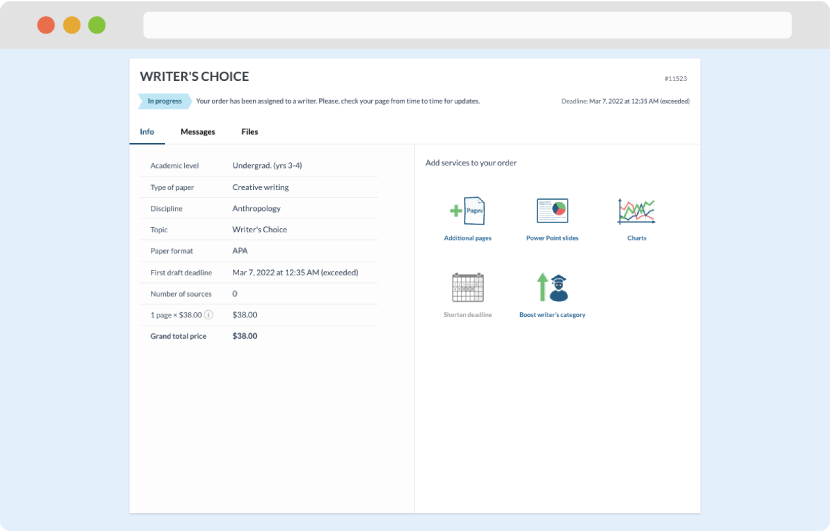
As soon as the writer has finished, it will be delivered both to the website and to your email address so that you will not miss it. If your deadline is close at hand, we will place a call to you to make sure that you receive the paper on time.
Completing the order and download