QUESTION
1
1. Jasper is a 7-year-old boy who has had flu-like symptoms for several weeks. It was mild at first, but his parents notice that he has been getting worse. They took him to his pediatrician last week, but he was sent home with suggestions to use OTC medication to treat his symptoms while his body recovered from what appeared to be a mild infection. Jasper appears weak, has lost 3-4 pounds in the last month, and has been complaining of headaches. Jasper’s parents have now brought him back to the clinic and another physician orders a CBC.
What is a CBC? In your own words, briefly describe why it is useful.
1 points
QUESTION 2
1. The physician suspects that Jasper may have leukemia. Which of the lab results most likely lead the physician to this conclusion?
|
Abnormal WBC count |
|
|
Normal RBC count |
|
|
High hemoglobin level |
|
|
High platelet count |
1 points
QUESTION 3
1. Jasper exhibits many symptoms that could relate to a diagnosis of leukemia. List and briefly explain 2 other symptoms of leukemia that are NOT mentioned in this case study.
1 points
QUESTION 4
1. Because of Jasper’s age, which type of leukemia is the most likely?
|
Acute lymphocytic leukemia |
|
Chronic lymphocytic leukemia |
|
Chronic myelogenous leukemia |
|
Hairy cell leukemia |
1 points
QUESTION 5
1. If Jasper has ALL, which of the following lab results is most likely?
|
High immature lymphocyte count |
|
Low neutrophil count |
|
Low eosinophil count |
1 points
QUESTION 6
1. What is the most common type of childhood leukemia? In your own words, briefly describe the pathophysiology of the disease.
1 points
QUESTION 7
1. Which of these tests would NOT be helpful in diagnosing leukemia?
|
Peripheral blood smear |
|
CT scan |
|
Bone marrow biopsy |
|
Bone density scan |
1 points
QUESTION 8
1. In your own words, briefly describe the difference between myelogenous and lymphocytic leukemia.
1 points
QUESTION 9
1. Which of the following is NOT a treatment option for ALL?
|
Chemotherapy |
|
Surgery |
|
Bone marrow/stem cell transplants |
|
Radiation therapy |
1 points
QUESTION 10
1. Assuming that Jasper has the most common type of childhood leukemia, what is his prognosis?
1 points
QUESTION 11
1. Elsa is an 11-month-old girl. Her parents have brought her to her pediatrician because they have noticed she seems lethargic and pale. Both parents have noticed that she appears bloated, doesn’t want to eat as much as she has before, and is tired and “cranky all the time.” They suspected she might be suffering from anemia, since she was being fed a low-iron formula, so they had switched to a high-iron formula. The change made no difference in her symptoms. The pediatrician notes that Elsa’s belly appears swollen. Her vital signs show that her temperature is normal and her heart rate is on the low end of the normal range for her age. She has dropped from the 50th percentile in height and weight (at her last check-up) to the 10th percentile in both height and weight.
Blood test results:
Hemoglobin
: 5 g/dl
RBC: 4.6×10⁶ cells/ml
MCV: 65
WBC: 18,000 cells/microliter
Platelet count: 250,000
Which of Elsa’s symptoms is NOT typical of anemia in infants?
|
Paleness |
|
Tiredness |
|
Slow heart rate |
|
Loss of appetite |
1 points
QUESTION 12
1. In your own words, briefly describe why Elsa’s parents changed her formula to the high-iron baby formula.
1 points
QUESTION 13
1. Which of her blood test results is within normal range?
| Hemoglobin |
|
Red blood cell count |
|
Mean corpuscular volume |
|
White blood cell count |
1 points
QUESTION 14
1. Elsa’s blood sampled was analyzed under a microscope and it was determined that her red blood cells were “hypochromatic” and “microcytic.” Explain, in your own words, what these terms mean.
1 points
QUESTION 15
1. Elsa’s pediatrician suspects that she has thalassemia. Which of the following statements is true of thalassemia?
|
Thrombocytes tend to “stick together” and form blood clots. |
|
Thalassemia is always caused by diet and environmental factors, not genetic makeup. |
|
Thalassemia is also known as erythroblastic anemia and involves a reduced amount of hemoglobin in the blood. |
|
Thalassemia is a type of hemophilia and is often hereditary in females. |
1 points
QUESTION 16
1. In your own words, explain why hemoglobin is important in hematology.
1 points
QUESTION 17
1. It is determined that Elsa is experiencing beta-thalassemia major. Which of the following statements is NOT true regarding this diagnosis?
|
The cause of beta-thalassemia is genetic. |
|
Beta-thalassemia major is a grave condition and has a high mortality rate. |
|
Beta-thalassemia major is often treated with blood transfusions. |
|
Because beta-thalassemia is an x-linked trait, it affects males more often than females. |
1 points
QUESTION 18
1. Because Elsa has received a confirmed diagnosis of beta-thalassemia major, which of the following statements is true about her parents?
|
Only her mother carried the gene that caused her blood disorder. |
|
Only her father carried the gene that caused her blood disorder. |
|
If her parents have another child naturally, there is a 100% chance that the second child will be diagnosed with beta-thalassemia major. |
|
If her parents have another child naturally, there is a 25% chance that the second child will be diagnosed with beta-thalassemia major. |
1 points
QUESTION 19
1. As Elsa gets older, which of the following choices is NOT a likely complication of her disorder?
|
Splenomegaly |
|
Gallstones |
|
Cirrhosis |
|
Decreased gastrointestinal iron absorption |
1 points
QUESTION 20
1. In your own words, briefly describe how thalassemia is related to Elsa’s failure to thrive.
1 points
Essay Writing Service Features
Our Experience
No matter how complex your assignment is, we can find the right professional for your specific task. Achiever Papers is an essay writing company that hires only the smartest minds to help you with your projects. Our expertise allows us to provide students with high-quality academic writing, editing & proofreading services.
Free Features
Free revision policy
$10Free bibliography & reference
$8Free title page
$8Free formatting
$8How Our Dissertation Writing Service Works
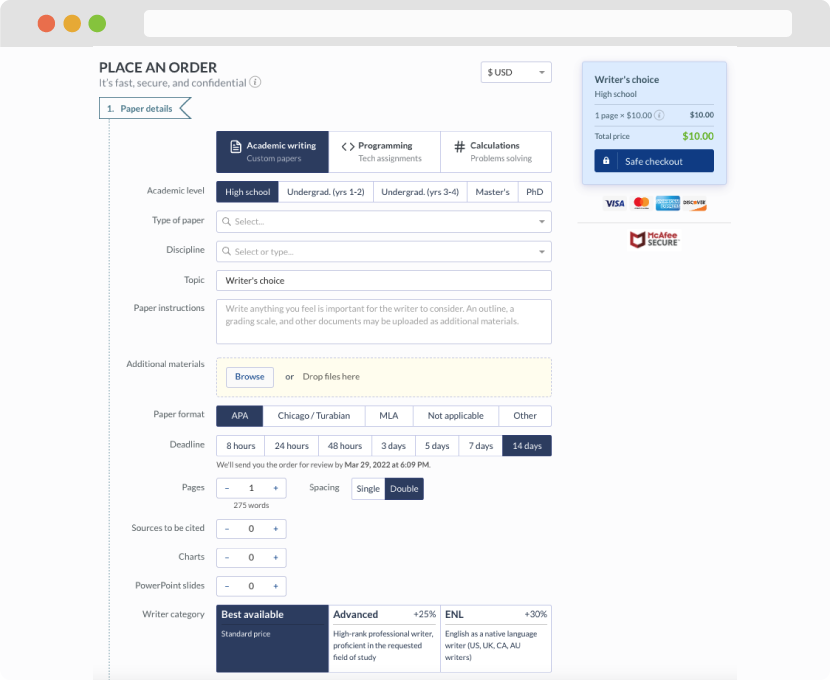
First, you will need to complete an order form. It's not difficult but, if anything is unclear, you may always chat with us so that we can guide you through it. On the order form, you will need to include some basic information concerning your order: subject, topic, number of pages, etc. We also encourage our clients to upload any relevant information or sources that will help.
Complete the order form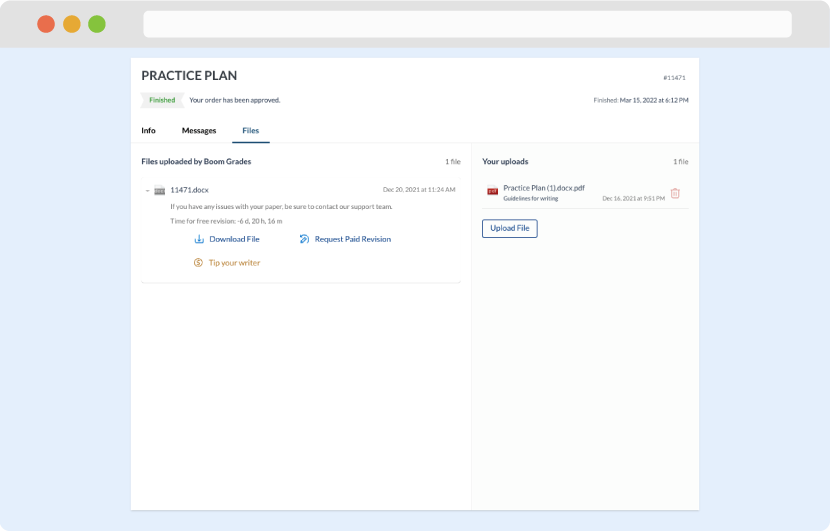
Once we have all the information and instructions that we need, we select the most suitable writer for your assignment. While everything seems to be clear, the writer, who has complete knowledge of the subject, may need clarification from you. It is at that point that you would receive a call or email from us.
Writer’s assignment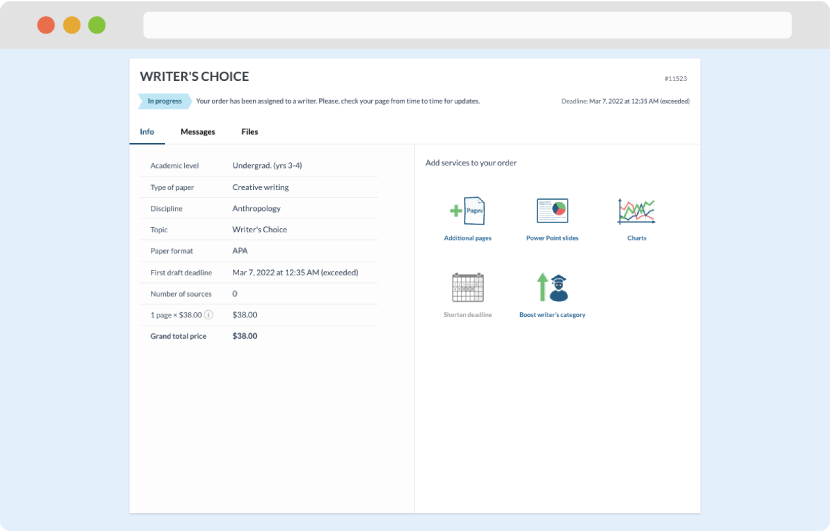
As soon as the writer has finished, it will be delivered both to the website and to your email address so that you will not miss it. If your deadline is close at hand, we will place a call to you to make sure that you receive the paper on time.
Completing the order and download