Must be cited and references included at bottom of page
MKT/574 v1
MKT/574 v1
Page 2 of 2
Strategic Marketing Plan
and
(Due in Wk 2)
Describe the company you are designing the plan for. Include:
· Mission Statement
· Vision Statement
· Product line description
· Company information, such as the size of the company
Environmental Analysis
Analyze the forces that affect the company and marketing efforts.
Analyze the company’s key competitors. You may choose to use a BCG Matrix or attribute checklist to compare your company against its competitors. Describe any strategic moves the competition has recently made. Estimate your market share. Identify key competitive advantages against your competitors.
Analyze the economic environment in the areas affecting your business. Consider differences within your industry and the economic impact on suppliers.
Analyze relevant political forces. Examples may include an election year or a law to drastically reduce or eliminate plastic waste in your county.
Analyze the legal, regulatory, and ethical issues that may affect your business. Considerations may include local laws such as a ban on the use of plastic bags, the ability to post billboards, or a possible increased regulation on direct mail.
Analyze whether your company will be affected by emerging technologies or trends in hardware and software industries
Analyze social trends and how they may affect your business. Considerations may include if your business will be affected by demographic trends, a growing dependence on computers, or whether interest in your product might be affected by growing preferences in the way things are done or changing social values.
Define the company’s current target markets. Describe the demographic, geographic, psychographic, and product usage of these targets.
Review Current Marketing
Review the company’s current marketing tactics. Consider how people find out about the product, how they get information about the product or service, what might be involved in the buying process, and what money is available for marketing. If your company is a start-up, describe your competitors’ current marketing.
SWOT Analysis
Assess your company’s strengths, weaknesses, threats, opportunities, and then evaluate how to address these in your marketing plan.
Assess your company’s competitive advantage. Consider core competencies, assets, location, practices, etc. that are distinct in the way the organization meets the needs of its customers.
Assess what limits the company may have in its current marketing strategy. Consider if there is a company weakness that needs to be addressed through Public Relations or Marketing.
Assess the opportunities you see based on trends or environmental conditions.
Assess the threats or limitations that may interfere with the company’s ability to meet its objectives or interfere with marketing plans.
Strengths to Opportunities & Converting Weaknesses and Threats
Convert weaknesses and threats to strengths, then strengths to opportunities in the marketing plan. Consider the implications for addressing supplier relationships, implementing new technologies, or changing the product line or addressing new markets.
Establish marketing objectives based on the results from the SWOT analysis. Marketing objectives must align with corporate objectives, modified by the company’s resources. Objectives should include a date for the completion of the objective and the way in which success will be measured. For example: The company will expand its marketing efforts to include a new market segment of 21- to 29-year-olds. This will entail the development of a customized product by June 2020 that will address the specific psychographic and technological needs of this age group. This strategy is expected to attain a 20% growth in overall sales by January 2020. Customer loyalty (willingness to recommend the product) will increase by 30%.
Data
Analysis
(Due in Wk 4)
Evaluate internal sources of information available to you inside the organization and what information you will receive from each source. Identify 3-6 sources of internal data. Insert or remove rows as needed.
|
Source |
What it Measures |
Data |
Potential Usage |
||||||||
|
Example: Sales data |
Monthly sales by specific product |
Average sales that month in US dollars for each of 10 products. Data can be segmented by business and consumer markets. |
Can be used for trend analysis, projections, and to measure effectiveness of promotions. |
||||||||
Evaluate secondary data sources and the specific information you need from each source. Insert or remove rows as needed.
|
Example: retail store analytics |
Dollar value of sales by quarter by major product categories |
Total sales of major players |
Market Share Analysis Seasonal patterns |
Evaluate primary data needs to create and evaluate the marketing plan. Insert or remove rows as needed.
| Data | |||
|
Example: Focus group |
Product usage, motives, identify group level satisfaction, decision process, etc. |
Qualitative |
Identify different reactions of market segments to product. Identify marketing opportunities, product/service flaws and opportunities |
Establish customer touchpoints and develop appropriate CRM events for customer acquisition, retention, and profitability. Insert or remove rows as needed.
|
CRM Touchpoint |
Purpose & CRM Objective |
Potential Data Usage |
|
|
Example: Customer profile information on website |
Starts the account for visitors: name, geography, email address (Customer acquisition) |
Presale: geographic location; customer id, source of reference Email address Post sales: address, product purchased, quantity, price. |
Track new and returning customer counts, total period purchases by customer ID, geographic sales data. Can be used for loyalty rewards, retention, and targeted marketing. |
(Due in Wk 6)
New Target Markets
Determine any new markets for your strategy and describe how you will provide value to each target market.
Marketing Mix for New Target Markets
Determine adaptions for each new target market.
· Products
· Price
· Distribution
· Traditional Promotion
· Online Promotion
Marketing Implementation
Create the implementation for your marketing plan. Describe how you will organize and implement the plan, such as whether it will be organized by market, geography, and who is responsible for marketing decisions.
Marketing Communication Channels
Evaluate the marketing communication channels you will use to reach selected audiences. Include Internet and traditional communication channels to convey key messages. Describe the advantages and disadvantages of each channel you select. Insert or remove rows as needed.
Channel
Target Market
Advantages
Disadvantages
Example: Direct mail
Middle class residential
Can include coupons
Expense and low return rate for given product
Strategic Actions
Develop specific activities required to implement the marketing plan. Identify the person or role who will be responsible for each action, when it will be complete, and what standard or metric indicate that the activity is complete. Insert or remove rows as needed.
Action
Date for Completion
Person/Role Responsible
Standard/Metric
Example: Design flyer for direct mail campaign
1/1/2021
J. Smith, graphic designer
Approval by senior marketing team and legal
Monitoring
Develop the measurement to identify how you know you have been successful for each strategic action. Specify the measures to track performance against goals. Identify standard reports from your online and traditional marketing efforts. Insert or remove rows as needed.
Action
Target
Person Responsible
Inter-measurement
Example: Direct mail flyer
1100 new inquiries
Western regional manager
500 new inquiries first month of campaign
Copyright 2020 by University of Phoenix. All rights reserved.
Copyright 2020 by University of Phoenix. All rights reserved.
Essay Writing Service Features
Our Experience
No matter how complex your assignment is, we can find the right professional for your specific task. Achiever Papers is an essay writing company that hires only the smartest minds to help you with your projects. Our expertise allows us to provide students with high-quality academic writing, editing & proofreading services.
Free Features
Free revision policy
$10Free bibliography & reference
$8Free title page
$8Free formatting
$8How Our Dissertation Writing Service Works
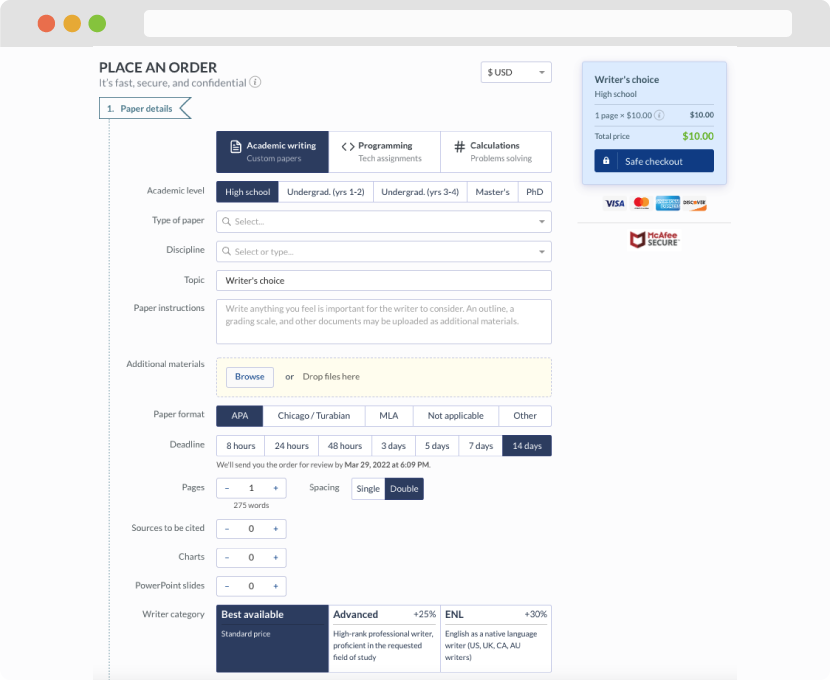
First, you will need to complete an order form. It's not difficult but, if anything is unclear, you may always chat with us so that we can guide you through it. On the order form, you will need to include some basic information concerning your order: subject, topic, number of pages, etc. We also encourage our clients to upload any relevant information or sources that will help.
Complete the order form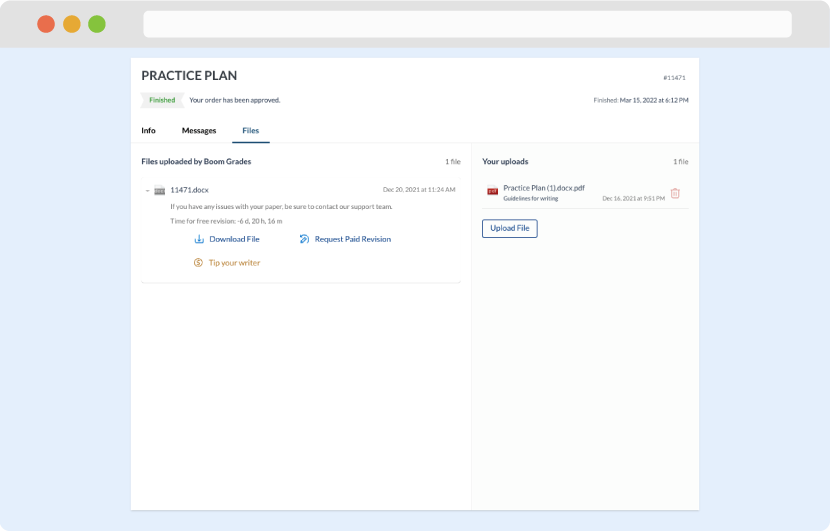
Once we have all the information and instructions that we need, we select the most suitable writer for your assignment. While everything seems to be clear, the writer, who has complete knowledge of the subject, may need clarification from you. It is at that point that you would receive a call or email from us.
Writer’s assignment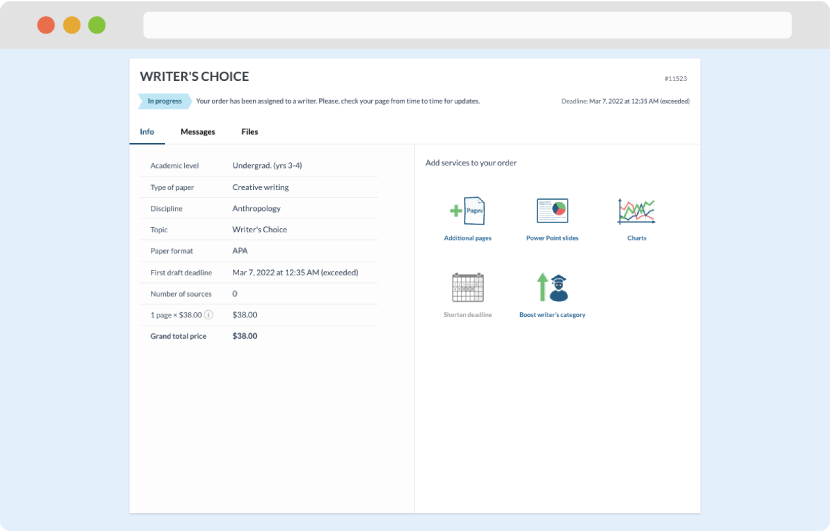
As soon as the writer has finished, it will be delivered both to the website and to your email address so that you will not miss it. If your deadline is close at hand, we will place a call to you to make sure that you receive the paper on time.
Completing the order and download