Assignment:
Evidence-Based Practice Model and Change Model
Create a PowerPoint presentation that addresses each of the following points/questions. Be sure to completely answer all the questions for each bullet point. Use clear headings that allow your professor to know which bullet you are addressing on the slides in your presentation. Support your content with at least three (3) sources using APA citations throughout your presentation. Make sure to cite the sources using the APA writing style for the presentation. Include a slide for your references at the end. Follow best practices for PowerPoint presentations related to text size, color, images, effects, wordiness, and multimedia enhancements. Review the rubric criteria for this assignment.
Part 1: Choose and explain one Evidence Based Practice Model from Chapter 13 of the textbook (Melnyk and Fineout-Overholt, 2015). Then, related to your research topic from Mod 1, describe in detail how you would utilize the model to implement an evidence-based practice change in your personal clinical practice environment. Models to choose from include: Stetler Model of EBP, Iowa Model of EBP, A Model for EBP Change, ARCC Model, PARIHS, Clinical Scholar Model, John Hopkins Nursing EBP, ACE Star Model of Knowledge Transformation
Part 2: Choose one Change Model/Theory from Chapter 14 of the textbook (Melnyk and Fineout-Overholt, 2015). Then, related to your research topic from Mod 1, describe in detail how you would utilize the model/theory to implement an evidence-based practice change in your personal clinical practice environment. Models/theories to choose from include: Change Curve, Kotter and Cohen’s, Roger’s Theory of Diffusion of Innovations, The Transtheoretical Module of Health Behavioral Change
Assignment Expectations:
Length: 9-13 slides
Structure: Include a title slide, objective slide, content slides, reference slide in APA format. Title/Objective/Reference slides do not count towards the minimum slide count for this assignment.
References: Use appropriate APA style in-text citations and references for all resources utilized to answer the questions. A minimum of three (3) scholarly sources are required for this assignment.
Copyright © 2011 Wolters Kluwer Health | Lippincott Williams & Wilkins
Chapter 13
Models to Guide Implementation and Sustainability of Evidence-Based Practice
*
Copyright © 2015 Wolters Kluwer • All Rights Reserved
Components That Need to Be Considered in the Clinical Decision-Making Model of EBP
Patient preferences and behaviors
Clinical state, setting, and circumstances
Availability of healthcare resources
High-quality research evidence
*
Copyright © 2015 Wolters Kluwer • All Rights Reserved
Factors That Are Impacted by the Practitioner’s Clinical Expertise
Quality of the initial assessment of the client’s clinical state and circumstances
Problem formulation
Decision about whether the best evidence and availability of healthcare resources support a new approach
Exploration of patient preferences
Delivery of the clinical intervention
Evaluation of the outcome for that particular patient
*
Copyright © 2015 Wolters Kluwer • All Rights Reserved
Commonalities Found in Models Used for Implementation of EBP
Identifying a problem that needs addressing
Identifying stakeholders or change agents who will help make the change happen in practice
Identifying a practice change shown to be effective through high-quality research that is designed to address the problem
Identifying and, if possible, addressing the potential barriers to the practice change
*
Copyright © 2015 Wolters Kluwer • All Rights Reserved
Commonalities Found in Models Used for Implementation of EBP—(cont.)
Using effective strategies to disseminate information about the practice change to those implementing it
Implementing the practice change
Evaluating the impact of the practice change on structure, process, and outcome measures
Identifying activities that will help sustain the change in practice
*
Copyright © 2015 Wolters Kluwer • All Rights Reserved
Commonly Used Models That Facilitate Integration of Evidence Into Practice
The Stetler Model of Evidence-Based Practice
The Iowa Model of Evidence-Based Practice to promote quality care
The Model for Evidence-Based Practice Change
The Advancing Research and Clinical practice through close Collaboration (ARCC) model for implementation and sustainability of EBP
*
Copyright © 2015 Wolters Kluwer • All Rights Reserved
Commonly Used Models That Facilitate Integration of Evidence Into Practice— (cont.)
The Promoting Action on Research Implementation in Health Services (PARIHS) framework
The Clinical Scholar model
The Johns Hopkins Nursing Evidence-Based Practice model
The ACE Star Model of Knowledge Transformation
*
Copyright © 2015 Wolters Kluwer • All Rights Reserved
Fives Phases of the Stetler Model of EBP
Preparation: Identifying the purpose, context, and sources of evidence
Validation: Assessing the credibility of the evidence and its statistical and clinical significance
Comparative evaluation/decision making: Synthesizing evidence and making decisions/recommendations for use
Translation/application: Developing plan for implementation and measurement of processes/outcomes
Evaluation: Evaluation of processes and outcomes
*
Copyright © 2015 Wolters Kluwer • All Rights Reserved
The Iowa Model of EBP
Identifying problem- and knowledge-focused triggers
Determining whether the issue is an organizational priority
Forming a team
Selecting, reviewing, critiquing, and synthesizing available research evidence
Piloting the practice change
Evaluating the pilot and dissemination of results
Depending on pilot results, rollout and integration of the practice are facilitated with periodic evaluation
*
Copyright © 2015 Wolters Kluwer • All Rights Reserved
Steps in the Model for Evidence-Based Practice Change (Larrabee, 2009; Rosswurm & Larrabee, 1999)
Assess the need for change in practice: Stakeholders collect internal data and compare with external evidence/benchmarks to identify problems and link them with interventions and outcomes
Locate the best evidence: Determine the types and sources of evidence; plan and conduct the search
Critically analyze the evidence: Appraise, weigh, and synthesize evidence; assess feasibility, benefits, and risks
Design practice change: Define proposed change and resources needed; design pilot implementation and its evaluation
*
Copyright © 2015 Wolters Kluwer • All Rights Reserved
Steps in the Model for Evidence-Based Practice Change (Larrabee, 2009; Rosswurm & Larrabee, 1999)—(cont.)
Implement and evaluate change in practice: Implement pilot; evaluate processes, costs, and outcomes; develop conclusions and recommendations
Integrate and maintain change in practice: Communicate pilot results to stakeholders and make recommendations; integrate change into practice; routinely monitor process and outcomes; disseminate monitoring results and celebrate successes
*
Copyright © 2015 Wolters Kluwer • All Rights Reserved
The Advancing Research and Clinical Practice Through Close Collaboration Model (ARCC© Model)
Provides healthcare institutions and clinical settings with an organized conceptual framework that can guide system-wide implementation and sustainability of EBP to achieve quality outcomes
Model is a product of nurse input about barriers and facilitators of EBP, control theory (Carver & Scheier, 1982, 1998), and cognitive behavioral theory (Beck, Rush, Shaw, & Emery, 1979)
Use of mentors is a central mechanism for implementing and sustaining EBP
*
Copyright © 2015 Wolters Kluwer • All Rights Reserved
Control Theory as a Conceptual Guide for the ARCC Model
*
Copyright © 2015 Wolters Kluwer • All Rights Reserved
The ARCC Model
*
Copyright © 2015 Wolters Kluwer • All Rights Reserved
Promoting Action on Research Implementation in Health Services Framework (PARIHS) Framework
Framework is based on the formula:
SI = f(E,C,F)
where SI represents successful implementation; f, function of; E, evidence; C, context; and F, facilitation
The three elements (i.e., evidence, context, and facilitation) are each conceptualized on a high-to-low continuum; the focus is to move the elements in the formula toward “high” in order to optimize the chances of success
*
Copyright © 2015 Wolters Kluwer • All Rights Reserved
The PARIHS Framework—(cont.)
The three PARIHS elements and their subelements:
Evidence: Propositional and nonpropositional knowledge from the subelements of research, clinical experience, patient experience, and local data/information
Context: The environment in which the proposed change is to be implemented. Subelements include culture, leadership, and evaluation.
Facilitation: The process of enabling or making easier the implementation of evidence into practice. Subelements include role, skills, and attributes.
*
Copyright © 2015 Wolters Kluwer • All Rights Reserved
The Clinical Scholar (CS) Model
Developed to promote the spirit of inquiry, educate direct care providers, and guide a mentorship program for EBP and the conduct of research at the point of care
Clinical scholars are described as individuals with a high degree of curiosity that possess advanced critical thinking skills and continuously seek new knowledge through learning opportunities
Clinical scholar mentors play a central role in the model
The Clinical Scholar Program was developed to actualize the Clinical Scholar Model
*
Copyright © 2015 Wolters Kluwer • All Rights Reserved
The Clinical Scholar (CS) Model—(cont.)
Four central goals of the model include that the CS should be able to:
Challenge current direct care practices
Speak and understand research language, making day-to-day dialog about new research findings a common occurrence
Critique and synthesize current research as the core of evidence
Serve as mentors to other staff and to teams who question their clinical practices and seek to improve clinical outcomes
*
Copyright © 2015 Wolters Kluwer • All Rights Reserved
The Johns Hopkins Nursing Evidence- Based Practice (JHNEBP) Model
Facilitates bedside nurses in translating evidence to clinical, administrative, and educational nursing practice
Sets a goal of building a culture of nursing practice based on evidence
Aims to demystify the EBP process for bedside nurses and embed EBP into the fabric of nursing practice
Desired outcomes include enhancing nurse autonomy, leadership, and engagement with interdisciplinary colleagues
*
Copyright © 2015 Wolters Kluwer • All Rights Reserved
The JHNEBP Conceptual Model
(From Dearholt, S. L., & Dang, D. (2012). Johns Hopkins nursing evidence-based practice model and guidelines (2nd ed.). Indianapolis, IN: Sigma Theta Tau International. Used with permission.)
*
Copyright © 2015 Wolters Kluwer • All Rights Reserved
The JHNEBP Process for EBP:
The PET Process
Practice question: Identify an EBP question and define its scope; leadership responsibility assigned and interdisciplinary stakeholders recruited for team; team meetings scheduled
Evidence: Internal and external evidence search conducted; evidence critiqued, summarized, and rated; recommendations developed depending on the evidence strength and need for change
Translation: Determine appropriateness of recommendation in specific settings; develop action and evaluation plan; implement plan; evaluate and report outcomes; secure support for widespread change; identify next steps
*
Copyright © 2015 Wolters Kluwer • All Rights Reserved
The ACE Star Model
Development of the ACE Star Model was prompted through the work of the Academic Center for Evidence-Based Practice (ACE) at the University of Texas Health Science Center San Antonio during the early phases of the EBP movement in the United States
The ACE Star Model explains how to overcome the challenges of the volume of research evidence; the misfit between form and use of knowledge; and integration of expertise and patient preference into best practice
The ACE Star Model is a model of knowledge transformation, to which quality improvement of healthcare processes and outcomes is the goal
*
Copyright © 2015 Wolters Kluwer • All Rights Reserved
The ACE Star Model—(cont.)
(© Stevens, 2004. Reprinted with expressed permission.)
*
Copyright © 2015 Wolters Kluwer • All Rights Reserved
The ACE Star Model—(cont.)
Star Point 1: Discovery—represents conduction of primary research studies
Star Point 2: Evidence summary—represents the synthesis of all available knowledge compiled into a single harmonious statement/document, such as a systematic review
Star Point 3: Translation into action—combining the existing evidential base with expertise to extend recommendations into evidence-based clinical practice guidelines
*
Copyright © 2015 Wolters Kluwer • All Rights Reserved
The ACE Star Model—(cont.)
Star Point 4: Integration into practice—practice is aligned to reflect the best evidence
Star Point 5: Evaluation—an inclusive view of the impact that the evidence-based practice has on patient health outcomes, satisfaction, efficacy and efficiency of care, and health policy
*
Copyright © 2015 Wolters Kluwer • All Rights Reserved
Question
The use of EBP mentors is a major component of which model for evidence-based practice change?
The Model for Evidence-Based Practice Change
The ARCC© model
The Stetler model
The Iowa model
*
Copyright © 2015 Wolters Kluwer • All Rights Reserved
Answer
b. The ARCC© model
Rationale: The ARCC model is the only model of those listed that considers the lack of EBP mentors to be a major barrier to the implementation of EBP and uses training of a cadre of EBP mentors as a step in implementing the model.
*
Copyright © 2015 Wolters Kluwer • All Rights Reserved
Question
Is the following statement true or false?
Both the Model for Evidence-Based Practice Change and the Iowa model include the use of a small-scale pilot study during the process of introducing an evidence-based change in practice.
*
Copyright © 2015 Wolters Kluwer • All Rights Reserved
Answer
True
Rationale: Pilot studies are explicit components of both the Model for Evidence-Based Practice Change and the Iowa model.
*
Copyright © 2015 Wolters Kluwer • All Rights Reserved
Question
Feedback loops are a central component of which of the following models for evidence-based practice change?
The Model for Evidence-Based Practice Change
The Clinical Scholar model
The ARCC model
The Iowa model
*
Copyright © 2015 Wolters Kluwer • All Rights Reserved
Answer
d. The Iowa model
Rationale: The Iowa model includes multiple feedback loops that refer the user back to earlier points in the process. This is not a central feature of the Model for Evidence-Based Practice Change, the Clinical Scholar model, or the ARCC model.
*
*
*
*
*
*
*
*
*
*
*
*
*
*
*
*
*
*
*
*
*
*
*
*
*
*
*
*
*
*
*
*
Copyright © 2011 Wolters Kluwer Health | Lippincott Williams & Wilkins
Chapter 14
Creating a Vision and Motivating a Change to Evidence-Based Practice in Individuals, Teams, and Organizations
*
Copyright © 2015 Wolters Kluwer • All Rights Reserved
Implementing EBP
Among the most important elements that need to be present for change to be accomplished successfully are:
1. Vision: Developing a clear and exciting vision of what is to be accomplished can unify stakeholders
2. Belief: Belief that the change to EBP is beneficial can lead to behavior change and foster the ability to successfully make the change
*
Copyright © 2015 Wolters Kluwer • All Rights Reserved
Implementing EBP—(cont.)
3. Strategic planning: Goals are established with deadline dates; a well-defined strategic plan is written. Use of a SCOT (Strengths, Challenges, Opportunities, and Threats) analysis will assist in the planning process:
Assess and identify system Strengths that will facilitate the success of a new project
Assess and identify Challenges that may hinder the initiative
Outline the Opportunities for success
Delineate the Threats to project completion, with strategies to overcome them
*
Copyright © 2015 Wolters Kluwer • All Rights Reserved
Implementing EBP—(cont.)
4. Action: Putting the strategic plan with its actionable objectives into motion
5. Persistence: Continuing to move forward despite of unforeseen barriers; being nimble and open to revising approaches to allow continued progress
6. Patience: Allows for continued progress even when results of actions are not yet seen
*
Copyright © 2015 Wolters Kluwer • All Rights Reserved
Organizational Change Models: Basic Assumptions of the Change Curve Model
Changing an organization is a highly emotional process
Group change requires individual change
No fundamental change takes place without strong leadership
The leader must be willing to change before others are expected to change
The larger and more drastic the change, the more difficult the change
The greater the number of individuals involved, the tougher the change will be to make (Duck, 2002)
*
Copyright © 2015 Wolters Kluwer • All Rights Reserved
Organizational Change Models: Stages of the Change Curve Model
Stage I: Stagnation: Characteristics include lack of effective leadership, failed initiatives, and too few resources; depression occurs and/or hyperactivity exists; individuals may feel stressed and exhausted
Stage II: Preparation: Emotional climate is anxiety mixed with hopefulness; possibly reduced productivity; buy-in is essential; opportunity exists of getting people excited, but may fail if preparation is too long or too short
*
Copyright © 2015 Wolters Kluwer • All Rights Reserved
Organizational Change Models: Stages of the Change Curve Model—(cont.)
Stage III: Implementation: Individuals must see “what is in it for me?”; it is essential to assess readiness for change and increase confidence in making the change
Stage IV: Determination: The highest chance of failure is in this stage; if results are not as expected, change fatigue may set in if determination to see the change through is not firm; highlighting small successes is crucial
Stage V: Fruition: Positive outcomes are seen; reward and celebration for effort is important; danger in this stage is that organization reverts back to complacency and begins stagnation
*
Copyright © 2015 Wolters Kluwer • All Rights Reserved
Organizational Change Models: Kotter and Cohen’s Model of Change
Step 1: Create a sense of urgency: Create the emotional feeling that “we need to move NOW,” which is especially important when individuals are complacent
Step 2: Form a team: Select members who possess the needed knowledge and skills, the respect and trust of others, and enthusiasm and commitment; opinion leaders are particularly important
Step 3: Vision and strategy: Create a clear vision and workable strategy with reasonable timeline
*
Copyright © 2015 Wolters Kluwer • All Rights Reserved
Organizational Change Models: Kotter and Cohen’s Model of Change—(cont.)
Step 4: Communicating the vision: Communicate the vision and strategies with “heartfelt messages” that appeal to the emotions, which will motivate change; repeating the message will make the strategies clearer
Step 5: Empowerment: Remove barriers that inhibit successful change
Step 6: Interim successes: Establish short-term successes to celebrate
*
Copyright © 2015 Wolters Kluwer • All Rights Reserved
Organizational Change Models: Kotter and Cohen’s Model of Change—(cont.)
Step 7: Ongoing persistence: Cultivate ongoing persistence; giving up too early will doom the project
Step 8: Nourishment: Encourage and feed the new culture to make the change permanent through celebration and planting meaningful infrastructures
*
Copyright © 2015 Wolters Kluwer • All Rights Reserved
Organizational Change Models: Roger’s Theory of Diffusion of Innovations
*
Copyright © 2015 Wolters Kluwer • All Rights Reserved
Organizational Change Models: The Transtheoretical Model of Health Behavior Change
Originally conceptualized to explain the process of changes in health behaviors, but also is applicable to organizational change
Stages:
Precontemplation: The individual is not intending to take action in the next 6 months (40% of an organization)
Contemplation: The individual is intending to take action within the next 6 months (40% of an organization)
Preparation: The individual plans to take action in the next 30 days (20% of organization)
*
Copyright © 2015 Wolters Kluwer • All Rights Reserved
Organizational Change Models: The Transtheoretical Model of Health Behavior Change—(cont.)
Stages—(cont.):
Action: Overt changes were made less than 6 months ago
Maintenance: Overt changes were made more than 6 months ago
By matching intervention strategies to the stage in which individuals are currently engaged, the model proposes that resistance, stress, and the time needed to implement the change will diminish
*
Copyright © 2015 Wolters Kluwer • All Rights Reserved
Strategies to Overcome Barriers to Implementing EBP
Allow individuals to express their skepticism, fears, and anxieties in order to clarify misconceptions
Educate clinicians about EBP in a way that appeals to their emotions; this enhances their beliefs about their ability to implement it
Know the personality types of the individuals involved
Produce a written strategic plan
Develop SMART (i.e., Specific, Measurable, Attainable, Relevant, and Time bound) goals to be achieved
*
Copyright © 2015 Wolters Kluwer • All Rights Reserved
Strategies to Overcome Barriers to Implementing EBP—(cont.)
Communicate the plan clearly and often; use several media modes (e.g., written, visual/graphic, and video) if possible
Acknowledge that the team-building process is dynamic and requires creativity and flexibility
Match organizational resources and administrative support closely to the diffusion of EBP
Enlist leaders and managers early in the change
Create a critical mass of EBP adopters within leadership and individual clinicians to sustain the change
*
Copyright © 2015 Wolters Kluwer • All Rights Reserved
“Knowing and Working with Personality Types”: Rohm’s Taxonomy (the DISC Model)
Type Characteristics Strategy
Drivers Like to take charge and are highly task oriented Give them opportunities to lead specific tasks
Inspired Are socially oriented and like to have fun Show them that the change can be fun and exciting; have them assist in celebrations of success
*
Copyright © 2015 Wolters Kluwer • All Rights Reserved
“Knowing and Working with Personality Types”: Rohm’s Taxonomy (the DISC Model)—(cont.)
Type Characteristics Strategy
Supportive and steady Typically reserved and like to be led Emphasize that they are important to the project, but do not have to lead
Contemplators Very analytical and detail oriented Show them all of the details; consider giving them a leadership role in tracking processes and outcomes
*
Copyright © 2015 Wolters Kluwer • All Rights Reserved
Stages of Team Formation
Stage Stage Characteristics
Forming Anxiety, excitement, testing, dependence, exploration, and trust
Storming Resistance to different approaches; competitiveness and defensiveness; tension and disunity
Norming Trust and respect develops; satisfaction increases; feedback is provided to others; responsibilities are shared; decisions are made
Performing Level of interaction is high; performance increases; team members are comfortable with one another; there is optimism and confidence
*
Copyright © 2015 Wolters Kluwer • All Rights Reserved
Question
According to Roger’s theory of diffusion of innovation, the minimum percentage (critical mass) of people who “adopt” to the change that would signal that a change has begun to take hold is:
a. 5%
b. 15%
c. 40%
d. 60%
*
Copyright © 2015 Wolters Kluwer • All Rights Reserved
Answer
b. 15%
Rationale: According to the theory, there needs to be a critical mass of 15% to 20% of a combination of innovators, early adopters, and early majority before it can be assumed that an innovative change really begins to take hold.
*
Copyright © 2015 Wolters Kluwer • All Rights Reserved
Question
What model of organizational change would be most likely to give priority to changing nurses’ feelings about EBP over presenting them with new information?
The transtheoretical model of health behavior change
The Change Curve model
Diffusion of innovations model
Kotter and Cohen’s model of change
*
Copyright © 2015 Wolters Kluwer • All Rights Reserved
Answer
d. Kotter and Cohen’s model of change
Rationale: Kotter and Cohen propose that the key to organizational change lies in helping people to feel differently (i.e., appealing to their emotions). They assert that individuals change their behavior less when they are given facts or analyses than when they are shown evidence that influences their feelings.
*
Copyright © 2015 Wolters Kluwer • All Rights Reserved
Question
According to Rohm’s taxonomy (the DISC model), individuals with which of the following personality styles are most likely to be comfortable in a leadership role?
Driver
Inspired
Supportive and steady
Contemplator
*
Copyright © 2015 Wolters Kluwer • All Rights Reserved
Answer
a. Driver
Individuals with “D” (Driver) personality styles like to take charge of projects and are highly task oriented, making them well suited to positions of leadership
*
*
*
*
*
*
*
*
*
*
*
*
*
*
*
*
*
*
*
*
*
*
*
*
*
Copyright © 2011 Wolters Kluwer Health | Lippincott Williams & Wilkins
Chapter 13
Models to Guide Implementation and Sustainability of Evidence-Based Practice
*
Copyright © 2015 Wolters Kluwer • All Rights Reserved
Components That Need to Be Considered in the Clinical Decision-Making Model of EBP
Patient preferences and behaviors
Clinical state, setting, and circumstances
Availability of healthcare resources
High-quality research evidence
*
Copyright © 2015 Wolters Kluwer • All Rights Reserved
Factors That Are Impacted by the Practitioner’s Clinical Expertise
Quality of the initial assessment of the client’s clinical state and circumstances
Problem formulation
Decision about whether the best evidence and availability of healthcare resources support a new approach
Exploration of patient preferences
Delivery of the clinical intervention
Evaluation of the outcome for that particular patient
*
Copyright © 2015 Wolters Kluwer • All Rights Reserved
Commonalities Found in Models Used for Implementation of EBP
Identifying a problem that needs addressing
Identifying stakeholders or change agents who will help make the change happen in practice
Identifying a practice change shown to be effective through high-quality research that is designed to address the problem
Identifying and, if possible, addressing the potential barriers to the practice change
*
Copyright © 2015 Wolters Kluwer • All Rights Reserved
Commonalities Found in Models Used for Implementation of EBP—(cont.)
Using effective strategies to disseminate information about the practice change to those implementing it
Implementing the practice change
Evaluating the impact of the practice change on structure, process, and outcome measures
Identifying activities that will help sustain the change in practice
*
Copyright © 2015 Wolters Kluwer • All Rights Reserved
Commonly Used Models That Facilitate Integration of Evidence Into Practice
The Stetler Model of Evidence-Based Practice
The Iowa Model of Evidence-Based Practice to promote quality care
The Model for Evidence-Based Practice Change
The Advancing Research and Clinical practice through close Collaboration (ARCC) model for implementation and sustainability of EBP
*
Copyright © 2015 Wolters Kluwer • All Rights Reserved
Commonly Used Models That Facilitate Integration of Evidence Into Practice— (cont.)
The Promoting Action on Research Implementation in Health Services (PARIHS) framework
The Clinical Scholar model
The Johns Hopkins Nursing Evidence-Based Practice model
The ACE Star Model of Knowledge Transformation
*
Copyright © 2015 Wolters Kluwer • All Rights Reserved
Fives Phases of the Stetler Model of EBP
Preparation: Identifying the purpose, context, and sources of evidence
Validation: Assessing the credibility of the evidence and its statistical and clinical significance
Comparative evaluation/decision making: Synthesizing evidence and making decisions/recommendations for use
Translation/application: Developing plan for implementation and measurement of processes/outcomes
Evaluation: Evaluation of processes and outcomes
*
Copyright © 2015 Wolters Kluwer • All Rights Reserved
The Iowa Model of EBP
Identifying problem- and knowledge-focused triggers
Determining whether the issue is an organizational priority
Forming a team
Selecting, reviewing, critiquing, and synthesizing available research evidence
Piloting the practice change
Evaluating the pilot and dissemination of results
Depending on pilot results, rollout and integration of the practice are facilitated with periodic evaluation
*
Copyright © 2015 Wolters Kluwer • All Rights Reserved
Steps in the Model for Evidence-Based Practice Change (Larrabee, 2009; Rosswurm & Larrabee, 1999)
Assess the need for change in practice: Stakeholders collect internal data and compare with external evidence/benchmarks to identify problems and link them with interventions and outcomes
Locate the best evidence: Determine the types and sources of evidence; plan and conduct the search
Critically analyze the evidence: Appraise, weigh, and synthesize evidence; assess feasibility, benefits, and risks
Design practice change: Define proposed change and resources needed; design pilot implementation and its evaluation
*
Copyright © 2015 Wolters Kluwer • All Rights Reserved
Steps in the Model for Evidence-Based Practice Change (Larrabee, 2009; Rosswurm & Larrabee, 1999)—(cont.)
Implement and evaluate change in practice: Implement pilot; evaluate processes, costs, and outcomes; develop conclusions and recommendations
Integrate and maintain change in practice: Communicate pilot results to stakeholders and make recommendations; integrate change into practice; routinely monitor process and outcomes; disseminate monitoring results and celebrate successes
*
Copyright © 2015 Wolters Kluwer • All Rights Reserved
The Advancing Research and Clinical Practice Through Close Collaboration Model (ARCC© Model)
Provides healthcare institutions and clinical settings with an organized conceptual framework that can guide system-wide implementation and sustainability of EBP to achieve quality outcomes
Model is a product of nurse input about barriers and facilitators of EBP, control theory (Carver & Scheier, 1982, 1998), and cognitive behavioral theory (Beck, Rush, Shaw, & Emery, 1979)
Use of mentors is a central mechanism for implementing and sustaining EBP
*
Copyright © 2015 Wolters Kluwer • All Rights Reserved
Control Theory as a Conceptual Guide for the ARCC Model
*
Copyright © 2015 Wolters Kluwer • All Rights Reserved
The ARCC Model
*
Copyright © 2015 Wolters Kluwer • All Rights Reserved
Promoting Action on Research Implementation in Health Services Framework (PARIHS) Framework
Framework is based on the formula:
SI = f(E,C,F)
where SI represents successful implementation; f, function of; E, evidence; C, context; and F, facilitation
The three elements (i.e., evidence, context, and facilitation) are each conceptualized on a high-to-low continuum; the focus is to move the elements in the formula toward “high” in order to optimize the chances of success
*
Copyright © 2015 Wolters Kluwer • All Rights Reserved
The PARIHS Framework—(cont.)
The three PARIHS elements and their subelements:
Evidence: Propositional and nonpropositional knowledge from the subelements of research, clinical experience, patient experience, and local data/information
Context: The environment in which the proposed change is to be implemented. Subelements include culture, leadership, and evaluation.
Facilitation: The process of enabling or making easier the implementation of evidence into practice. Subelements include role, skills, and attributes.
*
Copyright © 2015 Wolters Kluwer • All Rights Reserved
The Clinical Scholar (CS) Model
Developed to promote the spirit of inquiry, educate direct care providers, and guide a mentorship program for EBP and the conduct of research at the point of care
Clinical scholars are described as individuals with a high degree of curiosity that possess advanced critical thinking skills and continuously seek new knowledge through learning opportunities
Clinical scholar mentors play a central role in the model
The Clinical Scholar Program was developed to actualize the Clinical Scholar Model
*
Copyright © 2015 Wolters Kluwer • All Rights Reserved
The Clinical Scholar (CS) Model—(cont.)
Four central goals of the model include that the CS should be able to:
Challenge current direct care practices
Speak and understand research language, making day-to-day dialog about new research findings a common occurrence
Critique and synthesize current research as the core of evidence
Serve as mentors to other staff and to teams who question their clinical practices and seek to improve clinical outcomes
*
Copyright © 2015 Wolters Kluwer • All Rights Reserved
The Johns Hopkins Nursing Evidence- Based Practice (JHNEBP) Model
Facilitates bedside nurses in translating evidence to clinical, administrative, and educational nursing practice
Sets a goal of building a culture of nursing practice based on evidence
Aims to demystify the EBP process for bedside nurses and embed EBP into the fabric of nursing practice
Desired outcomes include enhancing nurse autonomy, leadership, and engagement with interdisciplinary colleagues
*
Copyright © 2015 Wolters Kluwer • All Rights Reserved
The JHNEBP Conceptual Model
(From Dearholt, S. L., & Dang, D. (2012). Johns Hopkins nursing evidence-based practice model and guidelines (2nd ed.). Indianapolis, IN: Sigma Theta Tau International. Used with permission.)
*
Copyright © 2015 Wolters Kluwer • All Rights Reserved
The JHNEBP Process for EBP:
The PET Process
Practice question: Identify an EBP question and define its scope; leadership responsibility assigned and interdisciplinary stakeholders recruited for team; team meetings scheduled
Evidence: Internal and external evidence search conducted; evidence critiqued, summarized, and rated; recommendations developed depending on the evidence strength and need for change
Translation: Determine appropriateness of recommendation in specific settings; develop action and evaluation plan; implement plan; evaluate and report outcomes; secure support for widespread change; identify next steps
*
Copyright © 2015 Wolters Kluwer • All Rights Reserved
The ACE Star Model
Development of the ACE Star Model was prompted through the work of the Academic Center for Evidence-Based Practice (ACE) at the University of Texas Health Science Center San Antonio during the early phases of the EBP movement in the United States
The ACE Star Model explains how to overcome the challenges of the volume of research evidence; the misfit between form and use of knowledge; and integration of expertise and patient preference into best practice
The ACE Star Model is a model of knowledge transformation, to which quality improvement of healthcare processes and outcomes is the goal
*
Copyright © 2015 Wolters Kluwer • All Rights Reserved
The ACE Star Model—(cont.)
(© Stevens, 2004. Reprinted with expressed permission.)
*
Copyright © 2015 Wolters Kluwer • All Rights Reserved
The ACE Star Model—(cont.)
Star Point 1: Discovery—represents conduction of primary research studies
Star Point 2: Evidence summary—represents the synthesis of all available knowledge compiled into a single harmonious statement/document, such as a systematic review
Star Point 3: Translation into action—combining the existing evidential base with expertise to extend recommendations into evidence-based clinical practice guidelines
*
Copyright © 2015 Wolters Kluwer • All Rights Reserved
The ACE Star Model—(cont.)
Star Point 4: Integration into practice—practice is aligned to reflect the best evidence
Star Point 5: Evaluation—an inclusive view of the impact that the evidence-based practice has on patient health outcomes, satisfaction, efficacy and efficiency of care, and health policy
*
Copyright © 2015 Wolters Kluwer • All Rights Reserved
Question
The use of EBP mentors is a major component of which model for evidence-based practice change?
The Model for Evidence-Based Practice Change
The ARCC© model
The Stetler model
The Iowa model
*
Copyright © 2015 Wolters Kluwer • All Rights Reserved
Answer
b. The ARCC© model
Rationale: The ARCC model is the only model of those listed that considers the lack of EBP mentors to be a major barrier to the implementation of EBP and uses training of a cadre of EBP mentors as a step in implementing the model.
*
Copyright © 2015 Wolters Kluwer • All Rights Reserved
Question
Is the following statement true or false?
Both the Model for Evidence-Based Practice Change and the Iowa model include the use of a small-scale pilot study during the process of introducing an evidence-based change in practice.
*
Copyright © 2015 Wolters Kluwer • All Rights Reserved
Answer
True
Rationale: Pilot studies are explicit components of both the Model for Evidence-Based Practice Change and the Iowa model.
*
Copyright © 2015 Wolters Kluwer • All Rights Reserved
Question
Feedback loops are a central component of which of the following models for evidence-based practice change?
The Model for Evidence-Based Practice Change
The Clinical Scholar model
The ARCC model
The Iowa model
*
Copyright © 2015 Wolters Kluwer • All Rights Reserved
Answer
d. The Iowa model
Rationale: The Iowa model includes multiple feedback loops that refer the user back to earlier points in the process. This is not a central feature of the Model for Evidence-Based Practice Change, the Clinical Scholar model, or the ARCC model.
*
*
*
*
*
*
*
*
*
*
*
*
*
*
*
*
*
*
*
*
*
*
*
*
*
*
*
*
*
*
*
*
Copyright © 2011 Wolters Kluwer Health | Lippincott Williams & Wilkins
Chapter 14
Creating a Vision and Motivating a Change to Evidence-Based Practice in Individuals, Teams, and Organizations
*
Copyright © 2015 Wolters Kluwer • All Rights Reserved
Implementing EBP
Among the most important elements that need to be present for change to be accomplished successfully are:
1. Vision: Developing a clear and exciting vision of what is to be accomplished can unify stakeholders
2. Belief: Belief that the change to EBP is beneficial can lead to behavior change and foster the ability to successfully make the change
*
Copyright © 2015 Wolters Kluwer • All Rights Reserved
Implementing EBP—(cont.)
3. Strategic planning: Goals are established with deadline dates; a well-defined strategic plan is written. Use of a SCOT (Strengths, Challenges, Opportunities, and Threats) analysis will assist in the planning process:
Assess and identify system Strengths that will facilitate the success of a new project
Assess and identify Challenges that may hinder the initiative
Outline the Opportunities for success
Delineate the Threats to project completion, with strategies to overcome them
*
Copyright © 2015 Wolters Kluwer • All Rights Reserved
Implementing EBP—(cont.)
4. Action: Putting the strategic plan with its actionable objectives into motion
5. Persistence: Continuing to move forward despite of unforeseen barriers; being nimble and open to revising approaches to allow continued progress
6. Patience: Allows for continued progress even when results of actions are not yet seen
*
Copyright © 2015 Wolters Kluwer • All Rights Reserved
Organizational Change Models: Basic Assumptions of the Change Curve Model
Changing an organization is a highly emotional process
Group change requires individual change
No fundamental change takes place without strong leadership
The leader must be willing to change before others are expected to change
The larger and more drastic the change, the more difficult the change
The greater the number of individuals involved, the tougher the change will be to make (Duck, 2002)
*
Copyright © 2015 Wolters Kluwer • All Rights Reserved
Organizational Change Models: Stages of the Change Curve Model
Stage I: Stagnation: Characteristics include lack of effective leadership, failed initiatives, and too few resources; depression occurs and/or hyperactivity exists; individuals may feel stressed and exhausted
Stage II: Preparation: Emotional climate is anxiety mixed with hopefulness; possibly reduced productivity; buy-in is essential; opportunity exists of getting people excited, but may fail if preparation is too long or too short
*
Copyright © 2015 Wolters Kluwer • All Rights Reserved
Organizational Change Models: Stages of the Change Curve Model—(cont.)
Stage III: Implementation: Individuals must see “what is in it for me?”; it is essential to assess readiness for change and increase confidence in making the change
Stage IV: Determination: The highest chance of failure is in this stage; if results are not as expected, change fatigue may set in if determination to see the change through is not firm; highlighting small successes is crucial
Stage V: Fruition: Positive outcomes are seen; reward and celebration for effort is important; danger in this stage is that organization reverts back to complacency and begins stagnation
*
Copyright © 2015 Wolters Kluwer • All Rights Reserved
Organizational Change Models: Kotter and Cohen’s Model of Change
Step 1: Create a sense of urgency: Create the emotional feeling that “we need to move NOW,” which is especially important when individuals are complacent
Step 2: Form a team: Select members who possess the needed knowledge and skills, the respect and trust of others, and enthusiasm and commitment; opinion leaders are particularly important
Step 3: Vision and strategy: Create a clear vision and workable strategy with reasonable timeline
*
Copyright © 2015 Wolters Kluwer • All Rights Reserved
Organizational Change Models: Kotter and Cohen’s Model of Change—(cont.)
Step 4: Communicating the vision: Communicate the vision and strategies with “heartfelt messages” that appeal to the emotions, which will motivate change; repeating the message will make the strategies clearer
Step 5: Empowerment: Remove barriers that inhibit successful change
Step 6: Interim successes: Establish short-term successes to celebrate
*
Copyright © 2015 Wolters Kluwer • All Rights Reserved
Organizational Change Models: Kotter and Cohen’s Model of Change—(cont.)
Step 7: Ongoing persistence: Cultivate ongoing persistence; giving up too early will doom the project
Step 8: Nourishment: Encourage and feed the new culture to make the change permanent through celebration and planting meaningful infrastructures
*
Copyright © 2015 Wolters Kluwer • All Rights Reserved
Organizational Change Models: Roger’s Theory of Diffusion of Innovations
*
Copyright © 2015 Wolters Kluwer • All Rights Reserved
Organizational Change Models: The Transtheoretical Model of Health Behavior Change
Originally conceptualized to explain the process of changes in health behaviors, but also is applicable to organizational change
Stages:
Precontemplation: The individual is not intending to take action in the next 6 months (40% of an organization)
Contemplation: The individual is intending to take action within the next 6 months (40% of an organization)
Preparation: The individual plans to take action in the next 30 days (20% of organization)
*
Copyright © 2015 Wolters Kluwer • All Rights Reserved
Organizational Change Models: The Transtheoretical Model of Health Behavior Change—(cont.)
Stages—(cont.):
Action: Overt changes were made less than 6 months ago
Maintenance: Overt changes were made more than 6 months ago
By matching intervention strategies to the stage in which individuals are currently engaged, the model proposes that resistance, stress, and the time needed to implement the change will diminish
*
Copyright © 2015 Wolters Kluwer • All Rights Reserved
Strategies to Overcome Barriers to Implementing EBP
Allow individuals to express their skepticism, fears, and anxieties in order to clarify misconceptions
Educate clinicians about EBP in a way that appeals to their emotions; this enhances their beliefs about their ability to implement it
Know the personality types of the individuals involved
Produce a written strategic plan
Develop SMART (i.e., Specific, Measurable, Attainable, Relevant, and Time bound) goals to be achieved
*
Copyright © 2015 Wolters Kluwer • All Rights Reserved
Strategies to Overcome Barriers to Implementing EBP—(cont.)
Communicate the plan clearly and often; use several media modes (e.g., written, visual/graphic, and video) if possible
Acknowledge that the team-building process is dynamic and requires creativity and flexibility
Match organizational resources and administrative support closely to the diffusion of EBP
Enlist leaders and managers early in the change
Create a critical mass of EBP adopters within leadership and individual clinicians to sustain the change
*
Copyright © 2015 Wolters Kluwer • All Rights Reserved
“Knowing and Working with Personality Types”: Rohm’s Taxonomy (the DISC Model)
Type Characteristics Strategy
Drivers Like to take charge and are highly task oriented Give them opportunities to lead specific tasks
Inspired Are socially oriented and like to have fun Show them that the change can be fun and exciting; have them assist in celebrations of success
*
Copyright © 2015 Wolters Kluwer • All Rights Reserved
“Knowing and Working with Personality Types”: Rohm’s Taxonomy (the DISC Model)—(cont.)
Type Characteristics Strategy
Supportive and steady Typically reserved and like to be led Emphasize that they are important to the project, but do not have to lead
Contemplators Very analytical and detail oriented Show them all of the details; consider giving them a leadership role in tracking processes and outcomes
*
Copyright © 2015 Wolters Kluwer • All Rights Reserved
Stages of Team Formation
Stage Stage Characteristics
Forming Anxiety, excitement, testing, dependence, exploration, and trust
Storming Resistance to different approaches; competitiveness and defensiveness; tension and disunity
Norming Trust and respect develops; satisfaction increases; feedback is provided to others; responsibilities are shared; decisions are made
Performing Level of interaction is high; performance increases; team members are comfortable with one another; there is optimism and confidence
*
Copyright © 2015 Wolters Kluwer • All Rights Reserved
Question
According to Roger’s theory of diffusion of innovation, the minimum percentage (critical mass) of people who “adopt” to the change that would signal that a change has begun to take hold is:
a. 5%
b. 15%
c. 40%
d. 60%
*
Copyright © 2015 Wolters Kluwer • All Rights Reserved
Answer
b. 15%
Rationale: According to the theory, there needs to be a critical mass of 15% to 20% of a combination of innovators, early adopters, and early majority before it can be assumed that an innovative change really begins to take hold.
*
Copyright © 2015 Wolters Kluwer • All Rights Reserved
Question
What model of organizational change would be most likely to give priority to changing nurses’ feelings about EBP over presenting them with new information?
The transtheoretical model of health behavior change
The Change Curve model
Diffusion of innovations model
Kotter and Cohen’s model of change
*
Copyright © 2015 Wolters Kluwer • All Rights Reserved
Answer
d. Kotter and Cohen’s model of change
Rationale: Kotter and Cohen propose that the key to organizational change lies in helping people to feel differently (i.e., appealing to their emotions). They assert that individuals change their behavior less when they are given facts or analyses than when they are shown evidence that influences their feelings.
*
Copyright © 2015 Wolters Kluwer • All Rights Reserved
Question
According to Rohm’s taxonomy (the DISC model), individuals with which of the following personality styles are most likely to be comfortable in a leadership role?
Driver
Inspired
Supportive and steady
Contemplator
*
Copyright © 2015 Wolters Kluwer • All Rights Reserved
Answer
a. Driver
Individuals with “D” (Driver) personality styles like to take charge of projects and are highly task oriented, making them well suited to positions of leadership
*
*
*
*
*
*
*
*
*
*
*
*
*
*
*
*
*
*
*
*
*
*
*
*
*
Essay Writing Service Features
Our Experience
No matter how complex your assignment is, we can find the right professional for your specific task. Achiever Papers is an essay writing company that hires only the smartest minds to help you with your projects. Our expertise allows us to provide students with high-quality academic writing, editing & proofreading services.
Free Features
Free revision policy
$10Free bibliography & reference
$8Free title page
$8Free formatting
$8How Our Dissertation Writing Service Works
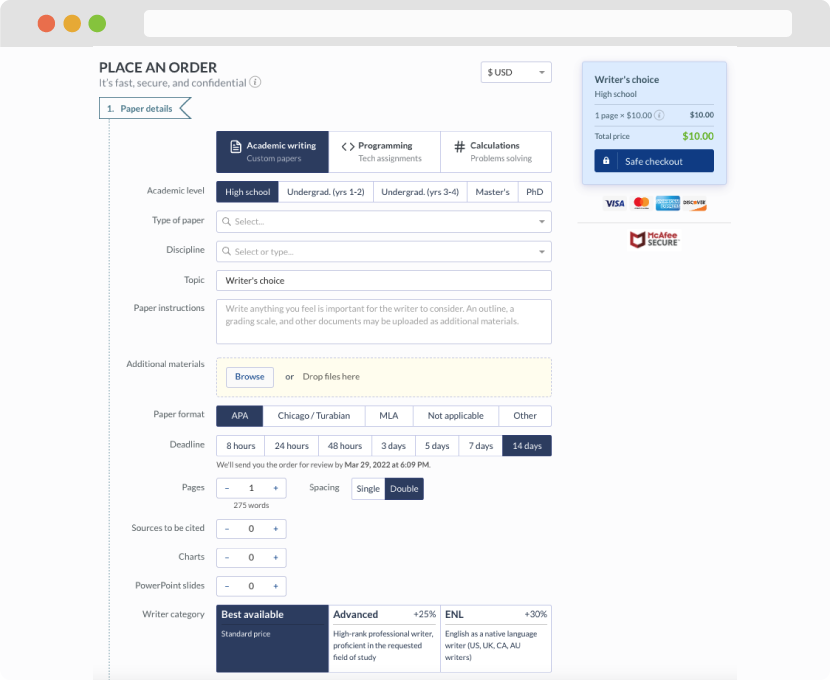
First, you will need to complete an order form. It's not difficult but, if anything is unclear, you may always chat with us so that we can guide you through it. On the order form, you will need to include some basic information concerning your order: subject, topic, number of pages, etc. We also encourage our clients to upload any relevant information or sources that will help.
Complete the order form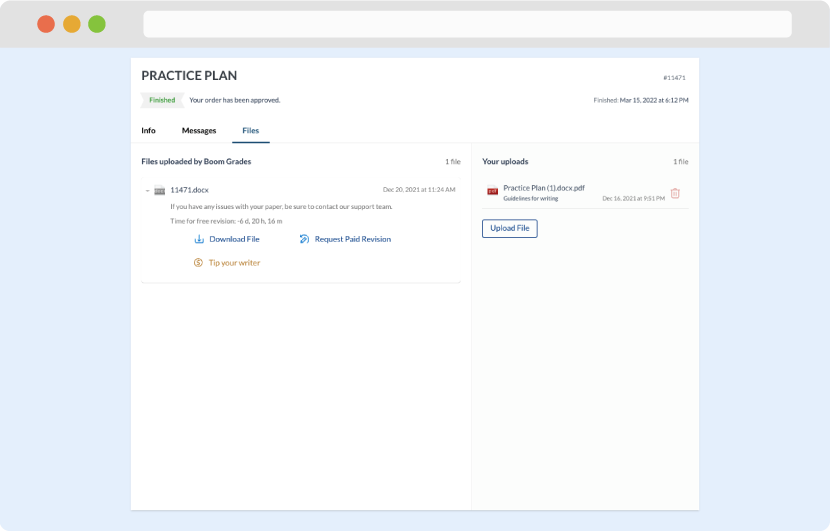
Once we have all the information and instructions that we need, we select the most suitable writer for your assignment. While everything seems to be clear, the writer, who has complete knowledge of the subject, may need clarification from you. It is at that point that you would receive a call or email from us.
Writer’s assignment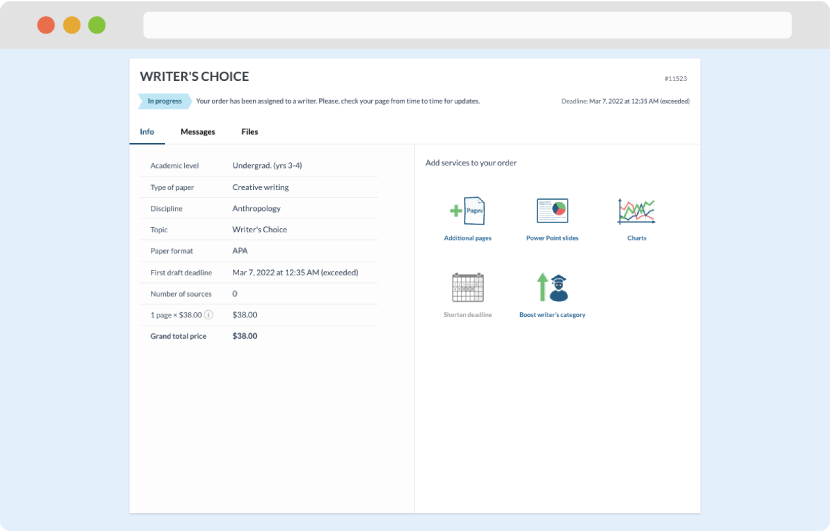
As soon as the writer has finished, it will be delivered both to the website and to your email address so that you will not miss it. If your deadline is close at hand, we will place a call to you to make sure that you receive the paper on time.
Completing the order and download