Identify and review in 500 words each—> 16 pages total of 8 different articles
eight (8) peer-reviewed journal articles published in the last five (5) years to address the following topics:
professional behaviors of a Counselor Education and Supervision doctoral learner, and professional; ethical conduct of a Counselor Education and Supervision doctoral learner, and professional; and, the ability to receive and implement feedback.
Here are some journal samples:
Counselor Education and Supervision Journal
Journal of Counseling & Development
Journal of Multicultural Counseling & Development
Counseling & Values
15
Laura Boyd Farmer, Corrine R. Sackett, Jesse J. Lile, Nancy Bodenhorn,
Nadine Hartig, Jasmine Graham, Michelle Ghoston
An Exploration of the Perceived Impact of
Post-Master’s Experience on Doctoral Study in
Counselor Education and Supervision
Using quantitative and qualitative analysis, the perceived impact of post-master’s experience (PME)
during counselor education and supervision (CES) doctoral study was examined across five core areas
of professional identity development: counseling, supervision, teaching, research and scholarship, and
leadership and advocacy. The results showed positive perceptions of the impact of PME in four of the five
core areas, with significant relationships between the amount of PME and perceived impact on supervision
and leadership and advocacy. Implications inform CES doctoral admissions committees as well as faculty
who advise master’s students interested in pursuing a doctoral degree in CES.
Keywords: counselor education and supervision, doctoral study, post-master’s experience, doctoral
admissions, professional identity
The master’s degree in counseling serves as the entry-level degree in the field, and students
entering a doctoral program in counselor education and supervision (CES) are believed to have
already met the standards of an entry-level clinician (Goodrich, Shin, & Smith, 2011). Therefore,
the doctoral degree in CES is to prepare counselors for leadership in the profession within a variety
of roles including supervision, teaching, research and scholarship, and leadership and advocacy,
as well as counseling practice (Bernard, 2006; Council for Accreditation of Counseling and Related
Educational Programs [CACREP], 2015; Goodrich et al., 2011; Sackett et al., 2015). Though CACREP
(2015) recognizes previous professional experience as one of the doctoral program admission criteria,
the counselor education field lacks clear professional standards regarding the amount and type
of counseling experience necessary for admittance to doctoral programs (Boes, Ullery, Millner, &
Cobia, 1999; Sackett et al., 2015; Schweiger, Henderson, McCaskill, Clawson, & Collins, 2012; Warnke,
Bethany, & Hedstrom, 1999). Conventional wisdom may tell us the more post-master’s counseling
experience a doctoral applicant has, the more enriched their doctoral experience will be; however, the
CES field does not have empirical data for how CES doctoral students perceive the impact of their
post-master’s experience (PME) on their doctoral education. Therefore, the purpose of the study was
to explore the perceived impact of PME on doctoral study in CES.
In this study, researchers explored the perceived impact of PME across the five core areas of
doctoral professional identity development outlined by CACREP (2015; Section 6. B.1-5). The
following research questions guided the study: (1) How do advanced doctoral students and
recent doctoral graduates perceive the impact of PME on the development of the five core areas
of professional identity during doctoral study: counseling, supervision, teaching, research and
scholarship, and leadership and advocacy? and (2) Is the amount of PME and the setting of PME
related to the perceived impact of PME on the five core areas of professional identity during doctoral
The Professional Counselor
Volume 7, Issue 1, Pages 15–
32
http://tpcjournal.nbcc.org
© 2017 NBCC, Inc. and Affiliates
doi:10.15241/lbf.7.1.15
Laura Boyd Farmer is an Assistant Professor at Virginia Tech. Corrine R. Sackett is an Assistant Professor at Clemson University. Jesse
J. Lile is a couple’s counselor in Boone, NC. Nancy Bodenhorn is an Associate Professor at Virginia Tech. Nadine Hartig is an Associate
Professor at Radford University. Jasmine Graham is a Clinical Assistant Professor at Indiana University Purdue University Indianapolis.
Michelle Ghoston is an Assistant Professor at Gonzaga University. Correspondence can be addressed to Laura B. Farmer, School of
Education (0302), 1750 Kraft Drive, Ste 2000, Blacksburg, VA 24061, lbfarmer@vt.edu.
16
The Professional Counselor | Volume 7, Issue 1
study: counseling, supervision, teaching, research and scholarship, and leadership and advocacy?
Practically, the results inform CES doctoral admissions committees in considering applicants with
and without PME. CES doctoral admissions committees must decide whether and how much
PME should be required for admittance to their programs. PME is an important consideration in
selecting doctoral students, yet few applicants have this experience (Nelson, Canada, & Lancaster,
2003), making it difficult to require. The results also inform CES faculty who advise master’s
students interested in pursuing a doctoral degree. CES faculty members frequently encounter
ambitious master’s students who are interested in pursuing a doctoral degree, and one of the many
considerations in that conversation is whether and how much PME should be obtained before
doctoral study begins. Though PME is deemed important, many CES faculty members advise
master’s students to go straight into doctoral study based on factors such as maturity, academics
and skill level (Sackett et al., 2015). This is an issue for the field since experience is an important
qualification in hiring CES faculty members (Bodenhorn et al., 2014; Rogers, Gill-Wigal, Harrigan, &
Abbey-Hines, 1998) and clinical experience informs teaching (Rogers et al., 1998; Sackett et al., 2015),
supervision (Sackett et al., 2015), and research (Munson, 1996; Sackett et al., 2015). Thus, exploring
further the impact of PME on doctoral students’ development is critical.
Relevant CES Literature on Post-Master’s Experience
The field of CES lacks clarity regarding the amount or type of counseling experience preferable
for incoming doctoral students (Sackett et al., 2015; Schweiger et al., 2012; Warnke et al., 1999).
Recently, Swank and Smith-Adcock (2014) found that most CES doctoral programs in their study
recommended, rather than required, one to two years of clinical experience for admission, while some
suggested licensure for admission. Similarly, Nelson et al. (2003) found that counseling experience
was a necessary component to doctoral admissions, though program representatives relayed the
difficulty in requiring PME since so few applicants have experience. Twenty of the 25 CACREP-
accredited programs in their sample rated successful work experience as a criterion for admission
to their doctoral programs. Sixteen of those reported that work experience is always or often helpful
in selecting strong doctoral students. CES doctoral programs deem experience is important in
admissions, yet CES faculty members often advise master’s students to go immediately into doctoral
programs (Sackett et al., 2015). Thus, there will likely continue to be a shortage of experienced
doctoral applicants for doctoral admissions committees to choose from. As such, it is critical to
explore the impact of PME on the areas of CES study to inform advisors at the master’s level how to
advise their students on gaining PME prior to pursuing doctoral work.
Sackett et al. (2015) conducted a recent study to explore how CES faculty are advising master’s-
level students interested in doctoral work regarding the amount of PME to obtain beforehand. CES
faculty expressed the significant influence of clinical practice on the areas of teaching, research
and supervision. Respondents identified the importance of clinical experience in providing for
stimulation in research and in establishing credibility in teaching and supervision. Though there was
much support for PME in the qualitative findings from this study, many respondents emphasized
individual circumstances in evaluating readiness for doctoral work in CES, such as age, maturity,
academics and skill level. For other respondents, the experience gained through master’s and doctoral
training was enough, especially in cases where students were working in clinical capacities while
completing their doctoral degrees. Thus, there is some indication in CES that PME is an important
consideration in doctoral student admissions (Nelson et al., 2003; Swank & Smith-Adcock, 2014) and
some indication that CES faculty members perceive the importance of PME in the areas of teaching,
supervision and research (Sackett et al., 2015). The current study adds to the literature by exploring
CES doctoral students’ perceptions of PME on their experiences in doctoral study.
The Professional Counselor | Volume 7, Issue 1
17
Other Helping Professions’ Literature on PME
Related disciplines are concerned with the question of PME as well. In marriage and family
therapy, students with clinical experience have been rated as better clinicians by faculty than those
who did not have clinical experience (Piercy et al., 1995). Proctor (1996) and Munson (1996) wrote
about opposing viewpoints on whether social work doctoral programs should admit students with
limited to no post-master’s in social work (MSW) experience. Proctor’s stance was that requiring post-
MSW experience for admission to doctoral programs in social work was a detriment to the field, as
it meant the discipline might miss out on students who are research-minded and eager to continue
with their education. On the other hand, Munson argued that post-MSW experience is essential for
graduates of social work doctoral programs to fulfill the needs of the field, which include building
knowledge, conducting practice research and effectively teaching social work practice. In clinical
psychology, O’Leary-Sargeant (1996) found academic criteria to be most important in doctoral
student admissions, while clinical competence also was important. It appears that determining PME’s
place in the priority list for doctoral admissions and its impact on doctoral work is a concern for
related disciplines as well.
As there are no clear guidelines for considering PME in doctoral student admissions (Sackett et al.,
2015; Schweiger et al., 2012), and empirical studies exploring the doctorate in counselor education
are scarce (Goodrich et al., 2011), with none specifically exploring the perceived impact of PME on
doctoral students’ experiences, researchers set out to add to the literature in this area. Both doctoral
admissions committees and faculty members advising master’s students who wish to pursue doctoral
study encounter the dilemma of if and how much PME experience is important to gain prior to
pursuing doctoral work. Given this, the purpose of this study was to explore the perceived impact
of PME on the five core areas of doctoral professional identity: counseling, supervision, teaching,
research and scholarship, and leadership and advocacy.
Method
To investigate the perceived impact of PME on doctoral study, quantitative and qualitative
methods were utilized for their complementarity (Johnson, Onwuegbuzie, & Turner, 2007).
The study was guided by the research questions: (1) How do advanced doctoral students and
recent doctoral graduates perceive the impact of PME on the development of the five core areas
of professional identity during doctoral study: counseling, supervision, teaching, research and
scholarship, and leadership and advocacy? and (2) Is the amount of PME and the setting of PME
related to the perceived impact of PME on the five core areas of professional identity during doctoral
study: counseling, supervision, teaching, research and scholarship, and leadership and advocacy?
Institutional Review Board approval was acquired prior to data collection. The researchers asked
participants to rate the perceived impact of their PME or lack of PME using an 11-point Likert scale
(-5 to +5; strong negative impact to strong positive impact), and analyzed themes using participants’
responses to open-ended questions for the five core areas of doctoral professional identity.
Participants
Fifty-nine advanced doctoral students or recent graduates completed an online questionnaire.
To define participants’ status to degree completion, all fell into one of three groups: recent doctoral
graduates (completed a CES doctoral degree within the last three years), ABD doctoral students (all
but dissertation; completed all coursework and were working on dissertation studies), and advanced
doctoral students (two years into completing coursework). Among participants, 13 (22%) were recent
doctoral graduates, 32 (54%) were ABD doctoral students, and 13 (22%) were advanced doctoral
students. One participant did not answer this question.
18
The Professional Counselor | Volume 7, Issue 1
Participants were asked to indicate the type of setting and experience that best described their
PME, checking all items that applied. There were 10 options provided and an option for “other”
that included a comment box. Forty-nine percent (n = 29) indicated PME in community-based
agencies, 31% (n = 18) worked in K–12 school settings, 20% (n = 12) worked in private practice, and
7% (n = 4) worked in inpatient settings. Four participants indicated post-master’s work in more
than one setting. Additionally, 37% (n = 22) indicated that their PME provided experiences working
with diverse populations, 31% (n = 18) gained experience working with families, and 24% (n = 14)
gained experience working with clients who had substance use issues. Less than 10% of participants
indicated other counseling settings and experiences such as play therapy, bilingual counseling, day
treatment and in-home counseling.
The 59 participants indicated a range of time spent in PME from zero years up to 19 years
before entering doctoral study. Thirty-four percent (n = 20) indicated between zero and one year
of experience, 25% (n = 15) between one and three years of experience, 19% (n = 11) between three
and five years of experience, 17% (n = 10) between five and 10 years of experience, and 5% (n = 3)
indicated more than 10 years of PME prior to entering doctoral study.
Procedure
Survey links were distributed through two national electronic list-servs, CESNET (the Counselor
Education and Supervision NETwork) and COUNSGRAD (for graduate students in counselor
education). The study invitation was sent to the listservs on two separate occasions approximately
one month apart. Simultaneously, the study invitation was sent to regional Association for Counselor
Education and Supervision leaders requesting that it be distributed to their membership lists.
Additionally, CACREP liaisons were asked to send the survey link and invitation to their doctoral
students. The survey was delivered through SurveyMonkey, a commonly used software product
with a secure feature that was used for this research. The following research question was identified
to potential participants: How do doctoral students and recent doctoral graduates reflect on how
their post-master’s counseling experience or lack of experience impacted their experiences as a
doctoral student? A response rate could not be calculated, as it is not possible to identify how many
potentially appropriate participants received the research request.
PME Questionnaire
The authors collaborated on identifying questions that would serve to answer the research
questions, focusing on five core areas of doctoral professional identity: counseling, supervision,
teaching, research and scholarship, and leadership and advocacy. Two questions were asked about
each of the five areas. “To what extent do you believe your post-master’s experience impacted your
ability to develop [area] skills in your doctoral program?” used an 11-point Likert scale with the
end points being (-5) strong negative impact and (+5) strong positive impact. Following the scaling
question, an open-ended follow-up question was asked: “Please comment on how your experience
impacted your [area] skills, and whether more or less experience would be beneficial.” Basic
demographic questions were included regarding the type of experience gained prior to doctoral
study, length of doctoral study and year of graduation. A pilot survey was sent to six people:
two recent doctoral graduates, two ABD doctoral students, and two advanced doctoral students
completing coursework. Feedback was provided on clarity and time involved.
Data Analysis
Quantitative analyses included correlation and multiple linear regression to examine the
relationship between the amount of PME obtained and the perceived impact on the five core areas
The Professional Counselor | Volume 7, Issue 1
19
of doctoral study. The research team hypothesized that the amount of PME would predict a positive
relationship with the perceived impact on some core areas of doctoral study, although which core
areas would be statistically significant were unknown. Therefore, this study represents an exploration
of the relationships between previously unexamined variables in the literature.
An independent samples t-test examined the relationship between PME setting (clinical mental
health or school) and the perceived impact of PME on the five core areas. For this analysis, several
setting options (community-based agencies, private practice and inpatient hospitals) were combined
into one setting labeled “clinical mental health,” which was compared to K–12 school settings (labeled
“school”). The research team hypothesized that there would be no statistically significant differences
between PME setting and any of the five core areas of doctoral study. There are no prior studies that
examine these variables.
For the qualitative analysis, the first, third and fourth authors served as the data analysis team. The
data analysis team analyzed responses to the open-ended questions using a constant comparative
method described by Anfara, Brown, and Mangione (2002). Additionally, the team used a form of
check coding described by Miles and Huberman (1994). The team members independently completed
a first iteration of data analysis by assigning open codes for each of the five open-ended questions
by reading responses to each item broadly and observing regularities (Anfara et al., 2002). The team
members completed a second iteration of analysis, which included comparison within and between
codes to establish categories and identify emergent themes. The constant comparative method
provided a systematic way to analyze large amounts of data by organizing it into manageable parts
first, and then identifying themes and patterns.
For the final step of analysis, the data analysis team rotated through a process of peer review as
recommended by Miles and Huberman (1994). For each open-ended question, two team members
were assigned as coders and one was assigned the role of peer reviewer. Once the team members
arrived at individually derived themes, the team met together to discuss the findings and arrive at
consensus for naming themes. During this meeting, the peer reviewer led the discussion by probing
and seeking clarification on the original comment wording, thus helping the team to reach consensus
for the themes. Consensus was reached when the three team members came to agreement on the final
themes. The data analysis team sent the original data and final themes for each of the five core areas
to the remaining four authors, who served as additional peer reviewers by examining the analysis.
Results
Quantitative and qualitative analyses were conducted in this study of the perceived impact of
PME on the five core areas of doctoral development for advanced doctoral students completing
coursework, ABD doctoral students, and recent doctoral graduates. The results are presented in the
following sections, with discussion to follow.
Quantitative Results: Correlation, Multiple Regression and Independent Samples T-test
Correlational analysis was used to explore the relationships among all variables: amount of PME
obtained (years), and the perceived impact of PME on counseling, supervision, teaching, research
and scholarship, and leadership and advocacy. A correlational matrix presents the relationships
among the variables in Table 1. Among significant relationships, the amount of PME was related to
perceived impact on development in supervision (r(57) = .43, p < .01) and leadership and advocacy
(r(57) = .39, p < .01).
20
The Professional Counselor | Volume 7, Issue 1
Table 1
Correlation Matrix for Main Study Variables
Note. Variables 2–6 represent the perceived impact of PME on the core area of doctoral identity development (counseling,
teaching, supervision, research and scholarship, and leadership and advocacy)
Multiple linear regression was used to examine whether the amount of PME (independent
variable) predicted the perceived impact of PME on each of the five core areas of doctoral
development: counseling, supervision, teaching, research and scholarship, and leadership and
advocacy (dependent variables). The results of the regression analysis indicated that amount of PME
predicted 38% of variance in the perceived impact of PME (R2 = .38, F (6, 47) = 4.80, p < .01). The
amount of PME significantly predicted the perceived impact of PME on two variables: supervision (β
= .44, p < .01) and leadership and advocacy (β = .34, p < .05). A post hoc power analysis was conducted
utilizing G*Power. With an alpha level of .01, a sample size of 59, and a medium effect size of .61
(Cohen, 1992), achieved power for the multiple linear regression was .98.
Finally, an independent samples t-test was conducted to compare the perceived impact of PME
in school PME and clinical mental health PME settings. Results showed a significant difference
between school PME (M = 4.43, SD = 1.02) and clinical mental health PME (M = 3.10, SD = 1.89) for
the core area of leadership and advocacy (t(51) = -3.26, p = .02), reflecting that doctoral students with
PME in schools perceived a significantly higher positive impact of their PME on the development of
leadership and advocacy compared to doctoral students with PME in clinical mental health settings.
In other words, both PME settings (school and clinical mental health) perceived a positive impact of
their PME on the development of leadership and advocacy. However, doctoral students who had
PME as school counselors perceived this experience as having a significantly greater impact on their
development in leadership and advocacy than doctoral students who had obtained PME in clinical
mental health settings.
The remaining four core areas of doctoral development were not significantly different when
comparing PME settings. With an alpha level of .05, a sample size of 59, and a medium effect size of
.88 (Cohen, 1992), achieved power for the independent samples t-test was .83.
Qualitative and Descriptive Results: Scaled and Open-Ended Responses
The following results describe respondents’ perceptions about the impact of PME on five core
areas of doctoral development: counseling, supervision, teaching, research and scholarship, and
The Professional Counselor | Volume 7, Issue 1
21
leadership and advocacy (CACREP, 2015). Data was gathered for each core area using an 11-point
Likert scale (-5 to +5) and was collapsed into five categories for ease of discussion. The categories
were: (a) strong positive impact, +4 and +5; (b) weak to moderate positive impact, +1 through +3; (c)
no impact, 0; (d) weak to moderate negative impact, -1 through -3; and (e) strong negative impact, -4
and -5. Table 2 reflects the percentage of responses in each core area. Table 3 provides a summary of
qualitative themes. In the sections that follow, percentage results are summarized first, followed by a
discussion of the qualitative themes within each core area of doctoral development.
Table 2
Descriptive Statistics: Perceived Impact of PME on Core Areas of Doctoral Professional Identity
Core Area of Doctoral Development: Counseling. A majority of participants (60%) responded
that PME had a strong positive impact on their ability to develop counseling skills in their doctoral
program. Another 29.3% indicated a weak to moderate positive impact. Five themes emerged from the
written responses describing the perceived impact of PME on the development of counseling skills.
Theme 1: Increased confidence. Developing confidence in one’s counseling skills was frequently
discussed as a benefit of having PME prior to doctoral study. Having confidence in the counseling
skills already established through practice allowed for even more clinical growth during doctoral
study. Many respondents stated they had greater confidence than their peers who lacked PME.
Confidence also was viewed as advantageous when being asked to try a new clinical skill or
technique: “I was more familiar with multiple clinical skills and my level of comfort when trying new
clinical skills was higher than those who did not have the same clinical experience.”
Theme 2: Integration of theory into practice. Participants described the perceived impact of PME
as being useful for helping to integrate theory into practice during doctoral study. While learning
theories and reading about concepts establishes a foundation for counseling skills, participants
reported that PME provided the context needed to test theoretical understanding in practice. Others
commented that having some PME and then returning to the classroom for doctoral study gave
them a greater understanding and appetite for theory. Theory was learned more thoroughly with a
contextual base of experience upon which to build, as one respondent described:
22
The Professional Counselor | Volume 7, Issue 1
My experience impacted my counseling skills; however, my experience alone did not help
me conceptualize theory. I learned theory much more thoroughly post-master’s (once in
doctoral studies) and then was able to identify how I had been using it all along as well as to
incorporate new knowledge.
Table 3
Perceived Impact of PME: Qualitative Themes by Core Area of Doctoral Development
The Professional Counselor | Volume 7, Issue 1
23
Theme 3: Conceptualizing cases. Case conceptualization was identified as a benefit of having PME.
Participants described having greater clinical understanding and ability to apply knowledge as an
advantage of PME. Others commented that having a context with which to build upon existing skills
was useful and contributed to more complex conceptualizations of clients and problems.
Theme 4: Honing counseling techniques. Participants reported that their PME refined the
counseling techniques they had gained in master’s study, enabling them to expand their repertoire
and focus on honing advanced techniques during their doctoral work. One participant expressed
feeling greater “comfort when trying new clinical skills” during doctoral study while another stated
they were “able to focus on refining higher level skills” in their doctoral program.
Theme 5: The unique experience of school counselors. There was a notable theme regarding
the distinct difference in school counselors’ experience when considering the impact of PME on
counseling skill development. Some school counselors commented that they did not regularly use
counseling skills while working in schools due to the variety of other responsibilities placed on school
counselors. Another respondent stated that clinical supervision was crucial to developing clinical
competence and that they did not receive clinical supervision while working as a school counselor.
For those doctoral students with PME as school counselors, they expressed they would have
benefitted by having more experience in several areas, such as use of the Diagnostic and Statistical
Manual of Mental Disorders, dual-diagnosis, and substance use treatment. Some school counselors
described using only specific theories in their setting (e.g., reality therapy, cognitive behavioral
therapy), and that practicing with a broad range of techniques would have been useful prior to
doctoral study.
Core Area of Doctoral Development: Supervision. The largest group of participants (48.3%)
responded that PME had a strong positive impact on their ability to develop supervision skills
in their doctoral program. Another group of participants (31%) rated PME as having a weak to
moderate positive impact on their supervision skills. Five themes emerged from the written responses
describing how PME impacted the development of supervision skills.
Theme 1: Increased confidence as a doctoral supervisor. Participants reported greater confidence
while developing supervision skills as a result of having PME. In general, doctoral students in
training are asked to enter into a supervisory relationship with master’s students in training in order
to develop supervision skills. Having counseling experience as a professional in the field assisted
doctoral students to feel more confident in this new role, as one respondent commented, “I was able
to supervise students in my former position, but also I feel the years of experience have given me
insight that I can be confident in the information I pass on.”
Alternately, doctoral students who do not have PME are asked to step into the same supervisory
role, but may feel inadequately prepared to be in a position of hierarchy and expertise. Most doctoral
students who have not had PME have recently graduated from their master’s program; therefore, the
difference between the supervisor and supervisee in terms of experience is small. A participant spoke
to this struggle: “Naturally clinical supervision and counseling are related. Because of this, it would
have helped to have a more solid grasp on my own counseling skills and for me to have personal
experiences to draw upon when supervising.”
Theme 2: Formative experiences in supervision. Through obtaining PME, participants reflected on
their initial experiences of receiving supervision as a necessary backdrop for learning how to provide
supervision. Whether those initial experiences in supervision were described as positive or negative,
24
The Professional Counselor | Volume 7, Issue 1
participants stated that they learned a great deal about becoming a supervisor through the process
of receiving supervision. Initial supervision experiences also were described as either “clinical”
in nature or “administrative.” Regardless of the type of supervision received, the experience was
regarded as helpful in preparing them for doctoral study to advance their skills as a supervisor.
There were some participants who reported being provided with supervision during their PME
and others reported that they lacked supervision. In both instances, participants acknowledged that
they valued supervision as a result of their PME. Among those lacking quality supervision, one
respondent stated, “My [post-master’s] supervision was mostly administrative and as a result I was
at a disadvantage coming into a clinical supervisory environment.” On the other side, one participant
described their master’s and doctoral program as providing “lousy supervision” and not regularly
attending scheduled supervision meetings. Both experiences capture the sentiment: inadequate
supervision, as a graduate student or professional, influences one’s expectations of what defines
effective supervision.
A final benefit of PME described by participants was the ability to understand the supervisee’s
experience. Having experienced the position of being a supervisee first-hand enabled a greater
understanding of supervisees’ struggles and real-world challenges that are faced when providing
counseling. One respondent expressed, “I understood the situations the students were facing
since I had recently faced them with my clients (e.g., transportation, childcare, resistance).” Some
participants reflected on the experience of building rapport with a supervisor, and how influential
this was in their development. Due to these experiences in the field, the importance of strengthening
the supervisory relationship and establishing a safe place in the supervision environment were
considered paramount. Overall, participants reported that having experience as a supervisee enabled
them to realize and appreciate critical aspects of providing effective supervision.
Theme 3: Providing resources to supervisees. Participants reported that having PME, which
often included supervision, enabled them to provide better resources to supervisees as doctoral
students. Some of these resources included community resources, referral options, counseling stories,
therapeutic tools and techniques, varied perspectives, and a more diverse conceptualization of clients
and issues. Here, a respondent illustrates this theme:
[I believe] it is super important to have . . . clinical experience when supervising students in a
doctoral program. You have to be able to understand the student’s experience, have experience
with many different client populations and modalities, be able to conceptualize client
problems, and give students tools to advance their skills.
Theme 4: Credibility with supervisees. Greater credibility as a supervisor was regarded as an
important benefit of having PME. Through the eyes of their supervisee, having more PME was
perceived as helpful to establish credibility. This theme included two aspects: the doctoral supervisor
having something valuable to offer in supervision, and the supervisee reporting greater confidence
in a supervisor who had professional counseling experience. In this quote, a respondent describes
feelings of credibility as a supervisor based on their PME: “I am able to understand the intricacies of
a school system, thus I can help my students think of problem-solving strategies to work with their
students and supervisors.”
Core Area of Doctoral Development: Teaching. The largest group of participants (38.9%)
responded that PME had a strong positive impact on their ability to develop teaching skills in their
doctoral program. Another group of participants (33.4%) rated PME as having a weak to moderate
The Professional Counselor | Volume 7, Issue 1
25
positive impact on their teaching skills. A smaller group of participants (22.2%) responded that PME
had no impact at all on the development of teaching skills. Four themes emerged from the written
responses describing how PME impacted the development of teaching skills.
Theme 1: Confidence in teaching. Having more confidence was frequently cited as a benefit to hav-
ing PME and developing teaching skills during doctoral study. Some participants stated that many
aspects of counseling involve teaching to a degree; therefore, having PME strengthened the ability
to teach in the classroom. On the other side, there were some participants who regretted not having
more PME directly related to teaching. One participant wrote, “I wish I had more experience teach-
ing, managing a classroom, developing innovative and attention catching ideas. I know it’s more me
than anything else so I need to develop my style more.”
Theme 2: Providing examples in the classroom. Perhaps the theme with the most support from
participants was the perceived benefit of PME in their ability to provide examples while teaching.
Those with PME had plenty of practical examples from their experience to draw from, which helped
them a great deal while teaching. One participant wrote, “I was able to use examples drawn from my
clinical experience to bring certain topics to life. I was also better able to describe some clinical issues
and to teach certain skills.” Several participants wrote that they received positive feedback from
students about the value of their stories and examples to enhance learning. Some also stated that they
felt better prepared to conduct a live role-play in class to bring a technique to life because they had
benefitted from PME. One respondent illustrated this idea well: “It’s difficult to teach something you
have no experience with. There were others in my cohort who had no real clinical experience prior to
starting their doctoral program and they were much less effective as teachers.”
Theme 3: Developing a new skill. Some participants responded that teaching was an entirely new
skill that was unrelated to their PME. For these participants, teaching was a skill that was solely
developed during doctoral study, as this respondent wrote: “Teaching was not a part of my post-
master’s work. This was an entirely new set of skills I learned in doctoral study. Neither more nor
less experience would have made a difference for me in this area.”
Theme 4: Value of prior teaching experiences. The fourth theme captures the positive impact
described by those participants whose PME included teaching experiences prior to pursuing their
doctoral degree. In particular, those with school counseling experience described preparing and
implementing classroom guidance lessons as a natural comparison to teaching. Some participants
had PME that involved providing training and giving presentations, which was also associated with
teaching. For these participants, their specific PME had a positive impact on their development as a
teacher during doctoral study, as this respondent reported: “Having an education background and
then opportunity in my school to perform classroom guidance lessons, while different, still gave me
an important opportunity to practice developing lesson plans.”
Core Area of Doctoral Development: Research and Scholarship. The largest group of participants
(46.3%) responded that PME had no impact on their ability to develop research and scholarship skills
in their doctoral program. Smaller groups of participants reported a range of weak to moderate to
strong positive impact on their research and scholarship development. This was the only area of
doctoral development that most participants described as being unrelated to PME. Three themes
emerged from the written responses describing how PME impacted the development of research and
scholarship.
Theme 1: No impact on research development. Most participants stated that their ability to develop
research skills during their doctoral program was unrelated to having PME in the field. For these
26
The Professional Counselor | Volume 7, Issue 1
participants, research was regarded as an advanced skill unique to doctoral study. Many participants
expressed that research and scholarship was not essential in their post-master’s positions, as is
relayed in this quote: “Research is one area where [PME] is not as vital.”
Theme 2: Basic research experiences were useful. A few participants responded that obtaining some
basic research experience was useful during the time between master’s and doctoral study. In general, it
is necessary for counselors in the field to conduct basic searches for knowledge to support their practice.
These searches may take the form of using the Internet to find resources for clients or reviewing text-
books or articles when using a particular technique or theory. School counselors discussed their use
of online research for building school guidance programs. In addition, some counselors gained basic
research skills in their PME through collecting and analyzing data regarding the provision of services
or client outcomes. One participant described her experience with a research study:
I worked in a clinical trial of CBT, CBT + medication, and medication only. This exposure
really helped me get an idea of what research is possible in mental health . . . so it had a large
impact on me. I pursued my doctorate largely because I wanted to engage in research and
scholarship.
Theme 3: Contributed to area of research focus. Participants credited their PME as informing
their ability to examine relevant topics for research. Some stated that their PME inspired their
area of research focus. One participant noted that by working with specific populations, such as a
specific ethnic minority population, “discrepancies and gaps in service” were found and helped the
participant think about questions to pursue through research.
Core Area of Doctoral Development: Leadership and Advocacy. A majority of participants
(58.2%) responded that PME had a strong positive impact on their ability to develop leadership
and advocacy skills in their doctoral program. Another group of participants (23.7%) rated PME
as having a weak to moderate positive impact on their leadership and advocacy skills. Five themes
emerged from the written responses describing how PME was perceived to impact the development
of leadership and advocacy skills.
Theme 1: Sense of responsibility to the profession. Participants described a heightened sense of
responsibility to provide leadership and advocacy in the counseling field based on their PME. Some
acknowledged a feeling of, “This is my job now,” related to the assumption of responsibility as a doc-
toral student in CES. Assuming greater responsibility was the most common theme discussed by par-
ticipants, emerging in various forms.
Many participants described a sense of being propelled into leadership and advocacy through
their PME. One school counselor wrote, “My job forced me to fight for myself, my students, teachers
and parents. It was the best experience because I had to do it, or my job would be ineffective and pos-
sibly in jeopardy.” Another participant wrote:
Due to the nature of my job, I was doing a significant amount of advocacy. . . . Many of the
kids on my caseload had multiple challenges, such as racial minority status, lack of citizenship,
poverty, and/or domestic violence, and it was part of my responsibility to help them address
the challenges they faced in all aspects of their lives in order to improve their mental health
and functioning in school and at home.
Overall, participants described their PME as the most formative training for developing leadership
The Professional Counselor | Volume 7, Issue 1
27
and advocacy skills. PME provided a sense of purpose and meaning to advocacy and leadership in
the counseling profession.
Theme 2: Awareness of advocacy needs within diverse client populations. Participants responded
that a greater awareness of the needs of diverse populations, particularly minority populations, was
a result and benefit of their PME. Through working with underrepresented populations, they had
a greater appreciation for the need to develop leadership and advocacy skills. One participant also
described having a “deeper understanding of the difficulties faced by certain populations within our
society,” which laid the groundwork for developing leadership and advocacy skills in the doctoral
program. Once involved in a doctoral program, advocacy felt like a way to “join forces with people
who care” to address inequities and help marginalized groups. In this way, having exposure to
different cultural groups through their PME provided the context for understanding and developing
advocacy action strategies.
Theme 3: Motivation and direction for leadership and advocacy. Participants described that the
motivation and direction for their leadership and advocacy work was inspired by the sense of respon-
sibility and the awareness of needs that originated in their PME. In this way, PME helped to pave the
way for the focus of their subsequent leadership and advocacy work. Regarding leadership, partici-
pants reflected that direct counseling work “consumed them” once in the profession and, as a result,
professional development became something that you fit in when you could. Once they re-entered
into graduate work as a doctoral student, they valued leadership and professional involvement and
could give these aspects of development a more passionate focus. In a way, not having much time for
professional development and leadership roles while directly serving clients provided motivation for
becoming involved as a doctoral student.
Participants also reported that the presentations they submit to conferences are motivated by the
needs they became aware of during their PME. Many credited their PME for helping them develop
awareness of the future needs counselors were going to face, which motivated their advocacy for im-
proved counselor training.
Theme 4: Development of leadership and advocacy skills on-the-job. Many participants described
the need to develop leadership and advocacy skills on-the-job during their PME, and how valuable
this was to their doctoral work. Participants experienced first-hand the lack of funding and resources
in the community and school settings, which forced them to act in creative ways to get clients’ and
students’ needs met. In addition, some described working in a position with multiple roles or serving
multiple school campuses, which forced them to learn how to initiate programs independently, bal-
ance multiple roles, communicate with a variety of stakeholders, and thus develop leadership skills.
Advocacy also was essential to develop on-the-job, as described by this participant:
I worked as a bilingual counselor, the only one at my clinic, working with a specific population
for a period of time. I had to do a lot of leadership and advocacy work at the clinic to help my
supervisors and colleagues understand this specific population and the resources that were
available in the community specifically for this population.
Theme 5: Confidence to speak up. Again, confidence emerged as a theme with regard to developing
leadership and advocacy skills during doctoral study. Having PME gave participants the necessary
confidence to speak up in classes, in meetings and at conferences. Many reported that they became
much more confident about voicing concerns and advocating due to their first-hand knowledge of
issues facing counselors in the field, as did this respondent:
28
The Professional Counselor | Volume 7, Issue 1
I think my post-master’s skills made me more confident about speaking up in meetings
and conferences and it enhanced my advocacy skills because I knew what the issues facing
clinicians were. It didn’t always make me popular or well understood among counselor
educators with little clinical experience, however.
For these respondents, having greater confidence to use one’s voice seemed a natural result of having
some years of experience with “boots on the ground” and becoming acclimated to the real-world
experience of working as a counselor.
Discussion
The results from this study help fill a gap identified in the literature regarding clarity in the
counselor education field on the amount of counseling experience preferable for incoming doctoral
students (Sackett et al., 2015; Schweiger et al., 2012; Warnke et al., 1999). Results of this study indicate
that doctoral students and recent doctoral graduates of counselor education programs perceived a
positive impact of their PME on doctoral study. The positive impact of PME was described across
all five core areas of doctoral development as defined by CACREP (2015; Section 6. B.1-5), yet was
particularly strong regarding counseling, supervision, teaching, and leadership and advocacy.
Quantitative analysis confirmed a significant predictive relationship between the amount of PME
obtained and the perceived impact on development of supervision and leadership and advocacy as
doctoral students. While some participants perceived that their PME had a positive impact on the
development of research and scholarship, this impact was far less pronounced than in other core
areas, and many expressed that their PME had no impact on development in the area of research and
scholarship. These findings align with and extend upon previous findings (Sackett et al., 2015) that
CES faculty members believe PME informs the supervision, teaching and research of CES doctoral
students.
Previous research has noted the strenuous nature of entering CES doctoral studies, with such a
transition being marked by fluctuations in both emotion and confidence (Dollarhide, Gibson, & Moss,
2013; Hughes & Kleist, 2005). This transition involves the expansion of professional roles to include
that of a counselor, student, educator, supervisor, and researcher and scholar (Dollarhide et al., 2013;
Lambie & Vaccaro, 2011; Limberg et al., 2013; West, Bubenzer, Brooks, & Hackney, 1995). A notable
theme in the current study was the confidence that participants experienced and attributed to PME.
With the tendency for new doctoral students to experience self-doubt in these multiple roles, the
confidence gained through PME may help to mobilize internal resources, moving them forward in
the developmental process as a CES doctoral student.
Considering all themes that emerged in this study of CES doctoral students and recent graduates,
there is strong support for the value of experiential learning that is gained through PME. According
to Kolb’s theory of experiential learning, concrete lived experiences provide the basis for reflection;
then, from these reflections new information can be assimilated and abstract concepts can be
formed (Kolb, 1984). Participants in this study described a common benefit of PME: having a base
of experiences as a professional counselor to reflect upon during doctoral study. The process of
reflecting on lived experiences as a counselor supports crystallization of knowledge in a doctoral
program where additional theories, skills, techniques, and advanced facets of professional identity
are developed.
Even though the majority of participants described a positive perceived impact of PME toward
doctoral development, there were some who did not perceive as much benefit. This finding is
The Professional Counselor | Volume 7, Issue 1
29
reminiscent of Sackett et al.’s (2015) finding that some CES faculty members reported the counseling
experience gained through the master’s and doctoral programs alone is enough and that success in
a doctoral program is more reliant on the characteristics of each student. It is possible that learning
styles may best predict whether and which master’s students benefit from PME prior to doctoral
study. Kolb’s experiential learning theory (1984) stated that individuals have a preference among four
modes of the learning cycle: concrete experience, reflective observation, abstract conceptualization
and active experimentation. Considering Kolb’s four learning styles, it is possible that those
participants who have a preference for abstract conceptualization rely less on lived experiences as
a counselor to understand and apply concepts; thus, doctoral students with this preferred learning
style might successfully develop in the five core areas of doctoral identity without perceiving any
benefits from PME. Future research is needed to examine this hypothesis.
Research and scholarship was the only core area of doctoral professional identity that PME was
perceived to have no impact on for a large group of participants (46.3%). This finding may be worth
considering for CES faculty who advise master’s students interested in pursuing a doctoral degree.
Depending on the master’s student’s career goal, obtaining PME may be less of a priority if aiming
for a research faculty position, where teaching and supervision would not be a requirement.
Significance of Supervision, Leadership and Advocacy
A unique finding in this study was the positive, predictive relationship between the amount of
PME obtained and the perceived impact on developing one’s identity in the areas of supervision and
leadership and advocacy. Specifically, doctoral students who had more years of PME perceived a
greater impact on their development in the areas of supervision and leadership and advocacy. For
supervision, doctoral students who have not obtained any PME would be stepping into a new role
where they are expected to provide teaching, consultation, and support for the skill development
of counselors-in-training (Bernard & Goodyear, 2014). Having little to no time between being in the
master’s student role of receiving supervision and to the role of providing supervision may present
significant challenges. Alternatively, a “master” clinician does not automatically become a “master”
supervisor; specialized knowledge and skills are required to develop supervision competency
(Bernard & Goodyear, 2014). While obtaining some PME is perceived to significantly impact
supervision development, the amount of PME may not be the only factor that influences supervision
competence.
Open-ended comments shed further light on the perceived impact of PME and developing
leadership and advocacy. Participants commented that through their lived experiences in schools and
agencies, PME provided doctoral students with a sense of urgency about the needs of clients and the
profession, thus motivating their advocacy work. Participants also acknowledged PME as valuable
fodder for understanding their potential as leaders. Through the context of experience as a counselor,
participants were better able to understand their ability to impact the profession through leadership
and advocacy work as a counselor, supervisor and counselor educator.
Relevance of PME Setting
This study explored whether the setting of PME, school or clinical mental health, was related to
the perceived impact of that experience on the five areas of doctoral identity development. The only
significant difference in the setting where PME was obtained was in the areas of leadership and
advocacy development. Those with school counseling experience perceived a greater impact of PME
on leadership and advocacy development. For participants in this study, spending time working in
a school system was essential to establishing a sense of oneself as a leader and advocate in school
counseling.
30
The Professional Counselor | Volume 7, Issue 1
Implications
While some evidence exists that PME is an important consideration in CES doctoral student
admissions (Nelson et al., 2003; Swank & Smith-Adcock, 2014), the current study provides evidence
of the perceived impact of PME in professional development as a CES doctoral student, especially in
the areas of counseling, supervision, teaching, and leadership and advocacy. Quantitative analysis
revealed a significant relationship between the amount of PME and perceived development in
supervision and leadership and advocacy. Doctoral admissions committees may consider these
findings as they weigh the pros and cons of applicants applying for doctoral study who have
differing amounts of PME. Additionally, CES faculty advising master’s students whose ultimate goal
is to pursue a doctoral degree may consider these findings as they offer guidance and support to
students in the decision-making process.
Across the five core areas of doctoral professional identity development, PME was frequently
perceived to boost confidence during doctoral study. However, there were some participants who
reported a lack of confidence in the core areas of teaching and research, despite having PME. It would
seem that teaching and research represent novel aspects of doctoral identity development, as both
skill sets are not always involved in PME as a professional counselor. Research and scholarship is a
primary focus of doctoral course content. In fact, the CACREP 2016 standards require CES doctoral
students to become proficient in both qualitative and quantitative methodology (CACREP, 2015;
Section 6 B.4.), which usually requires the completion of three or more research courses. With regard
to teaching, many doctoral students are an integral part of counselor education programs, with roles
as co-instructors, teaching assistants and guest lecturers. Yet, development of proficient teaching skills
may extend beyond these co-teaching experiences during doctoral study, where vicarious learning
and role modeling are heavily relied upon. As some participants in this study described, teaching
is likely to be a new area of identity to develop; yet most (72.3%) reported that having years of PME
aided their development as a teacher because they had real counseling experience to draw from and
ample clinical examples to contextualize course content. Therefore, doctoral admissions committees
should strongly consider the value of PME for doctoral applicants as a basis for development as a
teacher.
In the current study, a wide variety of PME was represented (from 0–19 years), yet a question
remains: How much experience is optimal to obtain? The current study only examined doctoral
students’ perceptions. Within one theme in the current study, participants speculated about reaching
a point of “diminishing returns,” in which too much time away from an academic setting (attaining
PME) could result in a depletion of academic skills. However, two to three years of PME would
typically allow CES applicants the opportunity to gain a counseling license, streamlining the career
opportunities available to them upon graduation. Sackett at al. (2015) found that many CES faculty
members advise master’s students to gain enough experience to earn licensure prior to pursuing
doctoral study. For CES graduates who choose to continue practicing counseling in the field, provide
supervision, or serve in administrative positions, state licensure is necessary. For CES graduates
pursuing a faculty position, Bodenhorn et al. (2014) found that a majority of faculty postings sought
applicants with licensure or two to three years of counseling experience. For either post-doctoral
trajectory, obtaining at least two to three years of PME may be most beneficial.
Future Research
This study provided an initial exploration of the perceived impact of PME on core areas of identity
development as a doctoral student, while privileging the perspective of those doctoral students.
Future studies are needed to examine the relationship between post-master’s counseling experience,
The Professional Counselor | Volume 7, Issue 1
31
development during doctoral study, and professional impact as a counselor educator and supervisor.
Specifically, studies should explore professional outcomes of counselor educators with varying levels
of PME. For example, what are students’ perceptions of faculty members and supervisors with more
or less counseling experience? How is the type of institution (high teaching versus high research)
related to the amount and benefit of professional counseling experience? Is continued professional
practice after earning the CES doctoral degree related to professional success, career satisfaction,
teaching evaluations or scholarship productivity? Future research focusing on these issues will add to
the literature on this aspect of the CES profession by answering these questions.
Conflict of Interest and Funding Disclosure
The authors reported no conflict of interest
or funding contributions for the development
of this manuscript.
References
Anfara, V. A., Jr., Brown, K. M., & Mangione, T. L. (2002). Qualitative analysis on stage: Making the research
process more public. Educational Researcher, 31(7), 28–38.
Bernard, J. M. (2006). Tracing the development of clinical supervision. The Clinical Supervisor, 24, 3–21.
doi:10.1300/J001v24n01_02
Bernard, J. M., & Goodyear, R. K. (2014). Fundamentals of clinical supervision (5th ed.). New York, NY: Pearson.
Bodenhorn, N., Hartig, N., Ghoston, M. R., Graham, J., Lile, J. J., Sackett, C. R., & Farmer, L. B. (2014). Counselor
education faculty positions: Requirements and preferences in CESNET announcements 2005–2009. The
Journal for Counselor Preparation and Supervision, 6. doi:10.7729/51.1087
Boes, S. R., Ullery, E. K., Millner, V. S., & Cobia, D. C. (1999). Meeting the challenges of completing a counseling
doctoral program. Journal of Humanistic Education & Development, 37(3), 130–144.
doi:10.1002/j.2164-4683.1999.tb00415.x
Cohen, J. (1992). A power primer. Psychological Bulletin, 112, 155–159.
Council for Accreditation of Counseling and Related Educational Programs. (2015). 2016 CACREP Standards.
Council for Accreditation of Counseling and Related Educational Programs. Retrieved from http://www.cacrep.
org/for-programs/2016-cacrep-standards
Dollarhide, C. T., Gibson, D. M., & Moss, J. M. (2013). Professional identity development of counselor education
doctoral students. Counselor Education and Supervision, 52, 137–150. doi:10.1002/j.1556-6978.2013.00034.x
Goodrich, K. M., Shin, R. Q., & Smith, L. C. (2011). The doctorate in counselor education. International Journal for
the Advancement of Counselling, 33, 184–195. doi:10.1007/s10447-011-9123-7
Hughes, F. R., & Kleist, D. M. (2005). First-semester experiences of counselor education doctoral students.
Counselor Education and Supervision, 45, 97–108. doi:10.1002/j.1556-6978.2005.tb00133.x
Johnson, R. B., Onwuegbuzie, A. J., & Turner, L. A. (2007). Toward a definition of mixed methods research.
Journal of Mixed Methods Research, 1, 112–133.
Kolb, D. A. (1984). Experiential learning: Experience as the source of learning and development. Englewood Cliffs, NJ:
Prentice-Hall.
Lambie, G. W., & Vaccaro, N. (2011). Doctoral counselor education students’ levels of research self-efficacy,
perceptions of the research training environment, and interest in research. Counselor Education and
Supervision, 50, 243–258. doi:10.1002/j.1556-6978.2011.tb00122.x
Limberg, D., Bell, H., Super, J. T., Jacobson, L., Fox, J., DePue, M. K., . . . Lambie, G. W. (2013). Professional
identity development of counselor education doctoral students: A qualitative investigation. The
Professional Counselor, 3, 40–53.
Miles, M. B., & Huberman, A. M. (1994). Qualitative data analysis: An expanded sourcebook (2nd ed.). Thousand
Oaks, CA: Sage.
32
The Professional Counselor | Volume 7, Issue 1
Munson, C. E. (1996). Should doctoral programs graduate students with fewer than two years of post-MSW
practice experience? No! Journal of Social Work Education, 32(2), 167–172.
Nelson, K. W., Canada, R. M., & Lancaster, L. B. (2003). An investigation of nonacademic admission criteria
for doctoral-level counselor education and similar professional programs. The Journal of Humanistic
Counseling, 42, 3–13.
O’Leary-Sargeant, J. L. (1996). A comparison of the relative ability of measures of interpersonal and academic
intelligence in the prediction of clinical competence. Dissertation Abstracts International, 57(04), 2877B.
(UMI No. AAG9627243)
Piercy, F. P., Dickey, M., Case, B., Sprenkle, D., Beer, J., Nelson, T., & McCollum, E. (1995). Admissions criteria as
predictors of performance in a family therapy doctoral program. The American Journal of Family Therapy,
23, 251–259. doi:10.1080/01926189508251355
Proctor, E. K. (1996). Should doctoral programs graduate students with fewer than two years of post-MSW
practice experience? Yes! Journal of Social Work Education, 32(2), 161–167.
Rogers, J. R., Gill-Wigal, J. A., Harrigan, M., & Abbey-Hines, J. (1998). Academic hiring policies and projections:
A survey of CACREP- and APA-accredited counseling programs. Counselor Education and Supervision,
37(3), 166–178. doi:10.1002/j.1556-6978.1998.tb00542.x
Sackett, C. R., Hartig, N., Bodenhorn, N., Farmer, L. B., Ghoston, M., Graham, J., & Lile, J. (2015). Advising
master’s students pursuing doctoral study: A survey of counselor educators and supervisors. The
Professional Counselor, 5, 473–485. doi:10.15241/crs.5.4.473
Schweiger, W. K., Henderson, D. A., McCaskill, K., Clawson, T. W., & Collins, D. R. (2012). Counselor preparation:
Programs, faculty, trends (13th ed.). New York, NY: Taylor and Francis.
Swank, J. M., & Smith-Adcock, S. (2014). Gatekeeping during admissions: A survey of counselor education
programs. Counselor Education and Supervision, 53, 47–61. doi:10.1002/j.1556-6978.2014.00048.x
Warnke, M. A., Bethany, R. L., & Hedstrom, S. M. (1999). Advising doctoral students seeking counselor education
faculty positions. Counselor Education and Supervision, 38, 177–190. doi:10.1002/j.1556-6978.1999.tb00569.x
West, J. D., Bubenzer, D. L., Brooks, D. K., Jr., & Hackney, H. (1995). The doctoral degree in counselor education
and supervision. Journal of Counseling & Development, 74, 174–176. doi:10.1002/j.1556-6676.1995.tb01846.x
®
Reproduced with permission of the copyright owner. Further reproduction prohibited without
permission.
Essay Writing Service Features
Our Experience
No matter how complex your assignment is, we can find the right professional for your specific task. Achiever Papers is an essay writing company that hires only the smartest minds to help you with your projects. Our expertise allows us to provide students with high-quality academic writing, editing & proofreading services.
Free Features
Free revision policy
$10Free bibliography & reference
$8Free title page
$8Free formatting
$8How Our Dissertation Writing Service Works
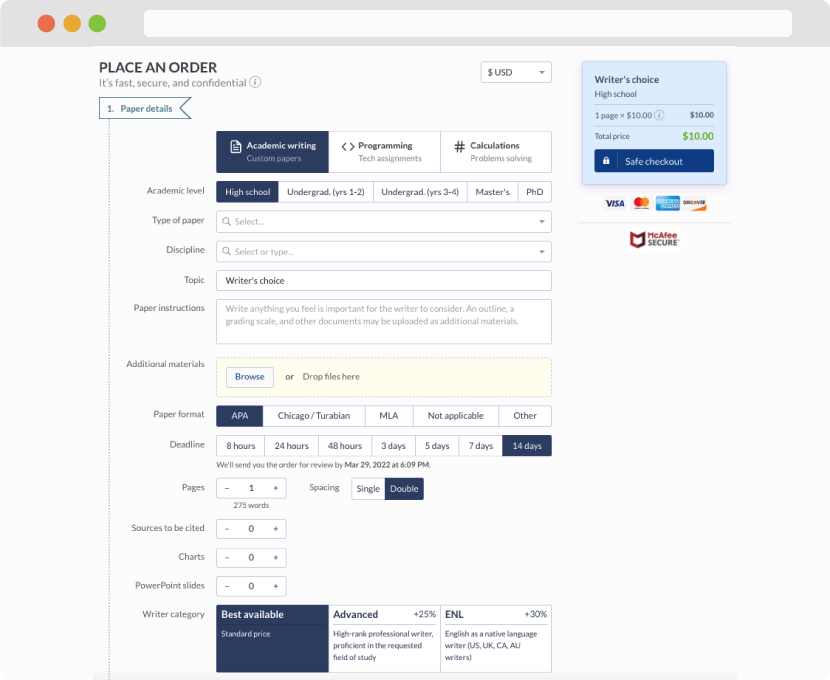
First, you will need to complete an order form. It's not difficult but, if anything is unclear, you may always chat with us so that we can guide you through it. On the order form, you will need to include some basic information concerning your order: subject, topic, number of pages, etc. We also encourage our clients to upload any relevant information or sources that will help.
Complete the order form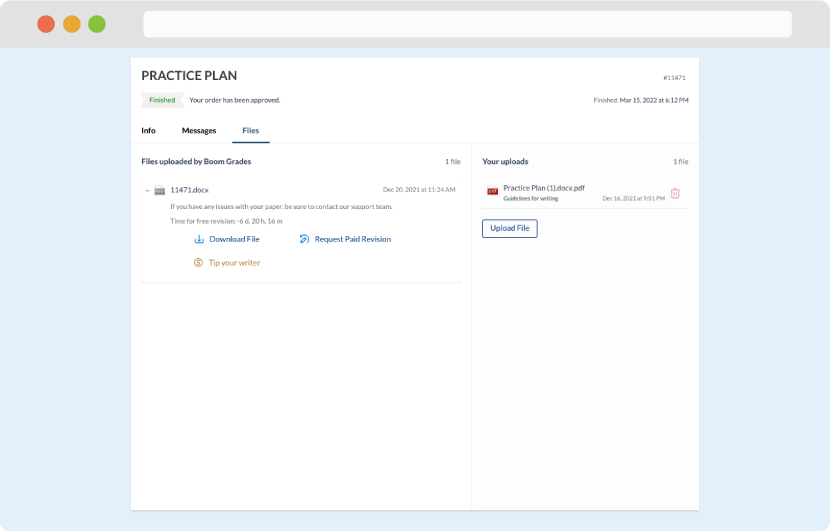
Once we have all the information and instructions that we need, we select the most suitable writer for your assignment. While everything seems to be clear, the writer, who has complete knowledge of the subject, may need clarification from you. It is at that point that you would receive a call or email from us.
Writer’s assignment
As soon as the writer has finished, it will be delivered both to the website and to your email address so that you will not miss it. If your deadline is close at hand, we will place a call to you to make sure that you receive the paper on time.
Completing the order and download