Just answer the following questions from the attachment.
Question 1
Evaluate the following sources and decide whether you should use them in graduate level academic writing. Rank them in order of highest quality to lowest quality. Provide short discussion on your response including popular vs. scholarly, primary vs. secondary source, and whether it is credible.
1. CDC NNDSS: https://wwwn.cdc.gov/nndss/data-and-statistics.html
2. Article in Journal of Infectious Diseases (https://academic.oup.com/jid)
3. https://www.nature.com/news
4. https://www.cancer.org/
5. https://blog.feedspot.com/science_blogs/
6. https://www.usnews.com/news/national-news
Question 2
A communicable disease
Question 2 options:
|
is a disease that is spread from person to person |
|
is synonymous with infectious disease |
|
is not spread through air |
|
only refers to viral diseases |
Question 3
Every year in the U.S. there are dozens of cases of a specific disease. How would you categorize this disease in the U.S.?
Question 3 options:
pandemic
epidemic
endemic
sporadic
Question 4
Match the disease with the type of transmission
Question 4 options:
measles
Ebola
malaria
SARS
cholera
1.
vectorborne
2.
airborne
3.
droplet
4.
direct contact
5.
fecal-oral
Question 5
Discuss the difference between a sensitive and specific case definition for a disease. Give examples of when each is used.
Question 6
Which statement about vaccines is TRUE?
Question 6 options:
Dead or protein-based vaccines can cause the disease they are made to prevent.
Vaccines can only be used to prevent viral diseases.
Vaccines are used to treat diseases.
Vaccines stimulate production of memory T and B cells to protect from future infections.
Question 7
Most microorganisms cause disease.
Question 7 options:
True
False
Question 8
The terms “Infection” and “Disease” are synonymous.
Question 8 options:
True
False
Question 9
Match the major type of microorganism with the true statement
Question 9 options:
simple, invertebrate animals that are difficult to treat because drugs that kill them are frequently very toxic to human cells
Obligate intracellular pathogens (meaning they need to infect a host cell to replicate)
Can be unicellular (yeast) or multicellular, Eukaryotic organisms
unicellular, heterotrophic eukaryotes acquired through contaminated food or water or by the bite of an infected arthropod such as a mosquito
Unicellular prokaryotes that can be treated with antibiotics
1.
Bacteria
2.
viruses
3.
fungi
4.
protozoa
5.
helminths
Question 10
Virulence
Question 10 options:
refers to the proportion of infected individuals who develop clinically apparent disease
refers to the proportion of exposed persons who become infected
refers to the proportion of clinically apparent cases that are severe or fatal
refers to persons who are infectious but have subclinical disease
Question 11
Critical characteristic(s) of a surveillance system include
Question 11 options:
representation
all answers are correct
sensitivity
timeliness
Question 12
Describe the steps in an outbreak investigation.
Question 13
EWARN
Question 13 options:
is a system designed by the CDC for use in the U.S. after natural disasters
is a substitute surveillance system that permanently replaces the national surveillance system
reports monthly data aggregated by health facilities for research purposes
fills a gap during the acute phase of an emergency when the routine systems are disrupted
Question 14
Discuss how a national surveillance plan should set a list of diseases as priority for surveillance. Do not discuss specific disease but discuss the attributes that make the disease worth monitoring through surveillance.
Question 15
What are the four diseases requiring notification to WHO in all circumstances under the IHR (2005)?
Question 15 options:
measles, SARS, pertussis, meningitis
smallpox, poliovirus, Ebola, SARS
smallpox, wild type poliovirus, new subtype of human influenza, and SARS
vaccine-derived poliovirus, measles, H1N1 influenza virus, SARS
Question 16
In the case study of EWARN after the 2008 earthquake in Haiti, what was the key conclusion?
Question 16 options:
The system is timely, cost-effective and limits the overload of a manual weekly reporting system.
There were issues of IT compatibility with other national databases which may have a negative impact on long term integration into routine surveillance systems
It was widely appreciated, understood and enjoys widespread compliance, due in part to the regular inperson visits of the surveillance officers to the health-care facilities.
The system was hampered by under-reporting, inconsistency of case definitions, lack of baseline data, fluid population movements, technological errors, lack of trained personnel and missing data.
Question 17
A rapid health assessment must be conducted as soon as possible after an emergency in order to control communicable diseases. The rapid health assessment team should include ALL EXCEPT
Question 17 options:
a water and sanitation/environmental health specialist
a governmental official
a nutritionist
a public health expert/epidemiologist
Question 18
Good site planning after an emergency is key to preventing communicable diseases. The site plan should include
Question 18 options:
basic clinical services
control of disease vectors
A good site plan will include all of the answers
mass vaccination against specific diseases
clean water and proper sanitation
Question 19
The diseased living are a far greater hazard than the deceased, because most pathogens do not survive long in dead bodies.
Question 19 options:
True
False
Question 20
After a natural disaster certain communicable diseases are at higher risk. Match the disease associated with the potential conditions after a natural disaster
Question 20 options:
food contamination
lack of sanitation and latrines
increase in vectors
urine contaminated flood waters
crowding
1.
Acute respiratory infections
2.
malaria
3.
cholera
4.
leptospirosis
5.
shigellosis
Question 21
A disaster is defined as
Question 21 options:
interrupts normal function of a community
All of the answers are part of the definition
affected population cannot fully cope with effects of the disaster
normal function cannot be resumed without external assistance
Essay Writing Service Features
Our Experience
No matter how complex your assignment is, we can find the right professional for your specific task. Achiever Papers is an essay writing company that hires only the smartest minds to help you with your projects. Our expertise allows us to provide students with high-quality academic writing, editing & proofreading services.
Free Features
Free revision policy
$10Free bibliography & reference
$8Free title page
$8Free formatting
$8How Our Dissertation Writing Service Works
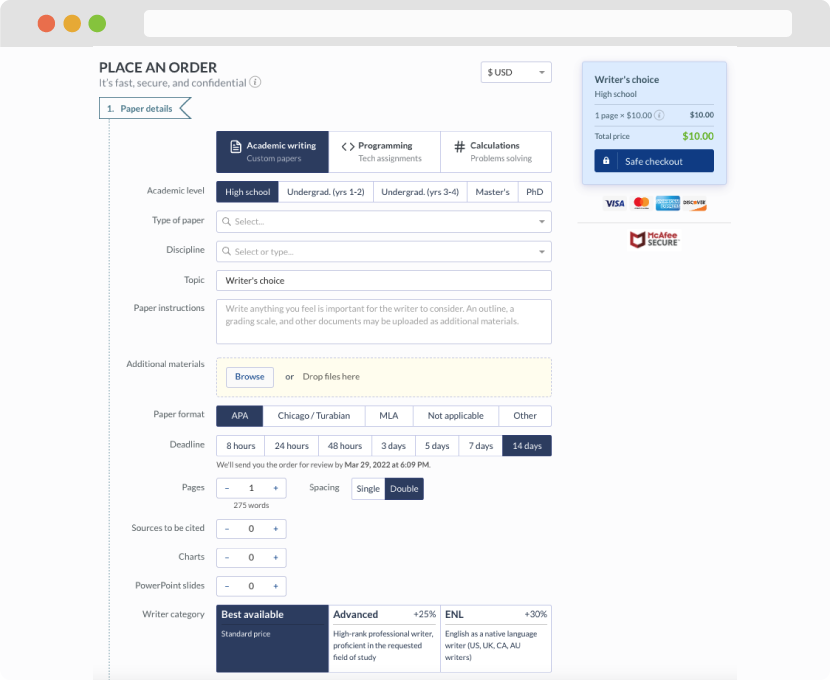
First, you will need to complete an order form. It's not difficult but, if anything is unclear, you may always chat with us so that we can guide you through it. On the order form, you will need to include some basic information concerning your order: subject, topic, number of pages, etc. We also encourage our clients to upload any relevant information or sources that will help.
Complete the order form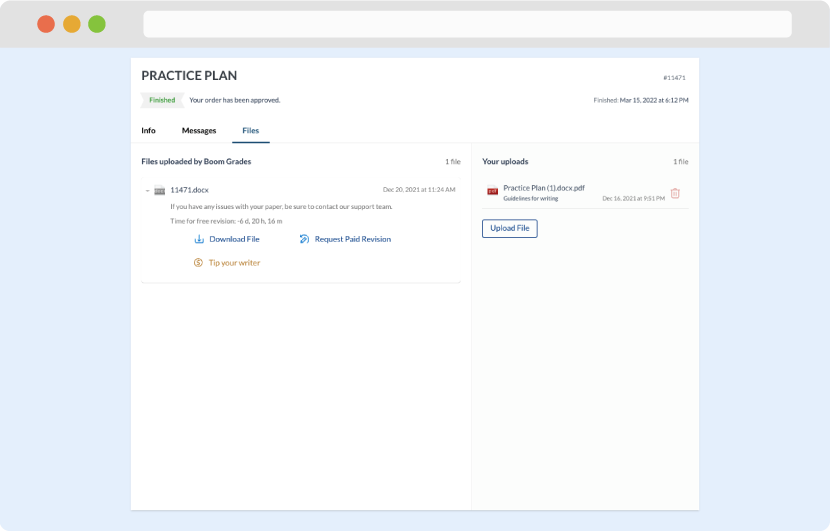
Once we have all the information and instructions that we need, we select the most suitable writer for your assignment. While everything seems to be clear, the writer, who has complete knowledge of the subject, may need clarification from you. It is at that point that you would receive a call or email from us.
Writer’s assignment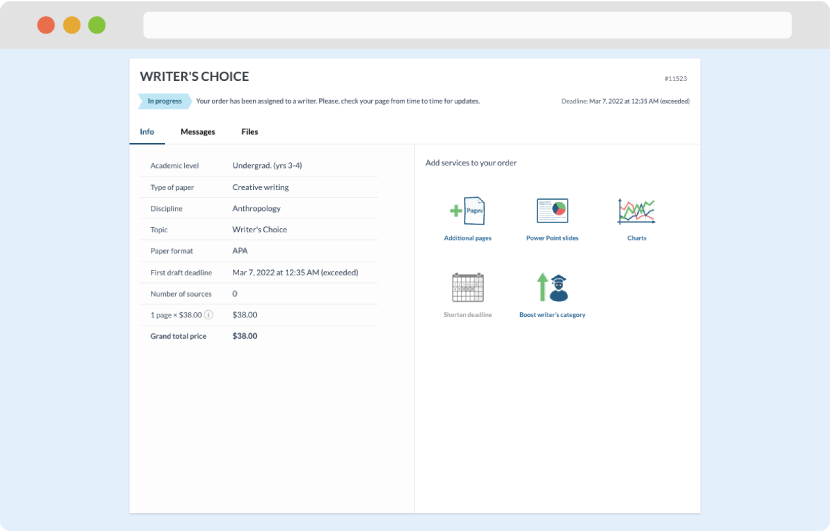
As soon as the writer has finished, it will be delivered both to the website and to your email address so that you will not miss it. If your deadline is close at hand, we will place a call to you to make sure that you receive the paper on time.
Completing the order and download