“Ordinary conversations are about sociability and maintaining a relationship, while interviews are more about making a relationship to help find an answer to a research question” (Rubin & Rubin, 2012, p. 99).
For this Discussion, you will view videos that depict different interviewing techniques. You will then analyze and evaluate the techniques used, and you will discuss how you will utilize best practices when you conduct your own interviews.
To prepare for this Discussion:
ASSIGNMENT
Post a 2- to 3-paragraph evaluation of the interview techniques used in both interviews. Include commentary and analysis of best practices, practices to avoid, and how this viewing experience will inform your approach to the interviewing assignment introduced in this week’s Major Assignment.
When appropriate, be sure to support your postings and responses with specific references to the reading(s) and/or video program(s) and use APA format.
apa required
turn it in required
Saldaña, J. (2016). The coding manual for qualitative researchers (3rd ed.). Thousand Oaks, CA: Sage Publications.
Chapter 1, “An Introduction to Codes and Coding” (pp. 1–42) (previously read in Weeks 5 and 6)
Chapter 2, “Writing Analytic Memos About Narrative and Visual Data” (pp. 43–65) (previously read in Weeks 5 and 6)
Ravitch, S. M., & Carl, N. M. (2016). Qualitative research: Bridging the conceptual, theoretical, and methodological. Thousand Oaks, CA: Sage Publications.
Chapter 5, “Methods of Data Collection” (pp. 145–183)
Chapter 7, “An Integrative Approach to Data Analysis” (pp. 215–236) (previously read in Weeks 5 and 6)
Chapter 8, “Methods and Processes of Data Analysis” (pp. 237–270) (previously read in Weeks 5 and 6)
Rubin, H. J., & Rubin, I. S. (2012). Qualitative interviewing: The art of hearing data (3rd ed.). Thousand Oaks, CA: Sage Publications.
Chapter 6, “Conversational Partnerships” (pp. 71–93)
Chapter 7, “The Responsive Interview as an Extended Conversation” (pp. 95–114)
Chapter 8, “Structure of the Responsive Interview” (pp. 115–129)
Chapter 9, “Designing Main Questions and Probes” (pp. 131–147)
Chapter 10, “Preparing Follow-Up Questions” (pp. 149–169)
Chapter 12, “Data Analysis in the Responsive Interviewing Model” (pp. 189–211) (previously read in Weeks 5 and 6)
Yob, I., & Brewer, P. (n.d.). Working toward the common good: An online university’s perspectives on social change, 1-25.
Student 1
Although both interviewing techniques video are face to face interview, the manner and way the interview was conducted in interviewing techniques part one and interviewing techniques part two are different. In the first interview segment the interviewer made several errors at the very beginning. Dr. Linda Crawford did not give the interviewee Laura sufficient or adequate information about what the interview was about, and that how the interview will be taped, as well as the length of the interview. When Laura entered the session, the room was not made safe for her evidenced by the hanging tape recorder chord and the interviewer did not rise to greet her. The desk was too small, as were the chairs and the interviewer did not take the time to make sure the equipment was working before the interview started. When you interview someone, you should make certain to attend to these items so that the interviewee feels welcome and respected (Ravitch & Carl, 2016). When Laura asked about the time commitment the interviewer responded “Oh, that was in the stuff I sent you.” (Laureate Education, 2016). Rushing past the chance to calm any fears Laura may have had. The interviewer also seemed to be a bit dismissive about Laura’s question regarding her taking notes and recording the session. The confidentiality aspect of the interview was not thoroughly explained. Participants are sometimes reluctant to be interviewed because they do not want to be identified. Researchers should take great care to ensure participants anonymity and confidentiality (Rubin & Rubin, 2012) and this was not done here.
The interviewer also failed to explain what her role was in the interview and she failed to fully explain how the results of the interview were going to be used (Rubin & Rubin, 2012). The interviewer did take notes, however, when she did so she did not make eye contact with Laura for long periods of time almost signifying disengagement (Ravitch & Carl, 2016). The interviewer also signaled some judgment about Laura’s responses with her verbal and non-verbal communications. Interviewers can display sympathy but judgments about the responses are not to be made (Rubin & Rubin, 2012). Rushing the participant, being disengaged, not respecting the participants time, and not being fully transparent are all things to avoid when conducting qualitative interviews. Laura showed some body language and was somehow shocked when Dr. Crawford told her that she has 5 questions and the look on Laura’s face was not pleasant as she asked Dr. Crawford how long was the interview going to take? Even though Laura told Dr. Crawford that she thinks that the interview will be okay, Laura went further by asking if Dr. Crawford was taking notes or something as well as taping the interview. Laura was in a hurry to finish the interview as she keeps interrupting Dr. Crawford by telling her “I have to go.” Also, Dr. Crawford did not make enough eye contact with Laura as she was constantly taking notes. The interview was ineffective and caused confusion, anxiety and discomfort for Laura.
The second interview session was much more professional. The room was set up to make Laura comfortable, and she was greeted properly. The interviewer did a good job of explaining the purpose of the interview, how the results were going to be used, who else was participating, and how the session was going to be conducted including taking notes and audio recording. In this session the interviewer gave Laura a chance to ask questions and she made sure that Laura understood her participation was totally voluntary. The interviewer also smiled when she spoke thereby releasing tension and making Laura feel comfortable (Rubin & Rubin, 2012). The interviewer also asked follow-up questions evidenced by the following exchange; LAURA: Workplace morale I would say basically means that it’s a fun place to work, that it’s a place where you are looking forward to getting up and going to every day and that there’s nice people there that you enjoy working with. LINDA: What makes it fun? (Laureate Education, 2016). You should not assume that you know what meaning an interviewee has given to a word or phrase you should ask follow-up questions for clarity (Rubin & Rubin, 2012). You should also use the participants own words when asking follow-up questions to preserve context (Ravitch & Carl, 2016). The interviewer allowed the interview to move at Laura’s own pace, she circled back to questions to give Laura a chance to expand upon her answer and she showed respect for Laura’s time by letting her know when time was up but invited her to continue if she wanted to. Asking permission; to extend the time, to record the session, to circle back to previous questions along with showing sympathy and maintaining a pleasant disposition are all important aspects to conducting a successful interview and should be considered best practices (Rubin & Rubin, 2012). These actions build trust and rapport and help establish relationships between the interviewer and the participant.
This viewing experience helped me to understand that I have a lot to learn about interviewing. Qualitative interviewing is more than just a casual conversation. Qualitative interviews, if done right, are carefully planned, rigorously conducted, and they allow for study to be enhanced by interviewees (Laureate Education, 2016). Choosing the right participants, selecting a good location, asking the right questions, and conducting a rigorous analysis are all part of a comprehensive qualitative interview. Interviewing is a skill that takes time and practice. I will make errors, but I am encouraged to know that even experienced interviewers make mistakes (Rubin & Rubin, 2012).
Laureate Education (Producer). (2016). Doctoral research: Interviewing techniques, part one Video File]. Baltimore, MD: Author.
Laureate Education (Producer). (2016). Doctoral research: Interviewing techniques, part two Video File]. Baltimore, MD: Author.
Ravitch, S.M., & Carl, N.M. (2016). Qualitative research: Bridging the conceptual, theoretical, and methodological. Thousand Oaks, CA: Sage Publications.
Rubin, H.J. & Rubin, I.S. (2012). Qualitative interviewing: The art of hearing data (3rd ed.). Thousand Oaks, CA: Sage Publications.
Student 2
Analysis for Best Practices in Interviewing
“Ordinary conversations are about sociability and maintaining a relationship, while interviews are more about making a relationship to help find an answer to a research question”
(Rubin &Rubin,2012,p.99)
Authors Rubin and Rubin in their quote on sociability and maintaining relationship want to reflect the importance of theology and methodology while developing a relationship with the interviewee to obtain the answers for a research paper. However, I had to watch the video three times to realize the video had no introduction, body or conclusion. Dr. Linda Crawford jumped from one topic to the other without organization. The start was baffling, Dr. Linda Crawford spoke on body language and conducted interviews on 230, then mentioned about interview observations and language. It was so confusing. I obtained observation was Laura rolled her arms and interpretation of interview Laura getting offended. From readings of Rubin and Rubin, “The interviewer also failed to explain what the role was in the interview and she failed to full explain how results of the interview was going to be used. The results of this interview was disastrous. Laura who was interviewed did not know what the interview was on or how long it would last. The questions seemed as though never given to Laura. It was transparent that Dr. Linda Crawford did not prepare for this interview or had the organization to conduct an interview for her “work moral”. It would be recommended that Dr. Linda Crawford outline and plan her interview before getting anyone to give information on the topic of research. My biggest appreciation for this interview is be prepared as write up the area of research with questions, inform the interviewee, outline the area of research, stay on topic and be respectful towards others participation.
Video two:
The second interview Dr. Linda Crawford presented with Laura was much more well developed and structured for a one-on-one interview. Dr. Linda Crawford was welcoming, outlined the purpose of the interview.
1. Why it was important to have an interviewees feedback?
2. What the interview results would be used for?
3. How the interview would help the research topic?
Dr. Linda Crawford respected Laura and stayed on topic writing down all the information required for the research analysis. The interviewer gave Laura the question then reassured it was voluntary and she would always ask for permission on audio taping.
“Asking permission to extend the time by conducting a successful interview and should be considered best practices” (Rubin& Rubin, 2012).
Final Findings on Qualitative Practices for Interviewing
Upon viewing two videos on interviewing on Walden University Blackboard with Dr. Laura Crawford with Laura I was appreciative to get examples on proper and improper ways to interview for with a research project. The theology of qualitative interviewing is staging the proper methodology for the interviewee. I learned as a researcher to have an environment with an atmosphere of equality, plan for the interviewee, practice, provide information to interviewee and supply full information to who ever I interview. I learned by watching these two videos the importance of being mindful, respectful, welcoming, professional and avoiding being bias.
References
Laureate Education (Producer). (2016). Doctoral research: Interviewing techniques, part one Video File]. Baltimore, MD: Author.
Laureate Education (Producer). (2016). Doctoral research: Interviewing techniques, part two Video File]. Baltimore, MD: Author.
Ravitch, S.M., & Carl, N.M. (2016). Qualitative research: Bridging the conceptual, theoretical, and methodological. Thousand Oaks, CA: Sage Publications.
Rubin, H.J. & Rubin, I.S. (2012). Qualitative interviewing: The art of hearing data (3rd ed.). Thousand Oaks, CA: Sage Publications.
Student 1
Although
both
interviewing
techniques
video
are
face
to
face
interview,
the
manner
and
way
the
interview
was
conducted
in
interviewing
techniques
part
one
and
interviewing
techniques
part
two
are
different.
In
the
first
interview
segment
the
interviewer
ma
de
several
errors
at
the
very
beginning.
Dr.
Linda
Crawford
did
not
give
the
interviewee
Laura
sufficient
or
adequate
information
about
what
the
interview
was
about,
and
that
how
the
interview
will
be
taped,
as
well
as
the
length
of
the
interview.
When
Lau
ra
entered
the
session,
the
room
was
not
made
safe
for
her
evidenced
by
the
hanging
tape
recorder
chord
and
the
interviewer
did
not
rise
to
greet
her.
The
desk
was
too
small,
as
were
the
chairs
and
the
interviewer
did
not
take
the
time
to
make
sure
the
equ
ipment
was
working
before
the
interview
started.
When
you
interview
someone,
you
should
make
certain
to
attend
to
these
items
so
that
the
interviewee
feels
welcome
and
respected
(Ravitch
&
Carl,
2016).
When
Laura
asked
about
the
time
commitment
the
intervi
ewer
responded
“Oh,
that
was
in
the
stuff
I
sent
you.”
(Laureate
Education,
2016).
Rushing
past
the
chance
to
calm
any
fears
Laura
may
have
had.
The
interviewer
also
seemed
to
be
a
bit
dismissive
about
Laura’s
question
regarding
her
taking
notes
and
record
ing
the
session.
The
confidentiality
aspect
of
the
interview
was
not
thoroughly
explained.
Participants
are
sometimes
reluctant
to
be
interviewed
because
they
do
not
want
to
be
identified.
Researchers
should
take
great
care
to
ensure
participants
anonymity
and
confidentiality
(Rubin
&
Rubin,
2012)
and
this
was
not
done
here.
The
interviewer
also
failed
to
explain
what
her
role
was
in
the
interview
and
she
failed
to
fully
explain
how
the
results
of
the
interview
were
going
to
be
used
(Rubin
&
Rubin,
2012).
The
interviewer
did
take
notes,
however,
when
she
did
so
she
did
not
make
eye
contact
with
Laura
for
long
periods
of
time
almost
signifying
disengagement
(Ravitch
&
Carl,
2016).
The
interviewer
also
signaled
some
judgment
about
Laura’s
responses
with
her
v
erbal
and
non
–
verbal
communications.
Interviewers
can
display
sympathy
but
judgments
about
the
responses
are
not
to
be
made
(Rubin
&
Rubin,
2012).
Rushing
the
participant,
being
disengaged,
not
respecting
the
participants
time,
and
not
being
fully
transpar
ent
are
all
things
to
avoid
when
conducting
qualitative
interviews.
Laura
showed
some
body
language
and
was
somehow
shocked
when
Dr.
Crawford
told
her
that
she
has
5
questions
and
the
look
on
Laura’s
face
was
not
pleasant
as
she
asked
Dr.
Crawford
how
long
was
the
interview
going
to
take?
Even
though
Laura
told
Dr.
Crawford
that
she
thinks
that
the
interview
will
be
okay,
Laura
went
further
by
asking
if
Dr.
Crawford
was
taking
notes
or
something
as
well
as
taping
the
interview.
Laura
was
in
a
hurry
to
finis
h
the
interview
as
she
keeps
interrupting
Dr.
Crawford
by
telling
her
“I
have
to
go.”
Also,
Dr.
Crawford
did
not
make
enough
eye
contact
with
Laura
as
she
was
constantly
taking
notes.
The
interview
was
ineffective
and
caused
confusion,
anxiety
and
discomfo
rt
for
Laura.
The
second
interview
session
was
much
more
professional.
The
room
was
set
up
to
make
Laura
comfortable,
and
she
was
greeted
properly.
The
interviewer
did
a
good
job
of
explaining
the
purpose
of
the
interview,
how
the
results
were
going
to
b
e
used,
who
else
was
participating,
and
how
the
session
was
going
to
be
conducted
including
taking
notes
and
audio
recording.
In
this
session
the
interviewer
gave
Laura
a
chance
to
ask
questions
and
she
made
sure
that
Laura
understood
her
participation
was
totally
voluntary.
The
interviewer
also
smiled
when
she
spoke
thereby
releasing
tension
and
making
Laura
feel
comfortable
(Rubin
&
Rubin,
2012).
The
interviewer
also
asked
follow
–
up
questions
evidenced
by
the
following
exchange;
LAURA:
Workplace
morale
I
would
say
basically
means
that
it’s
a
fun
place
to
work,
that
it’s
a
place
where
you
are
looking
forward
to
getting
up
and
going
to
every
day
and
that
there’s
nice
people
Student 1
Although both interviewing techniques video are face to face interview, the manner and way the
interview was conducted in interviewing techniques part one and interviewing techniques part
two are different. In the first interview segment the interviewer made several errors at the very
beginning. Dr. Linda Crawford did not give the interviewee Laura sufficient or adequate
information about what the interview was about, and that how the interview will be taped, as
well as the length of the interview. When Laura entered the session, the room was not made safe
for her evidenced by the hanging tape recorder chord and the interviewer did not rise to greet her.
The desk was too small, as were the chairs and the interviewer did not take the time to make sure
the equipment was working before the interview started. When you interview someone, you
should make certain to attend to these items so that the interviewee feels welcome and respected
(Ravitch & Carl, 2016). When Laura asked about the time commitment the interviewer
responded “Oh, that was in the stuff I sent you.” (Laureate Education, 2016). Rushing past the
chance to calm any fears Laura may have had. The interviewer also seemed to be a bit dismissive
about Laura’s question regarding her taking notes and recording the session. The confidentiality
aspect of the interview was not thoroughly explained. Participants are sometimes reluctant to be
interviewed because they do not want to be identified. Researchers should take great care to
ensure participants anonymity and confidentiality (Rubin & Rubin, 2012) and this was not done
here. The interviewer also failed to explain what her role was in the interview and she failed to
fully explain how the results of the interview were going to be used (Rubin & Rubin, 2012). The
interviewer did take notes, however, when she did so she did not make eye contact with Laura
for long periods of time almost signifying disengagement (Ravitch & Carl, 2016). The
interviewer also signaled some judgment about Laura’s responses with her verbal and non-verbal
communications. Interviewers can display sympathy but judgments about the responses are not
to be made (Rubin & Rubin, 2012). Rushing the participant, being disengaged, not respecting the
participants time, and not being fully transparent are all things to avoid when conducting
qualitative interviews. Laura showed some body language and was somehow shocked when Dr.
Crawford told her that she has 5 questions and the look on Laura’s face was not pleasant as she
asked Dr. Crawford how long was the interview going to take? Even though Laura told Dr.
Crawford that she thinks that the interview will be okay, Laura went further by asking if Dr.
Crawford was taking notes or something as well as taping the interview. Laura was in a hurry to
finish the interview as she keeps interrupting Dr. Crawford by telling her “I have to go.” Also,
Dr. Crawford did not make enough eye contact with Laura as she was constantly taking notes.
The interview was ineffective and caused confusion, anxiety and discomfort for Laura.
The second interview session was much more professional. The room was set up to make Laura
comfortable, and she was greeted properly. The interviewer did a good job of explaining the
purpose of the interview, how the results were going to be used, who else was participating, and
how the session was going to be conducted including taking notes and audio recording. In this
session the interviewer gave Laura a chance to ask questions and she made sure that Laura
understood her participation was totally voluntary. The interviewer also smiled when she spoke
thereby releasing tension and making Laura feel comfortable (Rubin & Rubin, 2012). The
interviewer also asked follow-up questions evidenced by the following exchange; LAURA:
Workplace morale I would say basically means that it’s a fun place to work, that it’s a place
where you are looking forward to getting up and going to every day and that there’s nice people
© 2016 Laureate Education, Inc. Page 1 of 2
Interview Guide Instructions
1. Prepare!
a. Choose a recording device to capture your voice and your
interviewee’s voice. Smartphones have a variety of apps for recording
and downloading calls. Several are free. Some charge an additional fee
for downloading the file. Some also have a transcribing service, but there
is an extra charge. You can also use a simple handheld recording device.
Conduct the interview using the speakerphone so both voices will be
distinctly heard.
b. Decide how you want to create the transcription. As indicated above,
you can use a transcription service; they will charge anywhere between $1
and $3 a minute. Alternatively, you can transcribe the interview yourself by
typing the text into MS Word. This is free, but time consuming—about 1–2
hours, as you need to record the contents of the interview verbatim. Be
sure to identify when the interviewee is speaking, and highlight the
questions you ask.
c. Create an Interview Guide Form. An example is provided in the course,
or you can create your own. If you use this one or another, be sure to
leave space for your notes.
d. Prepare a brief introduction. There is an example in the Interview Guide
Example.
e. Practice your interview with a friend to get comfortable with the questions
and the recording device.
f. Set up your appointment.
2. Conduct your interview.
a. Test to make sure your recording equipment is working.
b. Have your interview guide with you and a pen to take notes.
Immediately after:
i. Make detailed notes of your experience. Include how you were
feeling during the interview, and your unspoken reactions to the
interviewee’s comments.
ii. Check to make sure the recording worked
c. As soon as possible, transcribe the interview.
Questions:
1. Can you tell me what program are you in at Walden?
a. And what year did you start?
© 2016 Laureate Education, Inc. Page 2 of 2
2. How was working for social change important to you before you came to Walden?
a. Can you give me an example of what you did?
3. How was the social change mission important to you in making your choice to
come to Walden?
a. Please describe how it was important/not important to you.
4. From your perspective, what is social change?
a. Can you give me some examples of what you mean by that?
© 2016 Laureate Education, Inc. Page 1 of 3
Interview Guide Example
Date:
Time:
Interviewee Code #:
Location of Interview:
Parts of the Interview Interview Questions
Introduction Hi, this is _____. Thank you very much for helping
me practice my interview skills. As you know, the
purpose of this interview is to talk about what
social change means to you as a Walden student.
This should last about 10 minutes. After the
interview, I will be examining your answers to
practice data analysis, and some of your answers
will be shared with my Instructor and classmates.
However, I will not identify you in my documents,
and no one will be able to identify you with your
answers. You can choose to stop this interview at
any time. Also, I need to let you know that this
interview will be recorded for transcription
purposes.
Do you have any questions?
Are you ready to begin?
Question 1:
1. Can you tell me what program you are in at
Walden?
a. And what year did you start?
© 2016 Laureate Education, Inc. Page 2 of 3
Parts of the Interview Interview Questions
Question 2: 2. Was working for social change important to you
before you came to Walden?
a. Can you give me an example of what
you did?
Question 3:
3. Was the social change mission important to you in
making your choice to come to Walden?
a. Please describe how it was important/not
important to you.
Question 4: 4. From your perspective, what is social change?
a. Can you give me some examples of what
you mean by that?
Close 1. Thank you for your answers. Do you have anything
else you’d like to share?
© 2016 Laureate Education, Inc. Page 3 of 3
Parts of the Interview Interview Questions
2. Do you have any questions for me?
3. Thank you for your time. Goodbye.
Essay Writing Service Features
Our Experience
No matter how complex your assignment is, we can find the right professional for your specific task. Achiever Papers is an essay writing company that hires only the smartest minds to help you with your projects. Our expertise allows us to provide students with high-quality academic writing, editing & proofreading services.
Free Features
Free revision policy
$10Free bibliography & reference
$8Free title page
$8Free formatting
$8How Our Dissertation Writing Service Works
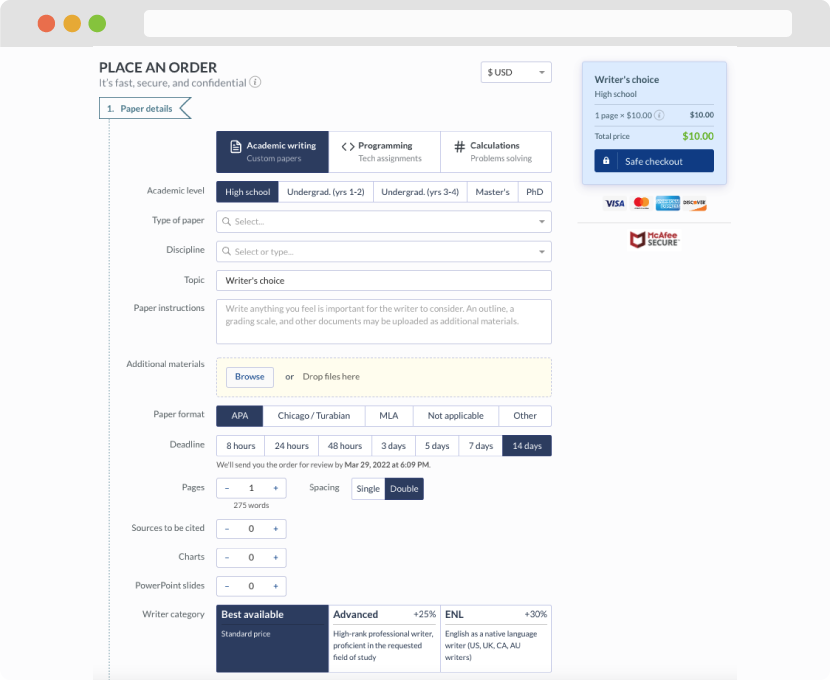
First, you will need to complete an order form. It's not difficult but, if anything is unclear, you may always chat with us so that we can guide you through it. On the order form, you will need to include some basic information concerning your order: subject, topic, number of pages, etc. We also encourage our clients to upload any relevant information or sources that will help.
Complete the order form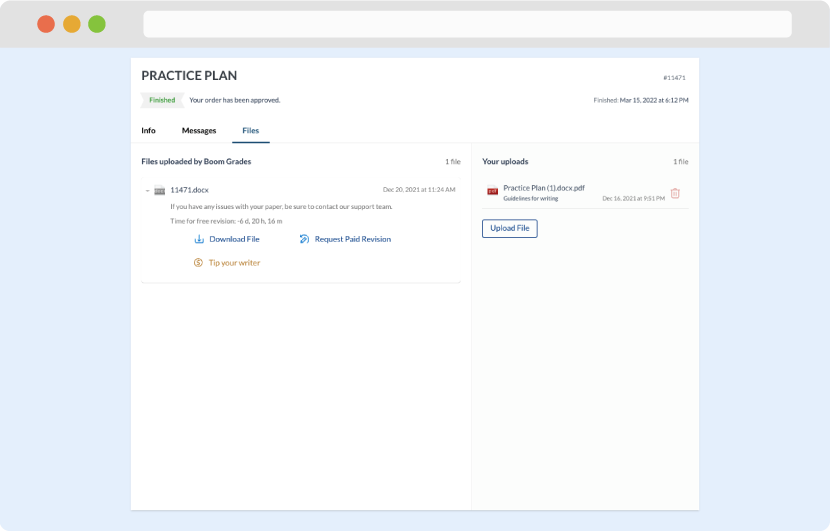
Once we have all the information and instructions that we need, we select the most suitable writer for your assignment. While everything seems to be clear, the writer, who has complete knowledge of the subject, may need clarification from you. It is at that point that you would receive a call or email from us.
Writer’s assignment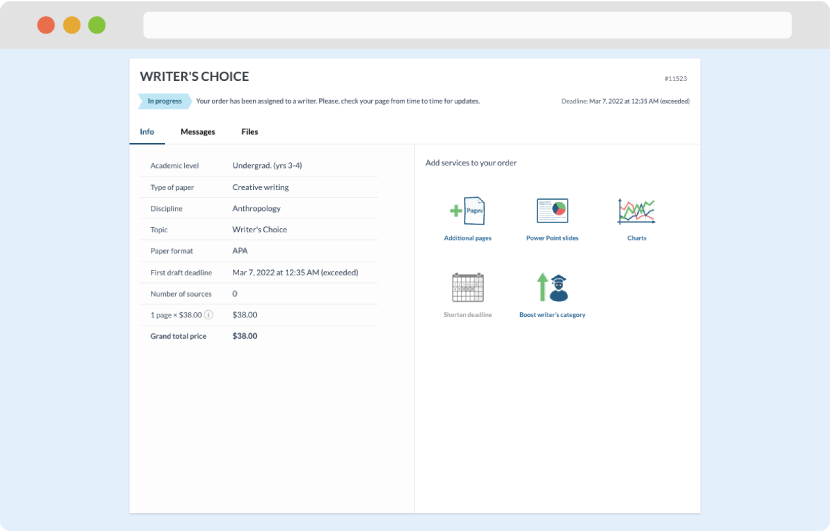
As soon as the writer has finished, it will be delivered both to the website and to your email address so that you will not miss it. If your deadline is close at hand, we will place a call to you to make sure that you receive the paper on time.
Completing the order and download