After World War II, as the world began to pick up its pieces, it soon became apparent that the pieces were not going to fit as they once had. As European and Western powers began to reluctantly part with their control of the Asian and African colonies, these colonies began to decolonize and rebuild. Asian and African people faced growing pains as their leaders attempted to force pieces into this puzzle and create new nations. They struggled with the decisions of how to rebuild, whether to rebuild in the footsteps of their repressors, or to build nations that were more democratic. Each of these pieces of the puzzle created a very different picture for the future of these nations.
As each piece finally began to find its proper place, new nations began to emerge. However, even when faced head-on with their newfound freedom, the Asian and African people were far from the end of conflict. These nations still had to determine what freedom actually meant to them and how they should embrace it.
Have these nations and their leaders truly answered these questions? Are nations at peace with these new structures or do power struggles still exist about the direction that the nations should be headed?
This week, you will trace the paths to independence for the peoples of Africa and Asia including the struggles they endured in their quest to be free from colonization.
Required Readings
Nkrumah, K. (1960). Address by Kwame Nkrumah at the United Nations.
Reynolds, D. (1997). The European response: primacy of politics. Foreign Affairs, (3), 171-184.
Reilly, K. (2012). The human journey: A concise introduction to world history. Lanham, MD: Rowman & Littlefield.
The Human Journey: A Concise Introduction to World History, 1450 to the Present, 2nd Edition by Reilly, K. Copyright 2012 by Rowman & Littlefield Publishers, Inc.. Reprinted by permission of Rowman & Littlefield Publishers, Inc. via the Copyright Clearance Center.
Read sections on “The United States as a Global Power,” “Achieving Independence” and “New Nations on the Global Stage.”
The Constitution of Japan. (1946).
Tse-tung, M. (1949). On the people’s democratic dictatorship.
World War II produced many of the most renowned political world leaders in Europe and the West. Each of these leaders had his own political and social ideologies that greatly influenced the new leaders of the Asian and African nations in their quest for independence after World War II.
In this Discussion, you will analyze the major developments of post–World War II and their impact on the new leaders of Asia and Africa as they became free from the control of European and Western nations. You will also uncover the influence that European and Western leaders left with these new leaders as they continued their struggle for independence.
To prepare for this Discussion:
,
, and
.
With these thoughts in mind:
Post by Day 3 a summary (2–3 paragraphs) of the ways that leaders in Asia and Africa thought about, used, or rejected Western institutions and ideas in shaping a post-colonial era. Be sure you consider the role of the Cold War in shaping the relationship of these countries with the West, and the US. Summarize attitudes towards and influences of:
Be sure to support your ideas by properly citing at least one of week’s Learning Resources, in APA format, within your initial post. As this is a post-first discussion board, you will not be able to see the work of your peers until you have posted the initial discussion requirement for the week.
Read a selection of your colleagues’ postings.
Respond to at least one of your colleagues’ postings in one or more of the following ways:
Return to this Discussion in a few days to read the responses to your initial posting. Note what you have learned and/or any insights you have gained as a result of the comments your colleagues made.
Discussion: The Western Influences on Asian and African Leaders
World War II produced many of the most renowned political world leaders in Europe and the West. Each of these leaders had his own political and social ideologies that greatly influenced the new leaders of the Asian and African nations in their quest for independence after World War II.
In this Discussion, you will analyze the major developments of post–World War II and their impact on the new leaders of Asia and Africa as they became free from the control of European and Western nations. You will also uncover the influence that European and Western leaders left with these new leaders as they continued their struggle for independence.
To prepare for this Discussion:
Review the readings in this week’s Learning Resources regarding Asian and African thoughts about Western influences and impacts.
Think about how African and Asian colonies fought to rebuild after World War II, and how they struggled to steer clear of building the same institutions their repressors once formed.
Consider the European and Western leaders’ journey and reflect on how they affected the Asian and African leaders. What do you think Asian and African leaders adopted from the ideas of the European and Western leaders? What do you think they discarded in their move towards independence?
Draw from the Learning Resources this week. Recall the pressures that the African and Asian nations experienced when adopting and crafting their own policies.
Reflect upon the African and Asian desire for change and what it meant to them as societies as they began to rebuild after World War II.
With these thoughts in mind:
By Day 3
Post by Day 3 a summary (2–3 paragraphs) of the ways that leaders in Asia and Africa thought about, used, or rejected Western institutions and ideas in shaping a post-colonial era. Be sure you consider the role of the Cold War in shaping the relationship of these countries with the West, and the US. Summarize attitudes towards and influences of:
Western political thought and institutions as they appear in the Japanese Constitution of 1946
Mao’s reflections of China’s revolutionary history in 1949
Kwame Nkrumah’s analysis of African nationalist movements
Be sure to support your ideas by properly citing at least one of week’s Learning Resources, in APA format, within your initial post. As this is a post-first discussion board, you will not be able to see the work of your peers until you have posted the initial discussion requirement for the week.
Read a selection of your colleagues’ postings.
By Day 5
Respond to at least one of your colleagues’ postings in one or more of the following ways:
Ask a probing question.
Share an insight from having read your colleague’s posting.
Offer and support an opinion.
Validate an idea with your own experience.
Make a suggestion.
Expand on your colleague’s posting.
Return to this Discussion in a few days to read the responses to your initial posting. Note what you have learned and/or any insights you have gained as a result of the comments your colleagues made.
Essay Writing Service Features
Our Experience
No matter how complex your assignment is, we can find the right professional for your specific task. Achiever Papers is an essay writing company that hires only the smartest minds to help you with your projects. Our expertise allows us to provide students with high-quality academic writing, editing & proofreading services.
Free Features
Free revision policy
$10Free bibliography & reference
$8Free title page
$8Free formatting
$8How Our Dissertation Writing Service Works
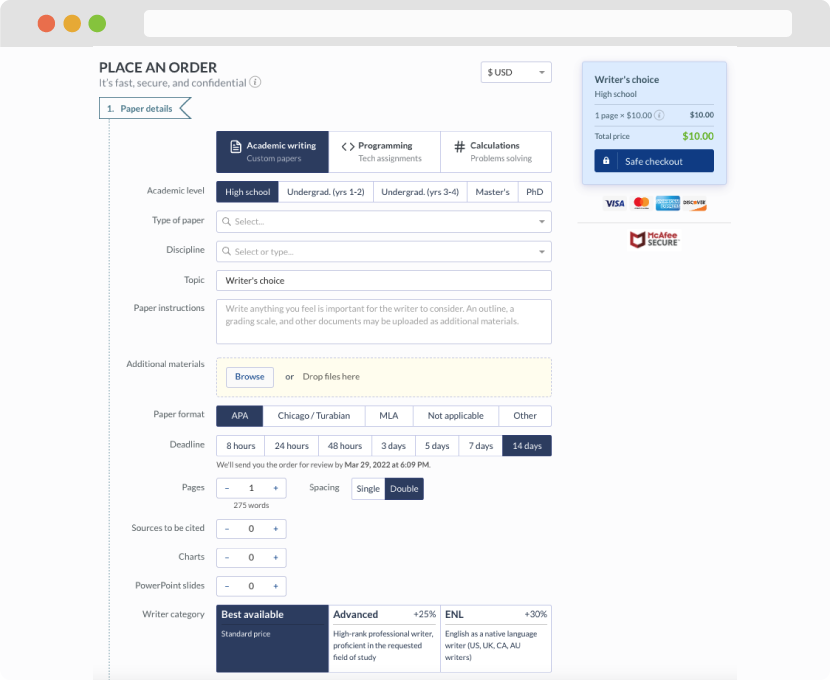
First, you will need to complete an order form. It's not difficult but, if anything is unclear, you may always chat with us so that we can guide you through it. On the order form, you will need to include some basic information concerning your order: subject, topic, number of pages, etc. We also encourage our clients to upload any relevant information or sources that will help.
Complete the order form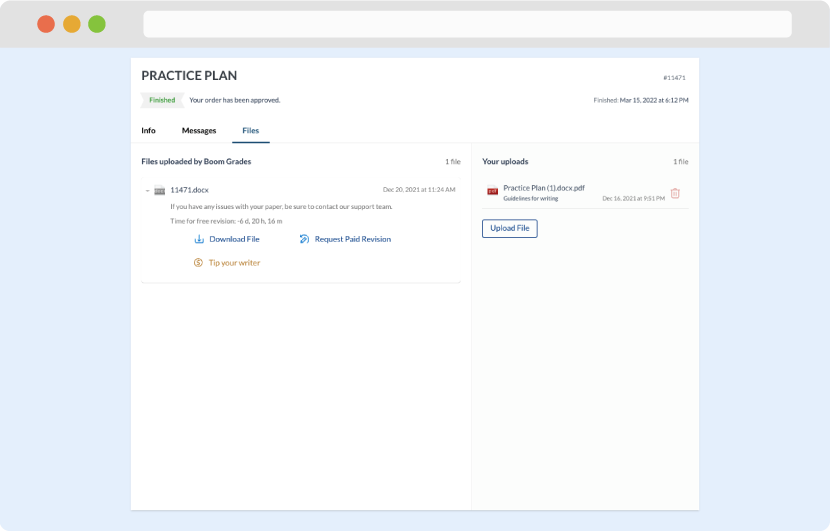
Once we have all the information and instructions that we need, we select the most suitable writer for your assignment. While everything seems to be clear, the writer, who has complete knowledge of the subject, may need clarification from you. It is at that point that you would receive a call or email from us.
Writer’s assignment
As soon as the writer has finished, it will be delivered both to the website and to your email address so that you will not miss it. If your deadline is close at hand, we will place a call to you to make sure that you receive the paper on time.
Completing the order and download