Select one of the eight practice problems that burden the overall health of the United States. Conduct a library search for one qualitative research study addressing this problem. Appraise the qualitative research study using the Johns Hopkins Research Evidence Appraisal Tool. For Me The Problem is OBESITY.
After appraising and determining the Level of Evidence and Grade of Quality for your selected qualitative study summarize your findings. Transfer your findings to the Johns Hopkins Individual Evidence Summary Tool. Complete each column including specific details about the qualitative study.
Include your completed Johns Hopkins Individual Evidence Summary Tool and your qualitative research study as an attachment with your initial post. Also, include a permalink for your selected qualitative research study with your initial discussion post. Confirm the link allows access to the full-text study article. Our faculty team will review both your research study and Johns Hopkins Individual Evidence Summary Tool and provide guidance.
Analyze the evidence summary of the selected qualitative research study to address the following.
1-Does the research design answer the research question? Explain your rationale.
2-Were the study sample participants representative? Why or why not?
3-Compare and contrast the study limitations in this study.
4-Based on this evidence summary, would you consider this qualitative research study as support for your selected practice problem? Explain your rationale.
Answer each questions separated.
I attached an example of the permalink for your selected qualitative research study with your initial discussion post and I attached Johns Hopkins Individual Evidence Summary Tool Template to be completed.
Some tips for completing the Johns Hopkins Evidence Summary Tool include:
–Articles selected for appraisal in this course must be current – within the past five years.
–When you are ready to upload your initial post, please upload your completed Johns Hopkins Evidence Summary Tool along with a permalink to your two selected qualitative research studies.
–A permalink is a full URL. If a permalink is not familiar to you here is a link to a tip sheet in Chamberlain’s Library:
https://library.chamberlain.edu/HowToSearch/Permalinks (Links to an external site.)
The other option is to upload your qualitative research study as a PDF. I will carefully read each of your studies along with reviewing your complete Johns Hopkins Evidence Summary Tool.
You can use these
References
:
References
1-Fleury, MJ., Grenier, G., Farand, L. et al. (2019). Use of emergency rooms for mental health reasons in Quebec: Barriers and facilitators. Adm Policy Ment Health 46, 18–33.
https://doi.org/10.1007/s10488-018-0889-3 (Links to an external site.)
2-Lützén, K. (2017). The value of qualitative methods in prioritized healthcare research.
Nordic Journal of Nursing Research (Links to an external site.)
, 37(4), 175-176. DOI:10.1177/2057158517745474
3-Perry, A., Lawrence, V., and Henderson, C. (2020). Stigmatisation of those with mental health conditions in the acute general hospital setting. Social Science & Medicine, Volume 255.
https://www-sciencedirect-com.chamberlainuniversity.idm.oclc.org/science/article/pii/S0277953620301933?via%3Dihub
Practice Question:
Date:
Author and Date
Sample, Sample Size, Setting
Evidence Level, Quality
· N/A
· N/A
· N/A
· N/A
· N/A
· N/A
· N/A
Attach a reference list with full citations of articles reviewed for this Practice question.
Johns Hopkins Nursing Evidence-Based Practice
Appendix G: Individual Evidence Summary Tool
The Johns Hopkins Hospital/ The Johns Hopkins University
1
Directions for Use of the Individual Evidence Summary Tool
This form is used to document the results of evidence appraisal in preparation for evidence synthesis. The form provides the EBP team with documentation of the sources of evidence used, the year the evidence was published or otherwise communicated, the information gathered from each evidence source that helps the team answer the EBP question, and the level and quality of each source of evidence.
Article Number
Assign a number to each reviewed source of evidence. This organizes the individual evidence summary and provides an easy way to reference articles.
Indicate the last name of the first author or the evidence source and the publication/communication date. List both author/evidence source and date.
Evidence Type
Indicate the type of evidence reviewed (for example: RCT, meta-analysis, mixed methods, qualitative, systematic review, case study, narrative literature review).
Provide a quick view of the population, number of participants, and study location.
Findings That Help Answer the EBP Question
Although the reviewer may find many points of interest, list only findings that directly apply to the EBP question.
Observable Measures
Quantitative measures or variables are used to answer a research question, test a hypothesis, describe characteristics, or determine the effect, impact, or influence. Qualitative evidence uses cases, context, opinions, experiences, and thoughts to represent the phenomenon of study.
Limitations
Include information that may or may not be within the text of the article regarding drawbacks of the piece of evidence. The evidence may list limitations, or it may be evident to you, as you review the evidence, that an important point is missed or the sample does not apply to the population of interest.
Using information from the individual appraisal tools, transfer the evidence level and quality rating into this column.
Perry, A., Lawrence, V., and Henderson, C. (2020). Stigmatisation of those with mental health conditions in the acute general hospital setting. Social Science & Medicine, Volume 255.
https://www-sciencedirect-com.chamberlainuniversity.idm.oclc.org/science/article/pii/S0277953620301933?via%3Dihub
Essay Writing Service Features
Our Experience
No matter how complex your assignment is, we can find the right professional for your specific task. Achiever Papers is an essay writing company that hires only the smartest minds to help you with your projects. Our expertise allows us to provide students with high-quality academic writing, editing & proofreading services.
Free Features
Free revision policy
$10Free bibliography & reference
$8Free title page
$8Free formatting
$8How Our Dissertation Writing Service Works
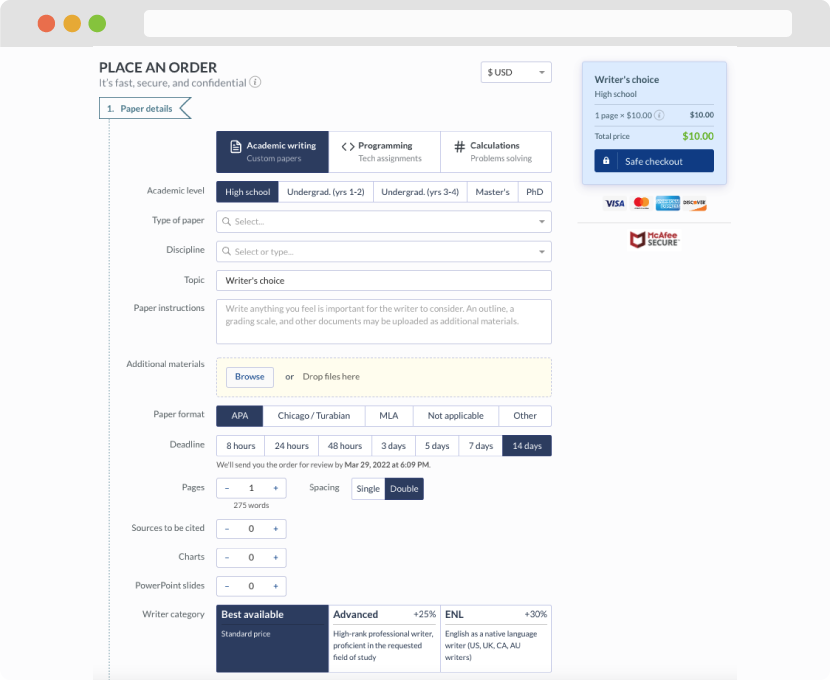
First, you will need to complete an order form. It's not difficult but, if anything is unclear, you may always chat with us so that we can guide you through it. On the order form, you will need to include some basic information concerning your order: subject, topic, number of pages, etc. We also encourage our clients to upload any relevant information or sources that will help.
Complete the order form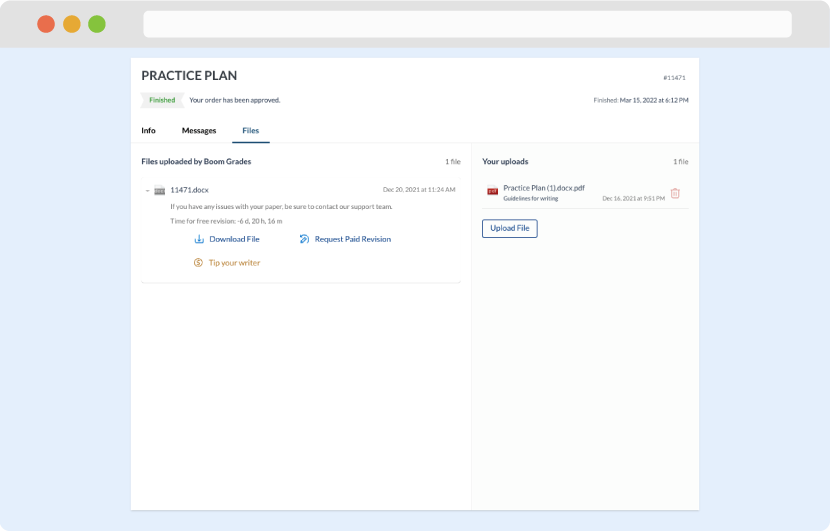
Once we have all the information and instructions that we need, we select the most suitable writer for your assignment. While everything seems to be clear, the writer, who has complete knowledge of the subject, may need clarification from you. It is at that point that you would receive a call or email from us.
Writer’s assignment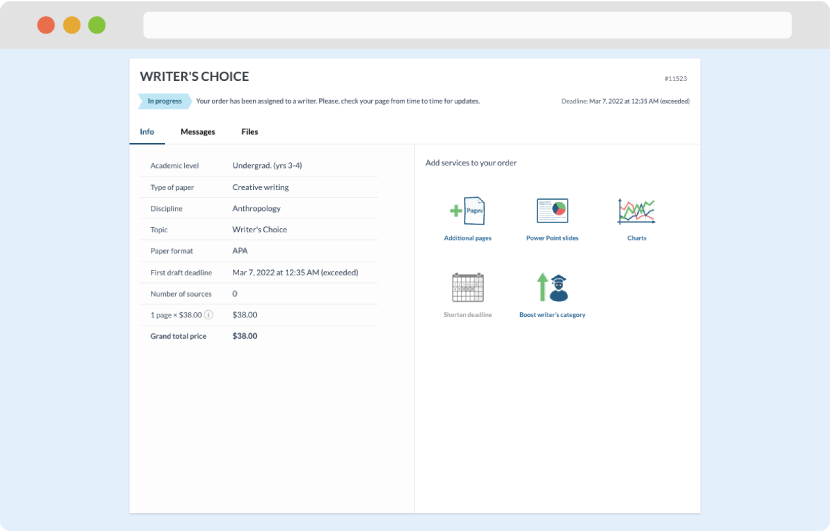
As soon as the writer has finished, it will be delivered both to the website and to your email address so that you will not miss it. If your deadline is close at hand, we will place a call to you to make sure that you receive the paper on time.
Completing the order and download