1st peer: Case Scenario 1
USPSTF
Women under age 40
No recommendation
s
No recommendation
No recommendations
Women aged 40-49 years
Start screening at 40 at 1-2 years interval
Start yearly screening at 45, 40 if personal risk factors,
Depending on individual family history/risk factors
Screenings every 1-2 years.
Starting age 55 mammograms every 1-2 years.
Start screening at 50. Every other year.
Continuing screenings beyond age 75 on a case-by-case basis
Stop screening when life expectancy falls under 10 years.
No recommendations
Women with dense breasts
No specific recommendations
No specific recommendationsNo specific recommendations
As you can see each organization has different screening guidelines, it is best to follow the protocols in your clinic for more guidance. Keep these guidelines in mind when answering the case scenario.
Table 2
The American College of Radiology Breast Imagine Reporting and Data Systems (BI-RADS)
Definition
BI-RADS 0
Incomplete/unreadable imaging. Call for repeat
BI-RADS 1
Negative
, no malignancy.
BI-RADS 2
Benign
Probably benign
Suspicious
4a: low suspicion of malignancy >2%<10% probability
4b: Moderate suspicion of malignancy >2% <50% probability
4c: High suspicion of malignancy >50%<95% probability
BI-RADS 5
>95% probability
BI-RADS 6
Malignant lesion confirmed with biopsy
Madeline is a 41-year-old female who complains of a small lump she feels in her right breast. Upon physical examination, you palpate an approximately 2×2 cm firm, non-tender, immobile mass in the right upper outer quadrant of the right breast at approximately 10 o’clock, 1 cm above the areola.
Write a brief SOAP note regarding this patient. Make sure to include your answers to these questions in your SOAP note.
Subjective
CC: “I noticed a lump on the outer side of my right breast”
HPI: The patient is 41-year-old who presents complaining of a non-tender, immobile mass on her right outer breast.
Medications: Are you currently taking any medication? “I’m not taking any medication.
Allergies: Do you have any allergies? “I’m allergic to sulfa medications”.
LMP: When was your last period day? “march 7th”
Gyn/OB history:
How many times were you ever pregnant? “I had 2 pregnancies”.
Are you periods regular” “yes, they are”
How old were you when you first had your period? “I was 14”
Have you noticed the lump changing in size over time?
Have you noticed any changes in the way your breasts look? Have you noticed redness, swelling or pain? “No”
Did you receive the HPV vaccine? “I had 3 doses”
Have you ever been exposed to radiation?
Sexual History
How old were you at your first sexual encounter? “At age 16”
When did you have a pap smear for the last time? “I had one last year”
Have you ever been diagnosed with an STD? “I had chlamydia when I was 20, and I was diagnosed with HSV a little later”
How many partners have you had over the past year? “1”
PMH: Have you ever had surgery? “I had a cesarean section to deliver my second child”
Chronic Illness/ Major trauma: Have you ever had any medical problem? “No”
Family Hx:
Are your maternal grandparents still alive?“Maternal grandmother is alive and being treated for hypertension and high cholesterol. Maternal grandfather died of a stroke.
Are your paternal grandparents still alive? “Both died years ago, i’m not sure of what.”
Are your parents still alive?Father: treated for hypertension and gout. Mother: has depression.
Are your siblings alive ? “I’m an only child”.
Social Hx:
Who do you live with? I live with my 2 kids, 18 and 14 year-old. I share custody with my ex-husband.
What do you do for a living?“I’m a graphic designer. I have a bachelor’s in sociology”
What is your diet typically like? “I work a lot so I don’t always have the time to cook. We eat a lot of frozen dinners and junk food”
Do you exercise?“I go to a yoga class twice a week”
Do you drink coffee? Alcohol? “I drink coffee everyday. I drink socially. I don’t smoke”
Do you do street drugs? “I don’t”
OS
Constitutional: Have you noticed night sweats, unintended weight loss, loss of appetite, chills, body aches? “None of those”
Vision : Do you have any vision problems? “My vision is fine”
HEENT: Do you have dizziness, ringing in the ears, vertigo? “None of the above”
Respiratory
: Do you have breathing problems like cough, blood in cough, difficulty breathing? “No breathing problems”
Cardiovascular
: Do you have chest pain, palpitation? “no”
GI: Do you have abdomen pain? “No”
GU/Reproductive:
Have you noticed vaginal discharge? “I have been urinating more than usual, and when I go I feel mild burning and pressure in my pelvic area. I haven’t noticed any discharge nor blood”
Have you been experiencing pain during intercourse? “No”
Have you noticed flank pain? “No”
Integumentary
: Have you noticed any non-healing wounds, or changing moles? “No”
stiffness.
Psychiatric: Are you feeling safe at home? “Yes”
Endocrine: have you been feeling more thirsty or noticed any change in your hair or nails? “No”
Hematologic: Have you noticed painful or swollen lymph nodes? “no”
Immunologic: Are your vaccines up to date? “I had the Tdap 6 years ago. I Had 3 doses of COVID vaccine”.
Objective
General
The patient is a pleasant 41 year-old woman who presents complaining of 2cm mass on her upper outer right breast. She is fully developed, well nourished, able to convey her state in full, coherent sentences.
VS: BP: 112/71; Pulse: 68; Respiratory:18; Temperature: 37.2ºC, Height: 160 cm; weight: 59kg; BMI: 23
List body systems- provide findings
Cardiovascular
No pulsation noted on the precordium. S1-S2 auscultated. No bruits or JVD noted. Capillaries refill under 3 seconds
Gastrointestinal
Flat abdomen, non-tender on palpation. Bowel sounds present in all 4 quadrants.
Respiratory
Unlabored breathing. Breaths sounds clear to auscultation on all lung fields
Integumentary
No skin lesions or rashes seen or noted upon skin assessment
GYN/GU
Breasts look grossly symmetrical. Nipples are outward, no discharge is elicited upon milking. Areolas are circular and color is consistent with ethnicity. A firm, immobile mass palpated on the upper outer quadrant of the right breast, approximately 2 in diameter.
Musculoskeletal
All joint ROM 5/5
Hematological
Axillary lymph nodes are not palpable
Diagnostic tests:
Mammogram. A radiography of the breast will allow to have a better understanding of the type of lesion and to stratify the risk for malignancy. If the result shows a less BI-RADS result less than 3, a directed ultrasonography should be performed. For BI-RADS risk assessment 4-5 a tissue biopsy is indicated (ACOG, 2016).
Assessment/ Diagnosis:
What is your presumptive diagnosis? Why?
Malignant neoplasm of upper-outer quadrant of right female breast (ICD 10: C50.411). Every mass found in the breast should be treated as breast cancer until proven benign (Alexander et al., 2023). The location (60% of breast carcinoma are located on the upper-outer area of the breast), the non-tender, unilateral, immobile nature of the mass.
Any other diagnosis or differential diagnosis you would like to add?
Cyst (ICD10: N63.11)
Right breast lipoma (ICD10: D24. 1)
Right breast fibroadenoma (ICD: N60.21)
Fibrocystic breast change (ICD10: N60.19). Breast malignancy is relatively uncommon before age 50, in particular in woman with negative family
Pertinent positive: patient’s age (<50), roughly follows menstruation pattern, upper-outer area of the breast.
Pertinent negative: family history, exposure to radiation and/or toxic, enlarged lymph nodes.
Plan:
What are your next steps and plan of care for this patient? Explain your rationale
Explain complications that can occur if patient does not comply with treatment regimen.
Left untreated a malignant neoplasm can progress and invade distant tissue and threaten the patient’s life.
2nd peer: Case Scenario 1
ACOGACSUSPSTFWomen under age 40
Perform monthly self exam and clinical breast exams every 1-3 years.
Does not recommend.
Not enough evidence to recommend for or against.
Women aged 40-49 years
Begin Annual Mammogram screenings.
Begin Mammograms at 50 years of age unless the patient is considered high risk.
Women aged 50-74 years
First mammogram should occur no later than 50 years of age and continue annual or biennially until 75.
Biennial screenings.
Women aged 75 years and older
Patients with negative history may stop at 75 years of age.
Discontinue screening when the life expectancy is estimated to be 10 years or less.
The current evidence is insufficient to assess benefits of screening for women 75 and older.
Women with dense breasts
ACOG does not recommend additionaldiagnostic screenings for women with dense breasts with no other risk factors due to research showing that these additional screenings do not reduce breast cancer death in these cases. Women with dense breasts and other risk factors or high risk factors may need ultrasound and MRI screenings (ACOG, 2024).
Any women dense breast tissue should follow mammography guidelines and may require additional screening with ultrasound or an MRI to detect breast cancer. There are 4 categories and 50% of women fall into the C&D categories with dense breast tissue (ACS, 2024).
Current evidence is insufficient to balance the benefits over harms of breast ultrasonography and MRIs for women categorized with dense breast tissue who have negative mammogram screenings. Positive findings may suggest more benefit for further diagnostic testing (USPTSF, 2023).
Table 2
The American College of Radiology Breast Imaging Reporting and Data Systems (BI-RADS)
DefinitionBI-RADS 0
Mammography incomplete-Need additional images
Ultrasound & MRI incomplete-Need additional images.
BI-RADS 1NegativeBI-RADS 2BenignBI-RADS 3Probably benignBI-RADS 4
Suspicious-Mammography & Ultrasound:
Category 4B: Moderate suspicion for malignancy
BI-RADS 5Highly suggestive of malignancyBI-RADS 6
Madeline is a 41-year-old female who complains of a small lump she feels in her right breast. Upon physical examination, you palpate an approximately 2×2 cm firm, non-tender, immobile mass in the right upper outer quadrant of the right breast at approximately 10 o’clock, 1 cm above the areola.
HPI:The patient reports first noticing the lump in her right breast two months ago, during a self-exam in the shower. The patient has not been tested for the BRCA gene and does not know of any familial history of breast cancer. She reports having some Ashkenazi Jewish ancestry on her mother’s side. The mother of two teenagers works as a school administrator and has a history of Mild Depressive Disorder that is well-controlled with medication that is prescribed by her psychiatrist. The patient describes herself as “otherwise healthy” eats a “Mediterranean diet and actively exercises for 30 minutes five days a week.” The patient denies any previous suicide attempts and has no thoughts of harming herself or others. The patient feels safe at home and has a good support system with her friends and family who live nearby.
Onset: of the lump began “2 months ago.”
Location:the lump is in the right breast 10 o/ clock position about 1 cm above the areola.
Duration: “2 months.”
Character: “Firm, immobile, and non-tender without touch.”
Aggravating factors:“massaging it.”
Relievingfactors are “avoiding touching it”
Timingis “intermittent.”
OB/GYN History:(G2P2A0L2) LMP: 3/29/2024. Periods are regular and occur every 28 days, lasting for 3-4 days with regular to light bleeding. Last Pap:5/2023 with HPV co-testing normal findings. Mammogram:Has not had.
Immunization Status:Influenza 9/2023, COVID-19 x 3 2020 and 9/2023. Tdap 2023. Gardasil 1996, and 1997.
Allergies: NKDA
Paternal Grandfather is deceased at 84, hypertension.
Maternal Grandfather is deceased at 90, MI.
Maternal Grandmother deceased at 76, CVA.
Father age 70, hypertension.
Mother age 64, hyperlipidemia.
Social History:Non-smoker, drinks alcohol 1-2 glasses of wine per week. No drug use. Works as a school administrator. Single mother of two.
ROS
General/Constitutional: The patient denies fever, chills, or unintentional weight loss.
Cardiovascular:The patient denies any shortness of breath, chest pain, or heart palpitations.
Respiratory:The patient denies any cough, orthopnea, wheezing, or dyspnea on exertion.
Gastrointestinal:The patient denies any abdominal pain, constipation, diarrhea, or blood in her stools.
OBJECTIVE
PHYSICAL EXAM
GENERAL/CONSTITUTIONAL:The patient presents as a well-developed 41-year-old woman. The patient appears anxious is alert and cooperative and responds appropriately to questions. The patient is afebrile.
Cardiovascular:Regular heart rate and rhythm. No bruits or thrills. No JVD and no edema.
Respiratory:The lungs are bilaterally clear to auscultation. No audible wheezes or rales.
Gastrointestinal:Bowel sounds are present in all 4 quadrants. No abdominal distention, guarding, or rebound tenderness was noted.
POCT:Clinical breast exam (+)
ASSESSMENT/Diagnosis:
C50.4 Malignant neoplasm of upper-outer quadrant of femaleThe majority of breast cancers are sporadic in patients without a family history of breast cancer. Breast cancers that are detected clinically are typically of an advanced stage. Findings on a physical exam alone cannot definitively establish benign or malignant status, however, fixed immovable masses are suspicious of malignancy. Diagnostic mammography is indicated to guide further diagnosis (Epocrates, 2024).
N63.11 Unspecified lump in the right breast, upper outer quadrant-Breast masses are a common clinical finding and the majority are found to be benign. Only 10% of women with breast masses will have a diagnosis of cancer. This patient does not have a family history that is significant for breast cancer but she does have Ashkenazi Jewish ancestry (Epocrates, 2024).
D24.1 Benign neoplasm of the right breast-Excludes adenofibrosis, benign cyst of a breast, fibrocystic breast disease. Includes fibroadenoma, benign neoplasm of connective tissue of the breast. This must be confirmed with mammography and possibly ultrasound or MRI imaging (Epocrates, 2024).
PLAN
PHARMACOLOGIC:(If Diagnostic Tests confirm malignant neoplasm of the right breast) Refer to an Oncologist who may prescribe Tamoxifen medication 20 mg tablet PO once daily (90 tablets with 3 refills). Endocrine therapy is considered standard as adjuvant therapy for premenopausal patients status post lumpectomy, with HR-positive breast cancer for 5–10 years. Tamoxifen 20 mg PO once per day for 5 years could reduce about 50% recurrence risk in the first 4 years, and over 30% during 5–9 years, and a longer duration of Tamoxifen resulted in further reduction of recurrence and breast cancer mortality (Wang et al., 2023) Adverse reactions may include edema, hot flashes, nausea, vaginal bleeding, anemia, arthritis, rash, hypertension, infection, insomnia, anemia and flu-like symptoms (Epocrates, 2024). Chemotherapy and/or Radiation may also be ordered per oncologist specifications.
NON-PHARMACOLOGIC:(If Diagnostic Tests confirm malignant neoplasm of the right breast) Refer to Oncologist and Surgeon for lumpectomy per oncologist recommendations. Referral to Counseling and Support Group for Breast Cancer Survivors. The focus of managing treatment for a cancer patient is to provide them with accurate information and resources for providing appropriate and individualized treatment options with a highly specialized interdisciplinary team (Valentini et al., 2023).
PATIENT EDUCATION:Anxiety is a common symptom reported by women who are undergoing breast cancer screenings and treatment. Utilizing resources for coping significantly improves coping with associated emotional and mental stress (Grimm et al., 2022). Mammograms are utilized for both screening and diagnosis. A diagnostic mammogram assists in detecting breast cancer and determining appropriate treatment parameters when a woman experiences symptoms such as a lump in her breast (Bushan et al., 2022). Breast-conserving surgery (BCS) and mastectomy with or without immediate reconstruction are both well-established local managements for early invasive breast cancer. Other treatments for breast cancer include chemotherapy, radiotherapy, endocrine therapy, targeted therapy, and immunotherapy. Endocrine therapy medications are indicated for pre and perimenopausal women and require a negative pregnancy test within 7 days of initiation (Wang et al.,2023). Report severe pain, hypersensitivity reaction, or any severe or worsening symptoms to your healthcare provider, and call 911 if you experience chest pain or difficulty breathing.
FOLLOW-UP: In 4 weeks discuss the results of mammography findings, make additional referrals for counseling and support groups, and discuss the treatment plan.
Essay Writing Service Features
Our Experience
No matter how complex your assignment is, we can find the right professional for your specific task. Achiever Papers is an essay writing company that hires only the smartest minds to help you with your projects. Our expertise allows us to provide students with high-quality academic writing, editing & proofreading services.
Free Features
Free revision policy
$10Free bibliography & reference
$8Free title page
$8Free formatting
$8How Our Dissertation Writing Service Works
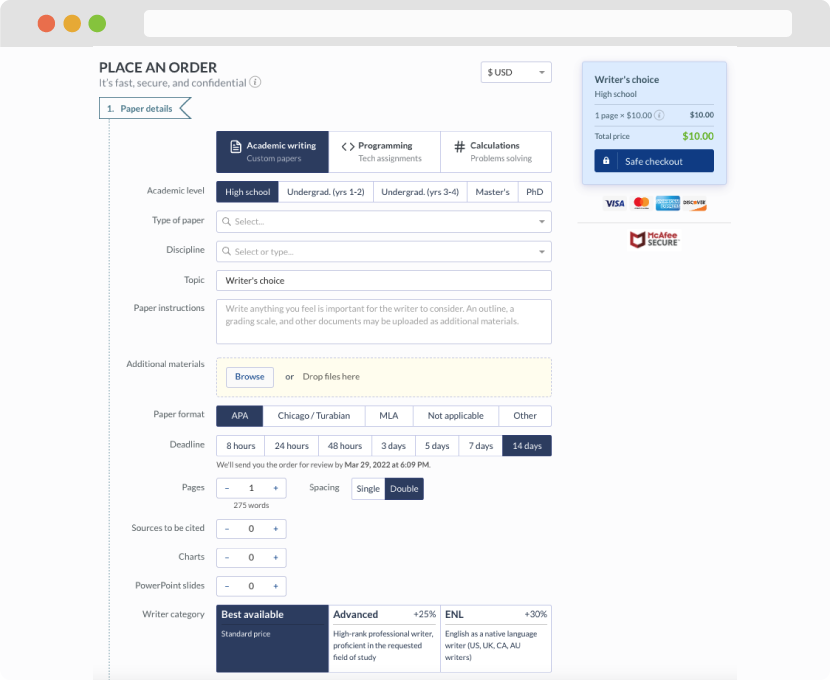
First, you will need to complete an order form. It's not difficult but, if anything is unclear, you may always chat with us so that we can guide you through it. On the order form, you will need to include some basic information concerning your order: subject, topic, number of pages, etc. We also encourage our clients to upload any relevant information or sources that will help.
Complete the order form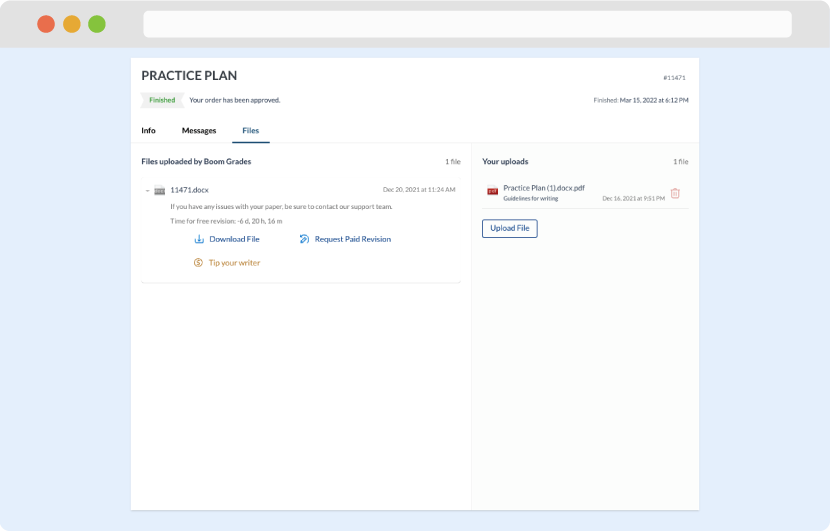
Once we have all the information and instructions that we need, we select the most suitable writer for your assignment. While everything seems to be clear, the writer, who has complete knowledge of the subject, may need clarification from you. It is at that point that you would receive a call or email from us.
Writer’s assignment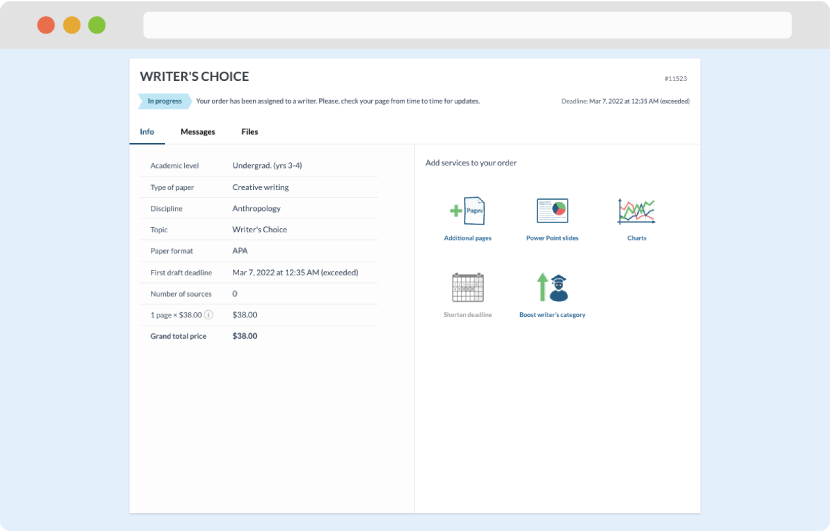
As soon as the writer has finished, it will be delivered both to the website and to your email address so that you will not miss it. If your deadline is close at hand, we will place a call to you to make sure that you receive the paper on time.
Completing the order and download