Analyze these data to determine if there is a relationship between airport location and runway incursion errors.
Airport
Runway
ID Incursion Error
ORD
OE
ATL
OE
LAX
OE
ORD
VPD
ORD
VPD
LAX
PD
LAX
OE
ATL
VPD
LAX
PD
LAX
PD
LAX
PD
LAX
OE
ORD
VPD
ORD
OE
LAX
PD
LAX
PD
LAX
OE
LAX
OE
ATL
PD
CLT
PD
CLT
PD
DVT
PD
ATL
PD
ORD
VPD
ORD
PD
ORD
OE
DVT
PD
CLT
OE
ORD
OE
LAX
PD
CLT
OE
CLT
OE
LAX
PD
DVT
VPD
ATL
OE
DVT
VPD
DVT
PD
ATL
OE
CLT
PD
LAX
PD
DVT
PD
DVT
PD
DVT
PD
LAX
PD
ATL
VPD
DVT
PD
ATL
DVT
DVT
DVT
DVT
LAX
CLT
DVT
DVT
DVT
CLT
DVT
ORD
ATL
CLT
DVT
ATL
ATL
LAX
DVT
ATL
CLT
DVT
ATL
LAX
ORD
ATL
DVT
CLT
DVT
DVT
LAX
DVT
LAX
CLT
ATL
ATL
ORD
DVT
ORD
DVT
LAX
LAX
ORD
DVT
DVT
LAX
VPD
PD
PD
PD
PD
PD
VPD
OE
PD
PD
VPD
PD
OE
PD
VPD
PD
PD
OE
PD
VPD
PD
PD
PD
PD
PD
OE
PD
PD
PD
PD
PD
PD
PD
PD
OE
OE
PD
PD
PD
PD
PD
PD
PD
VPD
PD
PD
PD
ORD
ATL
ORD
DVT
DVT
DVT
DVT
DVT
DVT
ORD
ATL
CLT
ORD
DVT
LAX
CLT
ATL
LAX
ORD
DVT
DVT
LAX
ATL
DVT
DVT
ORD
ORD
DVT
ORD
DVT
ORD
ATL
ATL
DVT
LAX
ORD
ATL
DVT
ATL
LAX
DVT
DVT
LAX
ATL
DVT
LAX
LAX
PD
PD
OE
PD
PD
PD
PD
PD
PD
OE
PD
VPD
OE
PD
PD
OE
PD
PD
PD
PD
PD
PD
PD
PD
PD
OE
PD
PD
VPD
PD
OE
PD
PD
PD
PD
OE
OE
PD
VPD
PD
PD
PD
PD
PD
PD
PD
PD
DVT
LAX
LAX
CLT
DVT
DVT
DVT
DVT
LAX
LAX
CLT
LAX
ORD
ATL
CLT
ATL
LAX
ORD
CLT
DVT
ORD
DVT
LAX
DVT
ORD
ORD
ATL
DVT
DVT
DVT
DVT
DVT
CLT
DVT
DVT
LAX
LAX
ATL
ATL
ORD
CLT
DVT
DVT
ORD
DVT
CLT
ORD
PD
OE
OE
PD
PD
PD
OE
PD
OE
OE
VPD
PD
PD
VPD
VPD
VPD
PD
OE
VPD
PD
PD
PD
PD
PD
PD
OE
VPD
PD
PD
OE
PD
PD
PD
PD
PD
PD
VPD
PD
PD
PD
PD
PD
PD
OE
PD
PD
VPD
LAX
LAX
LAX
ATL
ATL
LAX
LAX
DVT
DVT
DVT
CLT
ATL
ATL
DVT
ATL
DVT
ATL
DVT
ORD
DVT
ORD
DVT
DVT
DVT
CLT
DVT
DVT
ATL
LAX
DVT
LAX
ORD
CLT
DVT
LAX
ATL
DVT
ORD
ATL
DVT
ORD
DVT
CLT
ORD
DVT
DVT
ORD
PD
PD
VPD
VPD
PD
PD
PD
PD
PD
VPD
OE
PD
PD
PD
PD
PD
PD
PD
PD
PD
OE
OE
OE
PD
PD
VPD
PD
PD
VPD
PD
PD
OE
PD
PD
PD
PD
PD
OE
PD
PD
VPD
OE
OE
OE
PD
PD
PD
CLT
ATL
ATL
CLT
LAX
CLT
LAX
LAX
LAX
DVT
ATL
LAX
ATL
ATL
ORD
LAX
CLT
DVT
LAX
CLT
DVT
CLT
ORD
DVT
LAX
ORD
ATL
ORD
CLT
DVT
ORD
ATL
ORD
LAX
CLT
ATL
DVT
CLT
ATL
ORD
ORD
ATL
ORD
CLT
CLT
CLT
CLT
OE
OE
PD
PD
PD
OE
PD
OE
PD
PD
PD
PD
OE
PD
OE
OE
VPD
PD
OE
PD
PD
PD
OE
PD
OE
PD
VPD
PD
PD
VPD
OE
VPD
VPD
PD
PD
OE
PD
PD
PD
PD
PD
OE
PD
OE
OE
PD
PD
CLT
ATL
ORD
DVT
DVT
LAX
ORD
ORD
ATL
CLT
CLT
CLT
CLT
CLT
CLT
ORD
CLT
ORD
CLT
ORD
CLT
CLT
CLT
CLT
ATL
CLT
ORD
CLT
CLT
ATL
LAX
ORD
CLT
DVT
CLT
ORD
CLT
ATL
CLT
DVT
ATL
CLT
ATL
CLT
CLT
CLT
CLT
VPD
PD
OE
PD
PD
PD
VPD
VPD
PD
OE
OE
OE
OE
OE
OE
PD
OE
PD
OE
OE
OE
OE
OE
OE
PD
OE
OE
OE
OE
VPD
PD
PD
OE
OE
OE
PD
OE
PD
OE
PD
PD
OE
PD
OE
OE
OE
OE
CLT
CLT
CLT
CLT
ORD
ATL
LAX
ORD
ATL
CLT
ORD
CLT
CLT
LAX
CLT
ORD
ATL
CLT
CLT
CLT
CLT
CLT
CLT
ORD
CLT
CLT
CLT
ATL
CLT
CLT
ATL
CLT
CLT
CLT
ORD
ORD
CLT
CLT
CLT
CLT
ATL
CLT
CLT
CLT
ATL
CLT
LAX
OE
OE
OE
OE
OE
PD
PD
OE
PD
OE
OE
OE
OE
VPD
OE
OE
OE
OE
OE
OE
OE
OE
OE
OE
OE
PD
OE
OE
OE
OE
PD
OE
OE
OE
OE
PD
OE
OE
OE
OE
PD
OE
OE
OE
PD
OE
PD
CLT
CLT
CLT
CLT
LAX
CLT
CLT
CLT
CLT
CLT
CLT
ORD
CLT
CLT
CLT
ORD
ORD
CLT
CLT
LAX
CLT
CLT
CLT
CLT
ATL
CLT
CLT
CLT
ATL
ORD
ATL
ATL
CLT
ATL
CLT
LAX
ORD
LAX
CLT
CLT
CLT
CLT
ATL
CLT
CLT
CLT
LAX
OE
OE
OE
OE
VPD
OE
OE
OE
OE
OE
OE
VPD
PD
OE
OE
OE
OE
OE
OE
VPD
OE
OE
OE
OE
OE
OE
OE
PD
OE
PD
VPD
OE
OE
VPD
OE
PD
OE
OE
OE
OE
OE
OE
OE
OE
OE
OE
PD
CLT
CLT
CLT
ORD
ORD
ATL
ORD
CLT
CLT
CLT
CLT
ORD
ORD
ATL
CLT
CLT
CLT
CLT
ORD
CLT
CLT
CLT
CLT
CLT
LAX
CLT
CLT
CLT
LAX
ORD
CLT
ORD
CLT
LAX
CLT
CLT
ATL
CLT
ATL
CLT
CLT
LAX
ORD
CLT
CLT
CLT
ATL
OE
OE
OE
OE
PD
OE
OE
OE
OE
OE
OE
OE
OE
OE
OE
PD
OE
OE
OE
OE
OE
OE
PD
OE
PD
OE
PD
OE
PD
PD
OE
OE
OE
PD
OE
OE
PD
OE
OE
OE
OE
PD
PD
OE
OE
OE
OE
LAX
CLT
CLT
LAX
ORD
CLT
CLT
CLT
CLT
CLT
CLT
CLT
CLT
ATL
CLT
CLT
DVT
CLT
CLT
CLT
CLT
CLT
CLT
CLT
CLT
LAX
CLT
CLT
CLT
CLT
CLT
CLT
CLT
CLT
CLT
CLT
CLT
CLT
ATL
CLT
CLT
CLT
CLT
CLT
CLT
CLT
CLT
PD
OE
OE
PD
OE
OE
OE
OE
OE
OE
OE
OE
OE
OE
OE
OE
VPD
OE
OE
OE
OE
OE
OE
OE
OE
PD
OE
OE
OE
OE
OE
PD
OE
OE
OE
OE
OE
OE
OE
OE
OE
OE
OE
OE
OE
OE
OE
CLT
CLT
CLT
CLT
LAX
CLT
CLT
CLT
CLT
CLT
CLT
CLT
CLT
CLT
CLT
CLT
CLT
ATL
ATL
LAX
LAX
CLT
LAX
LAX
ATL
LAX
LAX
ORD
ORD
ORD
LAX
ATL
LAX
LAX
LAX
LAX
ORD
LAX
CLT
ATL
ATL
LAX
LAX
LAX
OE
OE
PD
OE
PD
OE
OE
OE
OE
OE
OE
OE
OE
OE
OE
OE
OE
OE
PD
PD
PD
VPD
PD
PD
VPD
PD
PD
VPD
VPD
VPD
PD
PD
PD
OE
VPD
PD
VPD
PD
VPD
VPD
VPD
PD
VPD
PD
Week 14
Two-Way Chi-Square
Graded Assignment
The Excel file “Week 14 Graded Assignment Data” contains a subset of the runway
incursions data acquired from the FAA’s runway incursions database for five airports that had
the highest frequency of reported runway incursions between January 2008 and August 2013.
Your assignment is to analyze these data to determine if there is a relationship between airport
location and runway incursion errors.
The airports are: Hartsfield–Jackson Atlanta International (ATL), Charlotte Douglas
International (CLT), Phoenix Deer Valley (DVT), Los Angeles International (LAX), and O’Hare
International (ORD). Furthermore, the runway incursion errors include: Operational Errors
(OEs), which consist of operational incidents, operational deviations, and “other”; Pilot
Deviations (PDs); and Vehicle/Pedestrian Deviations (V/PDs). For ease of grading, let X =
Airport Location and Y = Runway Incursion Error.
A. Pre-Data Analysis
1. What is the research question and corresponding operational definitions?
2. What is the research methodology/design and why is this methodology appropriate?
3. Conduct an a priori power analysis to determine the minimum sample size needed. Is the
given data set sufficient relative to this minimum sample size? In what way do you think
the size of the given sample will impact the results?
B. Data Analysis
Using the data from the Excel file conduct a hypothesis test as follows:
1. Formulate the null and alternative hypotheses in words.
2. Determine the test criteria.
3. Confirm the data set is compliant with the two primary assumptions for chi-square.
4. Run the analysis and record the results, or calculate the chi-square test statistic by hand
similar to what was done in the guided example.
5. Make a decision to reject or fail to reject the null hypothesis and write a concluding statement.
C. Post-Data Analysis
1. Determine and interpret the effect size.
2. Determine and interpret the power of the study.
3. Present at least three plausible explanations for the results.
4. Interpret the findings from a practical perspective.
Weather Runway
Conditions
Incursion Errors
VMC
OE
IMC
OE
VMC
OE
VMC
VPD
VMC
VPD
VMC
PD
VMC
OE
VMC
VPD
IMC
PD
IMC
PD
VMC
PD
VMC
OE
VMC
VPD
VMC
OE
VMC
PD
VMC
PD
VMC
OE
IMC
OE
VMC
PD
VMC
PD
VMC
PD
VMC
PD
VMC
PD
IMC
VPD
VMC
PD
VMC
OE
VMC
PD
VMC
OE
VMC
OE
IMC
PD
VMC
OE
VMC
OE
IMC
PD
VMC
VPD
VMC
OE
VMC
VPD
VMC
PD
VMC
OE
VMC
PD
IMC
PD
VMC
PD
VMC
PD
VMC
PD
VMC
PD
VMC
VPD
VMC
PD
IMC
VMC
VMC
VMC
VMC
VMC
VMC
VMC
VMC
VMC
VMC
VMC
VMC
VMC
VMC
VMC
VMC
VMC
IMC
VMC
VMC
VMC
VMC
VMC
VMC
VMC
VMC
VMC
VMC
VMC
VMC
IMC
VMC
VMC
VMC
VMC
VMC
VMC
VMC
VMC
VMC
VMC
VMC
VMC
VMC
VMC
VMC
VPD
PD
PD
PD
PD
PD
VPD
OE
PD
PD
VPD
PD
OE
PD
VPD
PD
PD
OE
PD
VPD
PD
PD
PD
PD
PD
OE
PD
PD
PD
PD
PD
PD
PD
PD
OE
OE
PD
PD
PD
PD
PD
PD
PD
VPD
PD
PD
PD
VMC
VMC
VMC
VMC
VMC
VMC
VMC
VMC
VMC
VMC
VMC
VMC
IMC
VMC
VMC
VMC
IMC
VMC
VMC
VMC
VMC
VMC
VMC
VMC
VMC
VMC
VMC
VMC
VMC
VMC
VMC
VMC
VMC
VMC
VMC
VMC
VMC
VMC
VMC
VMC
VMC
VMC
VMC
VMC
VMC
VMC
VMC
PD
PD
OE
PD
PD
PD
PD
PD
PD
OE
PD
VPD
OE
PD
PD
OE
PD
PD
PD
PD
PD
PD
PD
PD
PD
OE
PD
PD
VPD
PD
OE
PD
PD
PD
PD
OE
OE
PD
VPD
PD
PD
PD
PD
PD
PD
PD
PD
VMC
IMC
VMC
VMC
VMC
VMC
VMC
VMC
VMC
VMC
VMC
VMC
VMC
VMC
VMC
VMC
VMC
VMC
IMC
VMC
VMC
VMC
VMC
VMC
VMC
VMC
VMC
VMC
VMC
VMC
VMC
VMC
VMC
VMC
VMC
VMC
VMC
VMC
VMC
VMC
VMC
VMC
VMC
VMC
VMC
VMC
VMC
PD
OE
OE
PD
PD
PD
OE
PD
OE
OE
VPD
PD
PD
VPD
VPD
VPD
PD
OE
VPD
PD
PD
PD
PD
PD
PD
OE
VPD
PD
PD
OE
PD
PD
PD
PD
PD
PD
VPD
PD
PD
PD
PD
PD
PD
OE
PD
PD
VPD
VMC
VMC
VMC
VMC
VMC
VMC
VMC
VMC
VMC
VMC
VMC
VMC
VMC
VMC
VMC
VMC
VMC
VMC
VMC
VMC
VMC
VMC
VMC
VMC
VMC
VMC
VMC
VMC
VMC
VMC
VMC
VMC
VMC
VMC
VMC
VMC
VMC
VMC
VMC
VMC
VMC
VMC
VMC
VMC
VMC
VMC
VMC
PD
PD
VPD
VPD
PD
PD
PD
PD
PD
VPD
OE
PD
PD
PD
PD
PD
PD
PD
PD
PD
OE
OE
OE
PD
PD
VPD
PD
PD
VPD
PD
PD
OE
PD
PD
PD
PD
PD
OE
PD
PD
VPD
OE
OE
OE
PD
PD
PD
VMC
VMC
VMC
VMC
VMC
VMC
VMC
VMC
VMC
VMC
VMC
VMC
VMC
VMC
VMC
VMC
VMC
VMC
VMC
VMC
VMC
VMC
VMC
VMC
VMC
VMC
VMC
VMC
VMC
VMC
VMC
VMC
VMC
VMC
VMC
VMC
VMC
IMC
VMC
VMC
VMC
VMC
VMC
VMC
VMC
VMC
VMC
OE
OE
PD
PD
PD
OE
PD
OE
PD
PD
PD
PD
OE
PD
OE
OE
VPD
PD
OE
PD
PD
PD
OE
PD
OE
PD
VPD
PD
PD
VPD
OE
VPD
VPD
PD
PD
OE
PD
PD
PD
PD
PD
OE
PD
OE
OE
PD
PD
VMC
VMC
VMC
VMC
VMC
VMC
VMC
VMC
VMC
VMC
VMC
VMC
VMC
VMC
VMC
IMC
VMC
VMC
VMC
VMC
VMC
VMC
VMC
VMC
VMC
VMC
VMC
VMC
VMC
VMC
VMC
VMC
VMC
VMC
VMC
VMC
VMC
VMC
VMC
VMC
VMC
VMC
VMC
VMC
VMC
VMC
VMC
VPD
PD
OE
PD
PD
PD
VPD
VPD
PD
OE
OE
OE
OE
OE
OE
PD
OE
PD
OE
OE
OE
OE
OE
OE
PD
OE
OE
OE
OE
VPD
PD
PD
OE
OE
OE
PD
OE
PD
OE
PD
PD
OE
PD
OE
OE
OE
OE
VMC
VMC
VMC
VMC
VMC
VMC
VMC
VMC
IMC
VMC
VMC
VMC
VMC
IMC
VMC
VMC
VMC
VMC
VMC
VMC
VMC
VMC
VMC
VMC
VMC
VMC
VMC
VMC
VMC
VMC
VMC
VMC
VMC
VMC
VMC
VMC
VMC
VMC
VMC
VMC
VMC
VMC
VMC
VMC
VMC
VMC
VMC
OE
OE
OE
OE
OE
PD
PD
OE
PD
OE
OE
OE
OE
VPD
OE
OE
OE
OE
OE
OE
OE
OE
OE
OE
OE
PD
OE
OE
OE
OE
PD
OE
OE
OE
OE
PD
OE
OE
OE
OE
PD
OE
OE
OE
PD
OE
PD
VMC
VMC
VMC
VMC
VMC
VMC
VMC
VMC
VMC
VMC
VMC
VMC
VMC
VMC
VMC
VMC
VMC
VMC
VMC
VMC
VMC
VMC
VMC
VMC
VMC
VMC
VMC
VMC
VMC
VMC
VMC
VMC
VMC
VMC
VMC
VMC
VMC
VMC
VMC
VMC
VMC
VMC
VMC
VMC
VMC
VMC
VMC
OE
OE
OE
OE
VPD
OE
OE
OE
OE
OE
OE
VPD
PD
OE
OE
OE
OE
OE
OE
VPD
OE
OE
OE
OE
OE
OE
OE
PD
OE
PD
VPD
OE
OE
VPD
OE
PD
OE
OE
OE
OE
OE
OE
OE
OE
OE
OE
PD
VMC
VMC
VMC
IMC
IMC
VMC
VMC
VMC
VMC
VMC
VMC
VMC
VMC
VMC
VMC
VMC
VMC
VMC
VMC
VMC
VMC
VMC
VMC
VMC
VMC
VMC
VMC
VMC
VMC
VMC
VMC
VMC
VMC
VMC
VMC
VMC
VMC
VMC
VMC
VMC
VMC
VMC
IMC
VMC
VMC
VMC
VMC
OE
OE
OE
OE
PD
OE
OE
OE
OE
OE
OE
OE
OE
OE
OE
PD
OE
OE
OE
OE
OE
OE
PD
OE
PD
OE
PD
OE
PD
PD
OE
OE
OE
PD
OE
OE
PD
OE
OE
OE
OE
PD
PD
OE
OE
OE
OE
VMC
VMC
VMC
VMC
VMC
VMC
VMC
VMC
VMC
VMC
VMC
VMC
VMC
VMC
VMC
VMC
VMC
VMC
VMC
VMC
VMC
VMC
VMC
VMC
VMC
VMC
VMC
VMC
VMC
VMC
VMC
VMC
VMC
VMC
VMC
VMC
VMC
VMC
IMC
VMC
VMC
VMC
VMC
VMC
VMC
VMC
VMC
PD
OE
OE
PD
OE
OE
OE
OE
OE
OE
OE
OE
OE
OE
OE
OE
VPD
OE
OE
OE
OE
OE
OE
OE
OE
PD
OE
OE
OE
OE
OE
PD
OE
OE
OE
OE
OE
OE
OE
OE
OE
OE
OE
OE
OE
OE
OE
VMC
VMC
VMC
VMC
VMC
VMC
VMC
VMC
VMC
VMC
VMC
VMC
VMC
VMC
VMC
VMC
IMC
VMC
VMC
VMC
VMC
VMC
VMC
VMC
VMC
VMC
VMC
VMC
VMC
VMC
VMC
VMC
VMC
IMC
VMC
VMC
VMC
VMC
VMC
VMC
IMC
VMC
VMC
VMC
OE
OE
PD
OE
PD
OE
OE
OE
OE
OE
OE
OE
OE
OE
OE
OE
OE
OE
PD
PD
PD
VPD
PD
PD
VPD
PD
PD
VPD
VPD
VPD
PD
PD
PD
OE
VPD
PD
VPD
PD
VPD
VPD
VPD
PD
VPD
PD
Flight Status Opinion
Flight Student
Support
Flight Student
Support
Flight Student
Support
Flight Student
Support
Flight Student
Support
Flight Student
Support
Flight Student
Support
Flight Student
Support
Flight Student
Support
Flight Student
Support
Flight Student
Support
Flight Student
Support
Flight Student
Support
Flight Student
Support
Flight Student
Support
Flight Student
Support
Flight Student
Support
Flight Student
Support
Flight Student
Support
Flight Student
Support
Flight Student
Support
Flight Student
Support
Flight Student
Support
Flight Student
Support
Flight Student
Support
Flight Student
Support
Flight Student
Support
Flight Student
Support
Flight Student
Support
Flight Student
Oppose
Flight Student
Oppose
Flight Student
Oppose
Flight Student
Oppose
Flight Student
Oppose
Flight Student
Oppose
Flight Student
Oppose
Flight Student
Oppose
Flight Student
Oppose
Flight Student
Oppose
Flight Student
Oppose
Flight Student
Oppose
Flight Student
Oppose
Flight Student
Oppose
Flight Student
Oppose
Flight Student
Oppose
Flight Student
Oppose
Flight Student
Oppose
Flight Student
Oppose
Flight Student
Oppose
Flight Student
Oppose
Flight Student
Oppose
Flight Student
Oppose
Flight Student
Oppose
Flight Student
Oppose
Flight Student
Oppose
Flight Student
Oppose
Flight Student
Oppose
Flight Student
Oppose
Flight Student
Oppose
Flight Student
Oppose
Flight Student
Oppose
Flight Student
Oppose
Flight Student
Oppose
Flight Student
Oppose
Flight Student
Oppose
Flight Student
No Opinion
Flight Student
No Opinion
Flight Student
No Opinion
Flight Student
No Opinion
Flight Student
No Opinion
Flight Student
No Opinion
Flight Student
No Opinion
Flight Student
No Opinion
Flight Student
No Opinion
Flight Student
No Opinion
Flight Student
No Opinion
Flight Student
No Opinion
Flight Student
No Opinion
Flight Student
No Opinion
Flight Student
No Opinion
CFI
Support
CFI
Support
CFI
Support
CFI
Support
CFI
Support
CFI
Support
CFI
Support
CFI
Support
CFI
Support
CFI
Support
CFI
Support
CFI
Support
CFI
Support
CFI
CFI
CFI
CFI
CFI
CFI
CFI
CFI
CFI
CFI
CFI
CFI
CFI
CFI
CFI
CFI
CFI
CFI
CFI
CFI
CFI
CFI
CFI
CFI
CFI
CFI
CFI
Support
Oppose
Oppose
Oppose
Oppose
Oppose
Oppose
Oppose
Oppose
Oppose
Oppose
Oppose
Oppose
Oppose
Oppose
Oppose
Oppose
Oppose
Oppose
Oppose
Oppose
Oppose
Oppose
Oppose
Oppose
No Opinion
No Opinion
Week 14
Two-Way Chi-Square: Guided Example
This handout material provides a guided example of the two-way chi-square test, which is
commonly referred to as the chi-square test of independence. The example is similar in structure
to the other guided examples that have been presented in previous weeks. Prior to working
through this example you are encouraged to review Chapter 6 of the assigned textbook by
Wilson and Joye as well as the Gallo supplement on two-way chi-square.
Guided Example Context
The context of this guided example is an extension of the Torres, Metscher, and Smith
(2011) study, which was presented in the Week 13 guided example. In addition to examining the
relationship between human factors errors and runway incursions, Torres et al. also examined the
relationship between weather conditions and runway incursions. Because we do not have the raw
data from Torres et al., we examined the FAA’s runway incursions database and randomly selected
N = 560 cases that involved weather conditions and the different types of runway incursion errors.
A copy of the data is given in the Excel file, “Week 14 Guided Example Data.” The corresponding
contingency table for these data is presented below in Table 1 as a convenience to the reader.
Pre-data analysis. Before we begin data collection, we first must pose the research
question, identify the correct research methodology to answer the RQ, and conduct an a priori
power analysis to determine the minimum sample size needed.
What is the RQ? The overriding research question for the current example is: “What is
the relationship between weather conditions and runway incursion errors?” In the context of this
example, weather conditions are defined as instrument meteorological conditions (IMC) and
Table 1
Contingency Table for Runway Incursions Study
Runway Incursion Errorsa
Weather Conditions
OE
PD
VPD
Total
Instrument Meteorological Conditions (IMC)
8
13
5
26
Visual Meteorological Conditions (VMC)
251
230
53
534
259
243
58
560
Total
a
Note. OE = Operational Errors, which consists of operational incidents, operational deviations, and
other; PD = Pilot Deviations; and VPD = Vehicle Pedestrian Deviations.
Michael A. Gallo © 2018
Week 14: Gallo Guided Example: Applying Two-Way Chi-Square Page 1
visual meteorological conditions (VMC), and runway incursions are defined as those involving
operational errors (OEs), pilot deviations (PDs), and vehicle/pedestrian deviations (V/PDs). The
data are from January 2008 through August 2013.
What is the research methodology? The research methodology that would best answer
this question is correlational because we are examining a relationship between two variables
(weather conditions and runway incursion errors).
What is the minimum sample size needed? To determine the minimum sample size, we
consult G•Power using the following parameters:
• Test family = χ2 tests.
• Statistical test = Goodness of-fit tests: Contingency tables.
• Type of power analysis = A priori: Compute required sample size—given α, power,
and effect size.
• Input parameters are: Effect size w = 0.3 (medium effect), α error prob = .05, Power =
.80, and df = (R − 1)(C − 1) = (2 – 1)(3 – 1) = (1)(2) = 2.
These parameters result in a minimum sample size of N = 108. The sample data set contains N =
560 cases, so we have sufficient sample size. A copy of the G*Power output is given in Figure 1.
Data analysis. We now direct our attention to hypothesis testing. Following is a
summary of the steps associated with the corresponding hypothesis test. Before doing so, though,
you should confirm that the data satisfy the two assumptions for chi-square: (a) there is
independence of the observations, and (b) each cell for the expected frequencies is 5 or greater
with each cell having a frequency of at least 1.
Step 1: Formulate the null and alternative hypotheses.
H0: There is no significant relationship between weather conditions and runway
incursion errors. In other words: The two levels (categories) of weather conditions
are independent of the three levels of runway incursion errors.
H1: There is a significant relationship between weather conditions and runway incursion
errors.
Step 2: Determine the test criteria. The test statistic is χ2, the level of significance is α = .05,
and the boundary of the critical region is determined using Table 13.1 from the Week 13 Gallo
supplement on one-way chi-square. Based on df = 2 and α = .05, the corresponding critical χ2
value is 5.991. This is illustrated in the G*Power power analysis output given in Figure 1.
Michael A. Gallo © 2018
Week 14: Gallo Guided Example: Applying Two-Way Chi-Square Page 2
Figure 1. G•Power output for chi-square test of independence (a priori power analysis).
Step 3: Collect data and compute sample statistics. You should use your statistical
software program to perform this step using the data provided in the Excel file. For instructional
purposes, we also provide the hand calculations using the summary data provided in the
contingency table given in Table 1. Before we apply the formula to calculate the test statistic,
though, we must first determine the expected frequencies. One way to determine these
frequencies is to do what we did in our earlier discussion where for each cell we multiplied the
corresponding row and column totals and then divided this product by the overall total.
An alternative to this approach is to set up a blank expected frequencies table as follows:
OE
V/PD
IMC
26
VMC
534
259
Michael A. Gallo © 2018
PD
243
58
N = 560
Week 14: Gallo Guided Example: Applying Two-Way Chi-Square Page 3
We next observe that 259 out of 560 cases (46.25%) of runway incursions were OEs, 243 out of
560 (43.39%) were PDs, and 58 out of 560 (10.36%) were V/PDs. Given that the null hypothesis
claims the distribution is the same for the two categories of weather conditions, we can now use
these proportions to determine the expected frequencies as follows:
• 46.25% of the 26 IMC cases are expected to associated with OEs:
.4625 × 26 = 12
• 43.39% of the 26 IMC cases are expected to associated with PDs:
.4339 × 26 = 11
• 10.36% of the 26 IMC cases are expected to associated with V/PDs:
.1036 × 26 = 3
• 46.25% of the 534 IMC cases are expected to associated with OEs:
.4625 × 534 = 247
• 43.39% of the 534 IMC cases are expected to associated with PDs:
.4339 × 534 = 232
• 10.36% of the 534 IMC cases are expected to associated with V/PDs: .1036 × 534 = 55
Table 2 contains a summary of these calculations and includes both the observed frequencies (O)
and the expected frequencies (E). We now apply the formula.
χ2 = Σ
(Oi − Ei ) 2
(8 −12) 2
(13−11) 2
(5− 3) 2
(251− 247) 2
(230 − 232) 2
(53− 55) 2
=
+
+
+
+
+
Ei
12
11
3
247
232
55
(−4) 2
(2) 2
(2) 2
(4) 2
(−2) 2
(−2) 2
+
+
+
+
+
11
3 € 247
232
55
€ 12
€
€
16
4
4
16
4
4
=
+
+ +
+
+
12
11
3
247
232
55
€
€
€
€
€
=
€
€
€
€
≈ 1.33 + 0.36 + 1.33 + 0.06 + 0.02 + 0.07
€
€
€
= 3.17
€
€
€
2
Thus, the hand calculated chi-square value is χ (2, n = 560) = 3.17. Comparing this to the output
from our statistical program, we get χ2(2, n = 560) = 3.760, p = .1526. The reader will note that
our hand calculation is a little different due to round-off error.
Table 2
Contingency Table for Runway Incursions Study That
Includes Both Observed (O) and Expected (E) Frequencies
Runway Incursion Errorsa
OEs
PDs
VP/Ds
Weather
Conditions
O
E
O
E
O
E
IMC
8
12
13
11
5
3
VMC
251
247
230
232
53
55
Note. O = Observed Frequencies and E = Expected Frequencies.
a
OE = Operational Errors, PD = Pilot Deviations, and V/PD =
Vehicle/Pedestrian Deviations.
Michael A. Gallo © 2018
Week 14: Gallo Guided Example: Applying Two-Way Chi-Square Page 4
Step 4: Make a decision: Either reject or fail to reject the null hypothesis. The
calculated χ2 = 3.17 is smaller than the χ2 critical boundary of 5.99 for df = 2 and hence lies
outside the critical region. Therefore, the decision is fail to reject the null hypothesis and
conclude there is no significant relationship between weather conditions and runway incursion
errors. The number of OEs, PDs, and V/PDs are statistically uniform under the two
meteorological weather conditions of IMC and VMC.
Post-data analysis. After completing the hypothesis test, we now perform various postdata analysis activities. For chi-square these include determining and reporting the corresponding
effect size and power, and then discussing some plausible explanations for the results.
What is the effect size? As presented earlier the effect size for the chi-square test of
independence is Cramer’s V, which is given by the following formula:
V=
χ2
n× m
where χ2 = the calculated chi-square statistic, n = the total number of scores, and m = the smaller
of either (R − 1) or (C − 1). Applying Cramer’s
V to the current example:
€
V=
χ2
=
n× m
3.17
3.17
=
≈
560 ×1
560
0.006 = 0.08
Based on Cohen’s guidance, this is a small effect size.
€ power refers to the probability that the effect
What is the power of this study? Recall that
€
€
€
found in the sample truly exists in the parent population. To determine the actual power of this
study we consult G*Power again, but this time we make the following changes:
• The type of power analysis gets changed to Post hoc: Compute achieved power—given
α, sample size, and effect size.
• The input parameters are changed to reflect the actual effect size (ES = 0.08 and Total
sample size (N = 560).
When these changes are made, the power of the study is 0.38, which means there is 38%
probability that the effect found in the sample truly exists in the population.
What are some plausible explanations for the result? Two immediate plausible
explanations should come to mind. The first is related to the power of the study. Because the
effect size was so small, this implies that we did not have a sufficiently large sample size (recall
the basketball in a haystack vs. a needle in the haystack concept). Consulting G*Power again, to
Michael A. Gallo © 2018
Week 14: Gallo Guided Example: Applying Two-Way Chi-Square Page 5
find an effect size of ES = 0.08 with a power of .80 and α = .05 would require a minimum
sample size of N =1,506, nearly three times as large as our current sample size. Thus, one
plausible explanation is that we did not have a sufficiently large sample size.
A second plausible explanation has to do with the random sample itself. Observe from
the contingency table given in Table 1 there are only 26 out of 560 cases (4.64%) of the entire
data set in which runway incursions occurred under IMC. The vast majority of these incursions
(95.36%) occurred under VMC. This begs the question: “Is weather really a variable in this study
or is it a constant?” Lastly, observe from Table 2, which contains both observed and expected
frequencies. Look at the cell representing the expected frequencies for V/PDs under IMC. It is 3,
which is less than 5. This is not compliant with the assumptions of chi-square. As noted earlier in
our presentation, if the expected frequency of any cell is less than 5, then a chi-square test should
not be performed. Can you think of any other plausible explanations?
Michael A. Gallo © 2018
Week 14: Gallo Guided Example: Applying Two-Way Chi-Square Page 6
Week 14
Two-Way Chi-Square
This handout material supplements the information about two-way chi-square that is
presented in Chapter 6 of the assigned textbook by Wilson and Joye. You are encouraged to read
this chapter before reviewing the information contained here. You also should review the Week
14 Overview to ensure that you have a general understanding of the difference between one-way
and two-way chi-square.
The Concept of the Chi-Square Test of Independence
As noted in the Week 14 Overview, the chi-square test of independence involves
determining whether or not two variables measured on a nominal scale are related to each other.
In the FAA 1500-hour requirement example given in the Week 14 Overview, the two variables
were “flight status” (student and CFI) and “opinion” (support, oppose, no opinion). We also
indicated in the Week 14 Overview that data for the chi-square test of independence are
summarized in a contingency table. The contingency table we presented in the Week 14
Overview is replicated below for the reader’s convenience as Table 14.1. As can be seen from
Table 14.1 the data are arranged so that the frequencies associated with the various levels of one
variable are placed in rows—this would be the two levels of flight status—and the frequencies
associated with the various levels of the second variable are placed in columns—this would be
the three levels of opinions. From Table 14.1 we also can see that the raw data of a chi-square
test of independence represent pairs of scores such as “Flight Student–Oppose” from one
participant and “CFI–Support” from another participant.
The Test Statistic for the Chi-Square Test of Independence and Degrees of Freedom
The test statistic for the chi-square test of independence is the same as that for the chi
square test for goodness of fit:
χ2 = Σ
(Oi − Ei ) 2
Ei
Table 14.1
Contingency Table for FAA 1500-Hour Requirement
Study
€
Opinion
Flight Status
Support
Oppose
No Opinion
Row Totals
Flight Student
29
36
15
80
Flight Instructor (CFI)
14
24
2
40
Column Totals
43
60
17
N = 120
Michael A. Gallo © 2018
Week 14: Gallo Supplement: The Concept of Two-Way Chi-Square Page 1
When applying the formula, it is beneficial to recognize that each entry in the contingency table
represents an observed frequency (O) for each paired category. To get the corresponding
expected frequency (E), we have to compute the ratio of an observed frequency and the product
of the respective row and column totals as follows
Eij =
(Ti × Tj )
N
In this formula i represents the row and j represents the column. For example, using the
data from Table 14.1, the expected frequency
for the CFI–Oppose cell, which is E22 (i.e., Row 2,
€
Column 2), is the product of row 2’s total (40) and column 2’s total (60) divided by N = 120:
(40 × 60) / 120 = 2400/120 = 20
Thus, when applying the test statistic formula for this cell, the observed frequency is O22 = 24
and the expected frequency is E22 = 20. Although we will use our statistical program to calculate
the χ2 test statistic, we nevertheless provide a summary of the hand calculations associated with
the data in Table 14.1. A copy of the raw data that corresponds to this example also is provided
in the Excel file “Week 14 General Example Data.”
χ2 = Σ
€
(Oi − Ei ) 2
(29 − 28.7) 2
(36 − 40) 2
(15− 11.3) 2
(14 −14.3) 2
(24 − 20) 2
(2 − 5.7) 2
=
+
+
+
+
+
Ei
28.7
40
11.3
14.3
20
5.7
=
€
(0.3) 2
(−4) 2
(3.7) 2
(−0.3) 2
(4) 2
(−3.7) 2
+
+
+
+
+
28.7
40 € 11.3
14.3
20 €
5.7
€
€
=
€
€
€
(0.09)
16
13.69
0.09
16
13.69
+
+
+
+
+
28.7€
40 € 11.3
14.3
20
5.7
€
€
≈ 0.003 + 0.4 + 1.21 + 0.006 + 0.8 + 2.4
€
€
€
€= 4.819
€
€
The degrees of freedom for the chi-square test of independence are equal to the product
of one less than the number of rows in the contingency table and one less than the number of
columns. That is, df = (R − 1)(C − 1), where R = the number of rows and C = the number of
columns. Thus, for the current example involving the opinions of flight students and CFIs about
the FAA’s 1500-hour requirement, df = (2 − 1)(3 − 1) = (1)(2) = 2. Using the table of critical
values for chi-square (see Table 13.1 from Week 13 Gallo supplement), the corresponding
critical value is χ2(2) = 5.991 for α = .05. Because the calculated chi-square value is less than the
boundary value of the critical region (4.82 < 5.99), we would fail to reject the null hypothesis.
Michael A. Gallo © 2018
Week 14: Gallo Supplement: The Concept of Two-Way Chi-Square Page 2
The Null Hypothesis for the Chi-Square Test of Independence
The chi-square test of independence tests the null hypothesis that the variables are
independent of each other. For this to be true the proportions of participants in the different
levels (categories) of one variable should be the same regardless of a person’s position on the
other variable. For example, if “Flight Status” is unrelated to “Opinions,” then the percentage of
flight students and CFIs should be the same across the three opinions categories (support,
oppose, no opinion). To illustrate this example, we can see from the contingency table given in
Table 14.1 that the observed frequencies are not uniform across all the levels of opinion for flight
students and CFIs. However, if we now look at the proportions of those responding in each
category as summarized in Table 14.2, note the following:
• Of the 120 participants, two-thirds (80) were students and one-third (40) were CFIs.
• 36.25% of students and 35% of CFIs “support” the requirement.
• 45% of students and 60% of CFIs “oppose” the requirement.
• 18.75% of students and 5% of CFIs have “no opinion.”
When examined from this perspective the respective percentages of flight students’ and
CFIs’ opinions differ by 1% for “support,” 15% for “oppose,” and 13.75% for “no opinion.”
Although not exactly the same, these differences in proportion are not statistically different,
which was confirmed by the calculated test statistic of χ2(2) = 4.82 for α = .05 vs. the critical
value of χ2(2) = 5.99. As a result, we conclude that based on the sample data, a person’s flight
status (student or CFI) is completely independent of his or her opinion of the FAA’s 1500-hour
requirement, and vice versa, χ2(2, n = 120) = 4.82, p > .05. Thus, the chi-square test of
independence tests the theory that the variables are unrelated to each other. Similar to the
Pearson r, the null hypothesis of the chi-square test of independence posits there is no
relationship between the variables (i.e., they are independent of each other), whereas the
alternative hypothesis posits the variables are related to each other.
Table 14.2
Contingency Table for FAA 1500-Hour Requirement Study with Corresponding Proportions
Opinion
Flight Status
Support (%)
Oppose(%)
No Opinion(%)
Row Totals
Flight Student
29/80 = .3625
36/80 = .45
15/80 = .1875
80/120 = 0.667
Flight Instructor (CFI)
14/40 = .3500
24/40 = .60
2/40 = .0500
40 = 0.333
Column Totals
43/120 = .3580
60/120 = .50
17/120 = .1420
Michael A. Gallo © 2018
N = 120
Week 14: Gallo Supplement: The Concept of Two-Way Chi-Square Page 3
Assumptions and Restrictions for the Chi-Square Test of Independence
The assumptions for the chi-square test of independence are similar to those of the goodnessof-fit test:
• Each observation (i.e., each cell of a contingency table) must be independent. Thus, the
levels of one variable cannot be dependent on any of the levels of the second variable.
• Each expected cell frequency must be 5 or greater. Thus, if the expected frequency of
any cell is less than 5, do not perform a chi-square test.
The Effect Size for the Chi-Square Test of Independence
The most widely reported effect size for the chi-square test of independence is Cramer’s V
V=
χ2
n× m
where χ2 = the calculated chi-square statistic, n = the total number of scores, and m = the smaller
of either (R − 1) or (C − 1). Applying Cramer’s
V to the FAA 1500-hour requirement example:
€
V=
χ2
=
n× m
4.82
4.82
=
≈
120 ×1
120
0.04 = 0.20
Similar to the Pearson r, Cramer’s V ranges from 0 to 1: As V → 0 there is no association, and as
V → 1 there is a strong
association.
the€ effect size we use Cohen’s guidelines as given
€ To interpret
€
€
in Table 14.3. As a result, the effect size for our current example suggests a small relationship.
Closing Comment
We conclude our discussion of chi-square by presenting three general rules of thumb:
• If the calculated chi-square value is less than 3.84, then it will not be significant.
• If the calculated chi-square value is less than df, then it will not be significant.
• The number of cells in a contingency table provides a rough approximation of the
critical value. For example, in our running example there are 6 cells and the critical
value is χ2(2) = 5.99.
Table 14.3
Cohen’s Effect Sizes for Chi-Square Test of Independence
dfa
Small Effect
Medium Effect
Large Effect
1
.10
.30
.50
2
.07
.21
.35
.06
.17
.29
3
a
Note. df is the smaller of (R – 1) or (C – 1).
Michael A. Gallo © 2018
Week 14: Gallo Supplement: The Concept of Two-Way Chi-Square Page 4
Week 14
Overview
Two-Way Chi-Square
In Week 13’s lesson we examined the chi-square test for goodness of fit, which enabled
us to compare the relative probabilities for a distinct number of categories obtained from sample
data to the corresponding theoretical, or claimed, probabilities of the population. For example, in
the guided example we hypothesized that the number of runway incursions would be consistent
across five different human factors error conditions (situational awareness, miscommunication,
distraction, airport markings, and complex taxiways), and then used data acquired from ASRS
and NTSB reports to determine if this was indeed the case. Similarly, in the graded assignment
we collected survey data from Delta passengers about their seat preferences and compared these
data to Delta’s published claims about their passengers’ seat preferences. In each case our goal
was to determine if the frequency distribution generated from the sample data was a good “fit” to
the expected frequency distribution of the population. In other words, we answered the generic
question of “Does the sample frequency distribution ‘fit’ what we would expect from the
population frequency distribution if the null hypothesis were true?”
Note that in each of these examples, we are dealing with a single categorical variable. In
the runway incursion study the variable of interest was human factors errors and our focus was on
the number of runway incursions that were the result of five different human factors errors. In the
seat preferences study the variable of interest seat preference and our focus was the number of
passengers who indicated a preference for a particular type of seat. In both studies we collected
frequency data on a single variable and then classified these data into specific categories.
We now extend this concept to research studies that involve two categorical variables. In
other words, we will now consider studies where frequency data are collected on two separate
variables, and the goal will be to determine whether or not the two variables are related to each
other. For example, in a real simple case consider a study where a sample of flight students and
flight instructors are asked to respond to the question, “Do you support, oppose, or have no
opinion on the FAA requirement that all Part 121 pilots must have at least 1500 hours before
they can be hired?” The data from this study would be summarized in a contingency table as
follows:
Response to Question (Opinion)
Flight Status
Support
Oppose
No Opinion
Flight Student
29
36
15
CFI
14
24
2
Note from the table that 29 students and 14 CFIs support the FAA requirement, 36
students and 24 CFIs oppose it, and 15 students and 2 CFIs have no opinion. Note further that the
raw data used to prepare this table consists of pairs of data similar to bivariate correlation from
Week 10’s discussion. For example, there were 36 different participants who indicated they were
a “flight student” and indicated they “oppose” the requirement. Thus, you might imagine a data
table that consists of two columns as follows:
Flight Status
CFI
CFI
Student
CFI
Student
Student
…
Opinion
Oppose
No Opinion
Oppose
Support
Oppose
Oppose
…
To analyze these data we use a statistical strategy called the chi-square test of
independence, which is similar to other measures of association such as the Pearson r. The chisquare test of independence tests the null hypothesis that the frequencies in the categories that
represent the levels of one variable are the same for those at all levels of the other variable. In a
generic sense we are asking the question, “Do the levels of one variable operate the same or
differently under the levels of the second variable. In the FAA 1500-hour requirement example:
(a) the variable “flight status” has two levels (student and CFI), (b) the variable “opinion” has
three levels (support, oppose, no opinion), and (c) the question would be, “Do the proportions of
flight students and CFIs who support, oppose, or have no opinion differ significantly?
The topic of the chi-square test of independence is presented in Chapter 6 of the assigned
textbook by Wilson and Joye. You are encouraged to read this chapter and then review both the
corresponding Gallo supplement and guided example.
Essay Writing Service Features
Our Experience
No matter how complex your assignment is, we can find the right professional for your specific task. Achiever Papers is an essay writing company that hires only the smartest minds to help you with your projects. Our expertise allows us to provide students with high-quality academic writing, editing & proofreading services.
Free Features
Free revision policy
$10Free bibliography & reference
$8Free title page
$8Free formatting
$8How Our Dissertation Writing Service Works
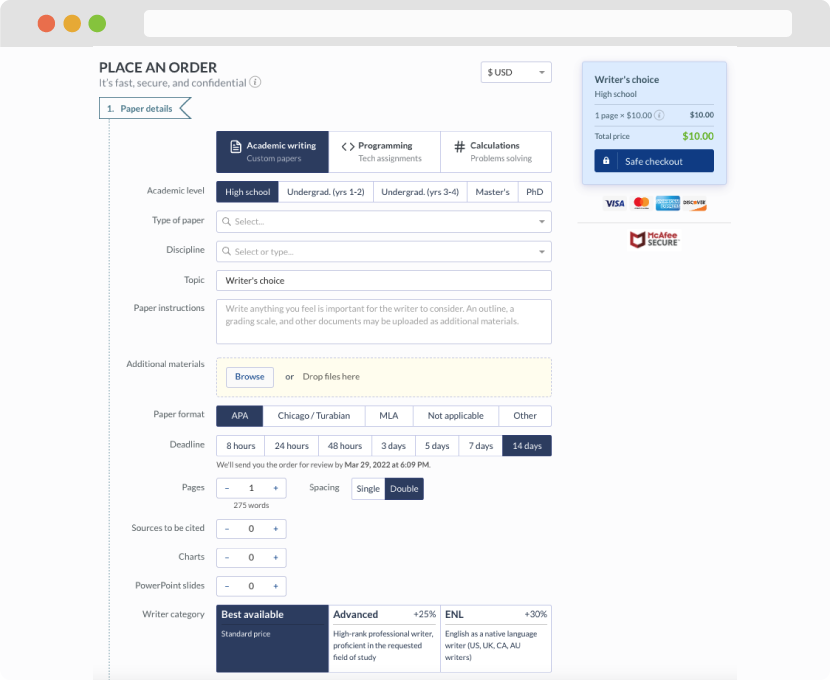
First, you will need to complete an order form. It's not difficult but, if anything is unclear, you may always chat with us so that we can guide you through it. On the order form, you will need to include some basic information concerning your order: subject, topic, number of pages, etc. We also encourage our clients to upload any relevant information or sources that will help.
Complete the order form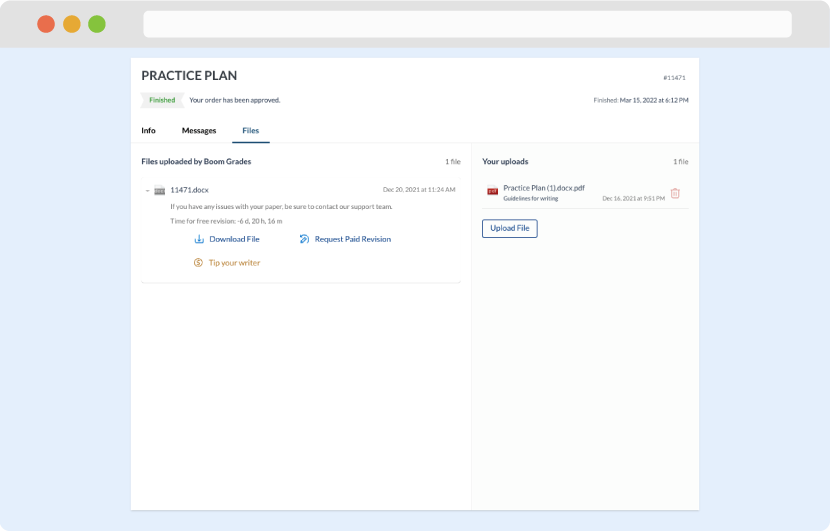
Once we have all the information and instructions that we need, we select the most suitable writer for your assignment. While everything seems to be clear, the writer, who has complete knowledge of the subject, may need clarification from you. It is at that point that you would receive a call or email from us.
Writer’s assignment
As soon as the writer has finished, it will be delivered both to the website and to your email address so that you will not miss it. If your deadline is close at hand, we will place a call to you to make sure that you receive the paper on time.
Completing the order and download