The practice of quantitative research not only involves statistical calculations and formulas but also involves the understanding of statistical techniques related to real-world applications. You might not become a quantitative researcher nor use statistical methods in your profession but as a consumer, citizen, and scholar-practitioner, it will be important for you to become a critical consumer of research, which will empower you to read, interpret, and evaluate the strength of claims made in scholarly material and daily news.
For this Assignment, you will critically evaluate a scholarly article related to MANOVA.
To prepare
Review the Article Critique Assignment Guide in the Walden Library, listed in the Week 2 Learning Resources.
Search the Walden Library for a quantitative article that applies MANOVA.
Do you think this test was the most appropriate choice? Why or why not?
Did the authors display the results in a figure or table?
Does the results table stand alone? In other words, are you able to interpret the study from it? Why or why not?
Available online at www.sciencedirect.com
Procedia – Social and Behavioral Sciences 47 (2012) 862 – 867
CY-ICER2012
An exploration of affective and demographic factors regarding
mathematical thinking and reasoning of university students
Seren Basarana*, Giray Berberoglub
a
Department of Computer and Instructional Technology Teaching, The American University,Girne,Mersin 10 Turkey, Cyprus
b
Department of Secondary Science and Mathematics Education, , Ankara, 6800, Turkey
Abstract
The purpose of this study is two-fold: It aims to determine the factors that are influential in undergraduate students’ approaches
to studying, self-efficacy, problem solving strategies, competency in mathematical thinking and reasoning; to identify any
gender, grade level, and regional differences among the identified factors and on the overall competency in mathematical
thinking and reasoning of undergraduate students and prospective teachers. The factors were identified through the adopted
survey of approaches to studying and the competency test on mathematical thinking nd reasoning that was designed by the
researcher. The scales were administered to 431 undergraduate students of mathematics, elementary and secondary mathematics
education in Ankara and in Northern Cyprus and to prospective teachers of classroom teacher education and early childhood
education of teacher training academy in Northern Cyprus. Exploratory and confirmatory factor analyses were employed to
determine the factors and the differences with respect to gender, region and grade level separately and their dual, triple
interaction effects were investigated through two two-way MANOVA and a three-way ANOVA analyses. Results showed that
significant gender, grade level differences across identified dimensions of the survey and region, gender and grade level
differences across the dimensions of the test and on the total test.
©
2012 Published
Published by
by Elsevier
ElsevierLtd.
Ltd.Selection and/or peer review under responsibility of Prof. Dr. Hüseyin Uzunboylu
© 2012
Open access under CC BY-NC-ND license.
Keywords: Affective, Analysis of Variance (ANOVA), Demographic, Mathematical Thinking and Reasoning, Multivariate
Analysis of Variance (MANOVA)
1. Introduction
The abundance of research investigating affective factors contributing to mathematics achievement and given the
scarcity of studies on the inspection of affective factors in particular to mathematical thinking and reasoning
constitute the foundation of this study. Albeit the recent reforms in the mathematics curricula at both national and
international stands, much of the mathematics instruction still focuses on the procedural and algorithmic
applications even at the undergraduate level. The instances requiring students’ engagement with problems that
trigger their mathematical thinking and reasoning are still sparse. Consequently they tend to demonstrate poor
mathematical thinking and reasoning abilities. Endorsing mathematical thinking and reasoning that is persistently
suggested by educational policy makers is a prerequisite for learning and doing mathematics and typically is not in
the agenda of higher mathematics education. Although mathematical thinking and reasoning are central to teaching
*Seren Başaran. Tel.: +90-392-650-0000
E-mail address:serenbasaran@gau.edu.tr
1877-0428 © 2012 Published by Elsevier Ltd. Selection and/or peer review under responsibility of Prof. Dr. Hüseyin Uzunboylu
Open access under CC BY-NC-ND license. doi:10.1016/j.sbspro.2012.06.748
Seren Basaran and Giray Berberoglu / Procedia – Social and Behavioral Sciences 47 (2012) 862 – 867
863
and learning of mathematics, the field of mathematics education has yet not accomplished to portray a broad view to
promote mathematical thinking and reasoning in coherent with the learning and studying experiences of students
along with affective and demographic constructs at all grade levels particularly at the undergraduate level. Aside
from contributing factors like mathematical thinking and reasoning to achievement in mathematics, student
characteristics and their way of learning are additional components of promoting mathematics achievement.There is
also a growing consensus among researchers in the field of student learning in higher education that university
students learn from their experiences (M
Ramsden&Entwistle,1981; Ramsden, 1988, 1997). For
this purpose, this study primarily aimed to identify the factors and their relationships perceived by undergraduate
students regarding their approaches to studying, self-efficacy and problem solving strategies, mathematical thinking
and reasoning competency.
considered from demographic standpoints. Literature addresses gender and age related differences regarding these
constructs that were usually inspected in isolated manner (Cole, 1997; Royer, et. al., 1999; Zeegers, 1999). No
research was known to exist exploring any gender, grade level and regional differences on mathematical thinking
and reasoning competency of students and along together their approaches to learning and self-efficacy, problem
solving strategies at once. Thirdly, this study sought to explore any regional, gender and grade level based
differences and their interaction effects attributed to aforementioned factors among undergraduate students.
2. Method
2.1. Sample
The participantswere431 undergraduate students from elementary, secondary mathematics education, early
childhood and classroom teacher education, mathematics departments that were enrolled to 2010 spring and summer
semesters in Ankara and in Northern Cyprus. The characteristics of the sample are presented in Table 1 below:
Table 1 Characteristics of the Sample
University
Gazi University
Hacettepe University
Eastern Mediterranean University
Middle East Technical University
Near East University
Total
Department
Mathematics
Elementary Mathematics Education
Secondary Mathematics Education
Classroom Teacher Education
Early Childhood Education
Total
Grade Level
1
2
3
4
5
Total
Missing
Total
Gender
Male
Female
Total
Missing
Frequency
66
106
56
139
59
5
431
Percentage (%)
15.3
24.6
13.0
32.3
13.7
1.2
100.0
180
56
57
76
62
431
41.8
13.0
13.2
17.6
14.4
100.0
86
115
109
111
8
429
2
431
20.0
26.7
25.3
25.8
1.9
99.5
0.5
100.0
148
281
429
2
34.3
65.2
99.5
0.5
864
Seren Basaran and Giray Berberoglu / Procedia – Social and Behavioral Sciences 47 (2012) 862 – 867
Total
431
100.0
2.2. Instruments
Two main scales were used for data collection; the adopted version of the
to studying/learning which was developed by Entwistle and Ramsden (1983) with additional items on demographic
profile, with self-efficacy in mathematics(Bandura,1997;Pajares,1996)and problem solving strategies and the test
on mathematical thinking and reasoning competency that was developed by the researcher. The items related to deep
and surface approaches, relating ideas, use of evidence, intrinsic motivation, syllabus-boundness, fear of failure,
extrinsic motivation, disorganized study methods, achievement motivation, were adapted from the Approaches to
Studying Inventory (ASI). The test was designed to measure the competency of undergraduate students in a set of
thinking processes that were situated in real life problems. The items of the test focuses to what extent students
understand the logical implications, express a given situation mathematically, apply computational skills, evaluate
conditional statements and extract the required information from a given situation. For convenience, the survey and
the test were pilot tested byvolunteered students who were enrolled to Introduction to Information Technologies and
its Applications(IS100) course at Middle East Technical University at 2010 spring semester.
2.3. Design
The major aims of this study are; (1) to explore the factors and their relationships perceived by
undergraduate students regarding their approaches to studying, self-efficacy and problem solving strategies,
mathematical thinking and reasoning competency; (2) to investigate any regional, gender and grade level based
differences attributed to approaches to studying, self-efficacy and problem solving strategies, competency in
mathematical thinking and reasoning of undergraduate students. The data was collected in a cross-sectional manner
that is; the scales used in this study were administered to the participants at once. The quantitative data obtained
were analyzed through two-way MANOVA and three-way ANOVA statistical techniques.
2.4. Analysis
Exploratory and confirmatory factor analyses were employed to determine the factors based on the literature;
meaning orientation, mathematics self-efficacy, motivation, disorganized study methods and surface approach for
ev
Two-way MANOVA was
employed to inspect gender, grade level differences across the dimensions of the survey at SPSS v17 program.
Gender and grade level are independent variables whereas the dimensions of the survey as index scores were
used in the subsequent univariate tests. Another two-way MANOVA procedure was carried out for the region and
grade level differences across the sub dimensions of the test where region and grade level are independent variables
and the two sub dimensions of the test are dependent variables. Finally, three-way ANOVA technique was used to
explore region, gender and grade level related differences on the total test score.
3. Results
3.1. Results of the Exploratory and Confirmatory Factor Analyses
The first research question required the identification of the factors concerning approaches to studying, selfefficacy and problem solving strategies, mathematical thinking and reasoning competency of which these are;
meaning orientation (deep approach, relating ideas, use of evidence), mathematics self-efficacy
0.762 ), motivation (intrinsic, extrinsic, achievement with
), disorganized study methods
related
Seren Basaran and Giray Berberoglu / Procedia – Social and Behavioral Sciences 47 (2012) 862 – 867
to non-academic orientation, surface approach method(
skills
) and
865
;
).
3.2. Results of the Gender, Grade Level and Region based Differences
As shown in the Tables 2,3 and 4 below, results of gender, grade level and region related differences in the
factors of the survey and on the test and the total test indicated that, female students are more meaning oriented than
dy methods more
frequently than second year undergraduate students. In addition, senior students are more competent than second
and third year undergraduate students in terms of both competency skills. Freshmen students outscored sophomore
students in the elaborate skills dimension. Students from Ankara region are more competent in terms of both
competency skills than students from Northern Cyprus region. This last inference is also valid on the total test score
of mathematical thinking competency for both regions. In addition, it was noted that male students performed better
on the total test than female students. Moreover, there exist region and grade level interaction effect upon both
Table 2 Gender and Grade Level Differences across Survey
Source
Gender
GradeLev.
Dependent Variable
MEANORTi
MSEFFICi
MOTi
DISORSDi
SURAPPi
MEANORTi
MSEFFICi
MOTi
DISORSDi
SURAPPi
Type III Sum of Squares
7.550
0.651
4.213
0.129
0.097
2.205
0.049
7.056
13.075
6.067
Df
1
1
1
1
1
3
3
3
3
3
Mean Square
7.550
0.651
4.213
0.129
0.097
0.735
0.016
2.352
4.358
2.022
F
7.704
0.637
4.271
0.135
0.097
0.750
0.016
2.384
4.561
2.024
Sig.
.006*
0.425
0.039
0.714
0.756
0.523
0.997
0.069
.004*
0.110
Partial Eta Squared
0.018
0.002
0.010
0.000
0.000
0.005
0.000
0.017
0.032
0.014
* p
Essay Writing Service Features
Our Experience
No matter how complex your assignment is, we can find the right professional for your specific task. Achiever Papers is an essay writing company that hires only the smartest minds to help you with your projects. Our expertise allows us to provide students with high-quality academic writing, editing & proofreading services.
Free Features
Free revision policy
$10Free bibliography & reference
$8Free title page
$8Free formatting
$8How Our Dissertation Writing Service Works
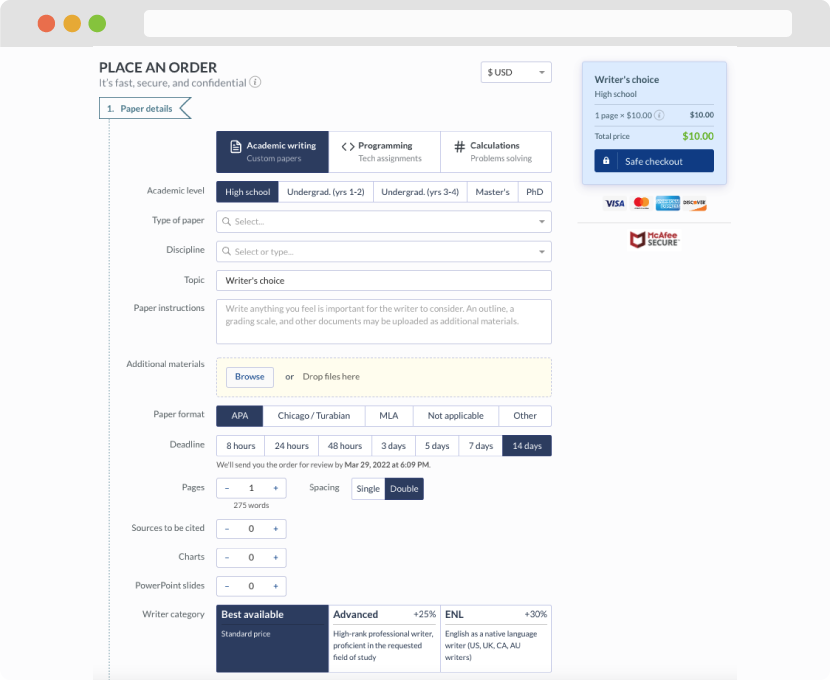
First, you will need to complete an order form. It's not difficult but, if anything is unclear, you may always chat with us so that we can guide you through it. On the order form, you will need to include some basic information concerning your order: subject, topic, number of pages, etc. We also encourage our clients to upload any relevant information or sources that will help.
Complete the order form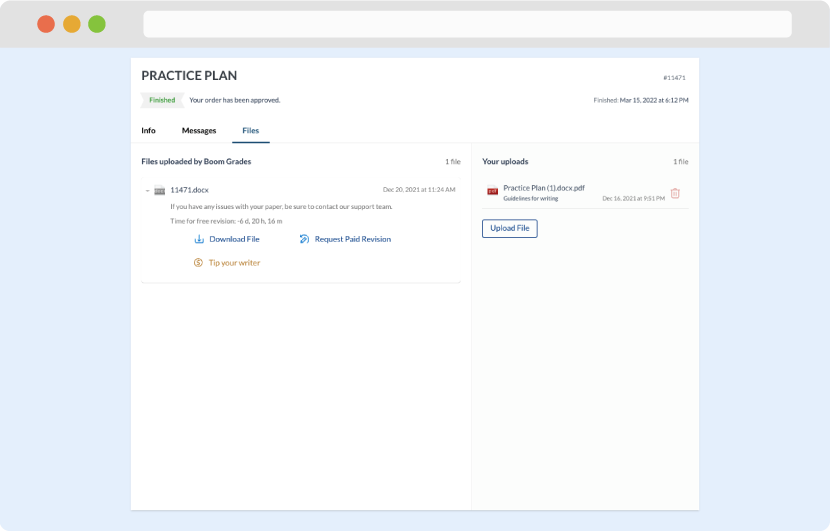
Once we have all the information and instructions that we need, we select the most suitable writer for your assignment. While everything seems to be clear, the writer, who has complete knowledge of the subject, may need clarification from you. It is at that point that you would receive a call or email from us.
Writer’s assignment
As soon as the writer has finished, it will be delivered both to the website and to your email address so that you will not miss it. If your deadline is close at hand, we will place a call to you to make sure that you receive the paper on time.
Completing the order and download