MenuView DiscussionMenuView DiscussionDiscussion Topic
Chapter 4:
Influence of Cultural and Health Belief Systems on Health Care Practices
Copyright © 20
1
6 Wolters Kluwer Health | Lippincott Williams & Wilkins
Copyright © 2020 Wolters Kluwer • All Rights Reserved
1
Cultural Belief Systems #1
Cultural meanings and cultural belief systems develop from the shared social group experiences and are expressed symbolically.
Copyright © 2020 Wolters Kluwer • All Rights Reserved
2
Cultural Belief Systems #2
Worldview
The set of metaphoric explanations used by a group of people to explain life’s events and to offer solutions to life’s mysteries
Permeates every lifeway within a group culture
Copyright © 2020 Wolters Kluwer • All Rights Reserved
3
Cultural Belief Systems #3
Worldview (paradigm) includes the assumptions, premises, and linkages that bind together a prevailing interpretation of reality; typically slow to change.
Copyright © 2020 Wolters Kluwer • All Rights Reserved
4
Question #1
Is the following statement true or false?
All clients refer to illness and disease in the same context.
Copyright © 2020 Wolters Kluwer • All Rights Reserved
Answer to Question #1
False
Rationale: Not all clients relate to health and illness in the same context. A client’s worldview influences his or her cultural belief system.
These are often the reasons why nurses may encounter challenges when communicating with those who have a different worldview than theirs.
Copyright © 2020 Wolters Kluwer • All Rights Reserved
6
Health Belief Systems #1
Health and illness worldviews are influenced by a person’s values, beliefs, and practices.
This concept is his or her health belief system.
Copyright © 2020 Wolters Kluwer • All Rights Reserved
7
Health Belief Systems #2
The three major health belief systems are:
Magico-religious
Scientific/biomedical
Holistic
Copyright © 2020 Wolters Kluwer • All Rights Reserved
8
Health Belief Systems #3
In the magico-religious paradigm:
The world is an arena in which supernatural forces dominate.
The fate of the world and those in it depends on the actions of God, or the Gods, or other supernatural forces of good or evil.
The cause of health or illness is mystical.
Examples: Voodoo, Christian Scientists
Copyright © 2020 Wolters Kluwer • All Rights Reserved
9
Health Belief Systems #4
In the scientific paradigm (biomedical model):
Life is controlled by a series of physical and biochemical processes, which can be studied and manipulated by humans.
Determinism (cause and effect for natural phenomena).
Mechanism (control life processes through mechanical, genetic, and engineered processes).
Reductionism (all life reduced to smaller parts).
Objective materialism (what is real can be observed/measured).
Example: most Western cultures
Copyright © 2020 Wolters Kluwer • All Rights Reserved
10
Health Belief Systems #5
In the holistic paradigm:
The forces of nature itself must be kept in natural balance or harmony.
Everything in the universe has a place and a role to perform.
Disturbing natural laws create imbalance, chaos, and disease.
Examples: yin/yang, hot/cold
Copyright © 2020 Wolters Kluwer • All Rights Reserved
11
Question #2
Is the following statement true or false?
Asians and Native American Indians should be assessed for holistic health beliefs.
Copyright © 2020 Wolters Kluwer • All Rights Reserved
12
Answer to Question #2
True
Rationale: The holistic paradigm has existed for centuries in many parts of the world, particularly in Native American Indian cultures and Asian cultures.
Copyright © 2020 Wolters Kluwer • All Rights Reserved
13
Health and Illness Behaviors #1
Health behavior (prevention/early detection)
Illness behavior (illness/remedy)
Sick role behavior (illness/coping)
Copyright © 2020 Wolters Kluwer • All Rights Reserved
14
Health and Illness Behaviors #2
Influencing factors:
One’s beliefs
Personal factors
Cues to action
Copyright © 2020 Wolters Kluwer • All Rights Reserved
15
Types of Healing Systems #1
The term healing system refers to the sciences, arts, and techniques of restoring and preserving health that are used by any cultural group.
Example: utilizing health care practitioners along with healers, religious figures, etc.
Copyright © 2020 Wolters Kluwer • All Rights Reserved
16
Types of Healing Systems #2
Self-care
Professional care systems
Folk healing system
Complementary, integrative, and alternative health systems (CIH)
Copyright © 2020 Wolters Kluwer • All Rights Reserved
17
Types of Healing Systems #3
Complementary Health Approaches/CIH:
Traditional alternative medicine beliefs
Natural products and senses
Mind and body practices
Manipulative and body-based methods
Energy therapies
Copyright © 2020 Wolters Kluwer • All Rights Reserved
18
Question #3
What is the focus of allopathic or biomedicine?
Replacing conventional medicine
Adding to conventional medicine
Killing bacteria and suppressing symptoms
Healing with naturally occurring substances
Copyright © 2020 Wolters Kluwer • All Rights Reserved
19
Answer to Question #3
C. Killing bacteria and suppressing symptoms
Rationale: Allopathic medicine is the practice most physicians and nurses are educated in. Life is controlled by a series of physical and biochemical processes that can be studied and manipulated by humans through allopathic medicine or professional care systems.
Copyright © 2020 Wolters Kluwer • All Rights Reserved
20
Chapter 3:
Cultural Competence in the History and Physical Examination
Copyright © 2020 Wolters Kluwer • All Rights Reserved
1
Cultural Assessment #1
Customized or tailored to the client’s unique background.
Health history and physical exam interrelated.
With growing diversity comes the need for nurses to develop knowledge and skills in cultural assessment.
Copyright © 2020 Wolters Kluwer • All Rights Reserved
2
Cultural Assessment #2
Assessments form the foundation for the plan of care.
Tend to be broad and comprehensive.
Cultural assessment usually integrated into the overall assessment.
Copyright © 2020 Wolters Kluwer • All Rights Reserved
Health History #1
The purpose of the health history is to collect subjective data.
This is combined with the objective data from the physical examination for both well and ill clients.
Copyright © 2020 Wolters Kluwer • All Rights Reserved
4
Question #1
Is the following statement true or false?
Subjective data refer to things that people say or relate about themselves, whereas objective data result from the physical examination and the laboratory findings.
Copyright © 2020 Wolters Kluwer • All Rights Reserved
5
Answer to Question #1
True
Rationale: Subjective data come from the client and are information only they can give and confirm; objective data are observable and confirmed through sources other than the client.
Copyright © 2020 Wolters Kluwer • All Rights Reserved
6
Health History #2
Major data categories to be considered when conducting a culturally competent health history:
Biographic data and history
Genetic data
Review of medications and allergies
Reason for seeking care
Copyright © 2020 Wolters Kluwer • All Rights Reserved
7
Health History #3
Major data categories to be considered when conducting a culturally competent health history (cont.):
Present health and history of present illness (culture-bound syndromes)
Past health
Family and social history
Review of systems
Copyright © 2020 Wolters Kluwer • All Rights Reserved
8
Question #2
Is the following statement true or false?
Most cultures recognize the difference between prescribed medications and over-the-counter medications including herbs.
Copyright © 2020 Wolters Kluwer • All Rights Reserved
9
Answer to Question #2
False
Rationale: It is important to note all prescription and over-the-counter medications, including herbs, that clients might purchase or grow in home gardens. Because of cultural differences in peoples’ perceptions of which substances are considered medicines, it is important to ask about specific items by name.
Copyright © 2020 Wolters Kluwer • All Rights Reserved
10
Physical Examination #1
Accurate assessment and evaluation of clients require:
Knowledge of normal biocultural variations among healthy members of selected populations
Assessment skills that will enable you to recognize variations that occur in illness
Copyright © 2020 Wolters Kluwer • All Rights Reserved
11
Physical Examination #2
Biocultural variations in:
Measurements
Height, body proportions, weight (see Table 3-5)
Vital signs, including pain
General appearance
Copyright © 2020 Wolters Kluwer • All Rights Reserved
12
Physical Examination #3
Skin
Mongolian spots
Vitiligo
Hyperpigmentation
Cyanosis
Jaundice
Pallor
Erythema, petechial, ecchymoses
Addison’s disease, uremia, albinism
Normal age-related skin changes
Copyright © 2020 Wolters Kluwer • All Rights Reserved
13
Physical Examination #4
Body secretions
Apocrine glands
Eccrine sweat glands
Head
Hair (texture, color)
Eyes (structure, color, visual acuity)
Ears (size, shape, cerumen, hearing loss)
Mouth (pigmentation, cleft lip/palate, leukoedema)
Teeth (developmental, hygienic, nutritional indicators)
Copyright © 2020 Wolters Kluwer • All Rights Reserved
14
Physical Examination #5
Musculoskeletal system
Bone composition
Bone density
Bone curvature
Body composition
Copyright © 2020 Wolters Kluwer • All Rights Reserved
15
Question #3
Where is the most reliable location to assess for petechiae in a person with darkly pigmented skin?
Palms of the hands
Soles of the feet
Lining of the mouth
Upper chest and shoulders
Copyright © 2020 Wolters Kluwer • All Rights Reserved
16
Answer to Question #3
C. Lining of the mouth
Rationale: In dark-skinned clients, petechiae are best visualized in the areas of lighter melanization, such as the abdomen, buttocks, and volar surface of the forearm. When the skin is black or very dark brown, petechiae cannot be seen in the skin. Petechiae are most easily seen in the mouth, particularly the buccal mucosa, and in the conjunctiva of the eye.
Copyright © 2020 Wolters Kluwer • All Rights Reserved
17
Laboratory Tests
Biocultural variations occur with some lab test results, such as:
Hemoglobin
Hematocrit
Cholesterol
Serum transferrin
Blood glucose
Renal (creatinine, GFR)
Copyright © 2020 Wolters Kluwer • All Rights Reserved
18
Clinical Decision-Making and Actions
The three major modalities to guide nursing judgments, decisions, and actions are:
Cultural care preservation or maintenance
Cultural care accommodation or negotiation
Cultural care repatterning or restructuring
Copyright © 2020 Wolters Kluwer • All Rights Reserved
19
Question #4
Which is an example of cultural care accommodation?
Arranging the client’s dressing changes to avoid scheduled prayer times
Providing the client with foods that are aligned with his or her religious dietary concerns
Explaining to the client the need to reduce fat content from his or her ethnic high-fat diet
Arranging for an interpreter to facilitate communication
Copyright © 2020 Wolters Kluwer • All Rights Reserved
20
Answer to Question #4
A. Arranging the client’s dressing changes to avoid scheduled prayer times
Rationale: Cultural care accommodation or negotiation refers to professional actions and decisions that help people of a designated culture to adapt to or to negotiate with others for beneficial or satisfying health outcomes with professional care providers.
Copyright © 2020 Wolters Kluwer • All Rights Reserved
21
Essay Writing Service Features
Our Experience
No matter how complex your assignment is, we can find the right professional for your specific task. Achiever Papers is an essay writing company that hires only the smartest minds to help you with your projects. Our expertise allows us to provide students with high-quality academic writing, editing & proofreading services.
Free Features
Free revision policy
$10Free bibliography & reference
$8Free title page
$8Free formatting
$8How Our Dissertation Writing Service Works
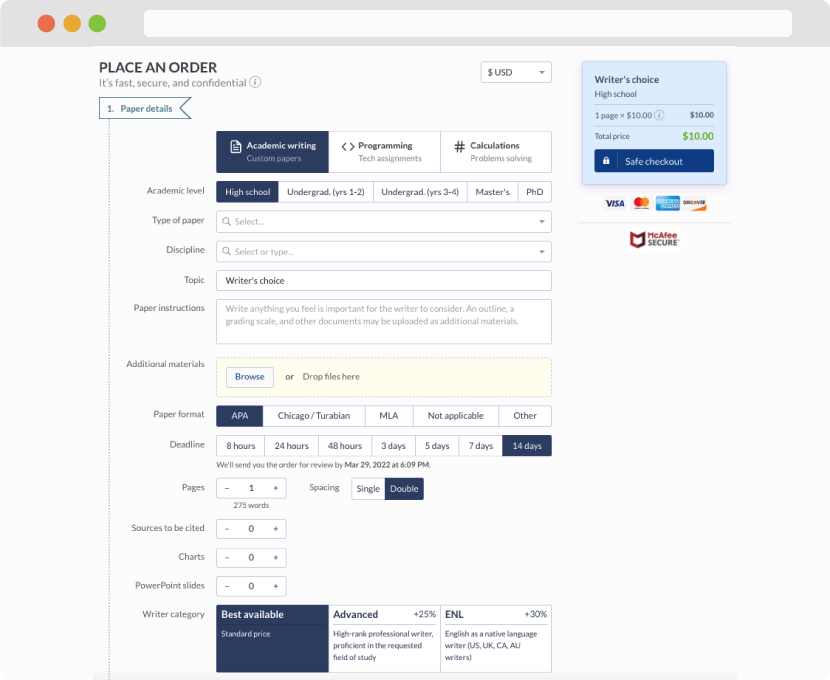
First, you will need to complete an order form. It's not difficult but, if anything is unclear, you may always chat with us so that we can guide you through it. On the order form, you will need to include some basic information concerning your order: subject, topic, number of pages, etc. We also encourage our clients to upload any relevant information or sources that will help.
Complete the order form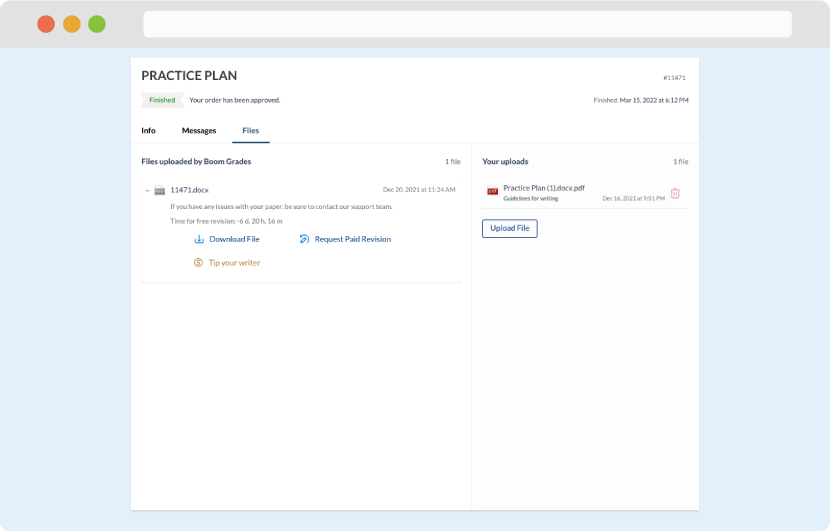
Once we have all the information and instructions that we need, we select the most suitable writer for your assignment. While everything seems to be clear, the writer, who has complete knowledge of the subject, may need clarification from you. It is at that point that you would receive a call or email from us.
Writer’s assignment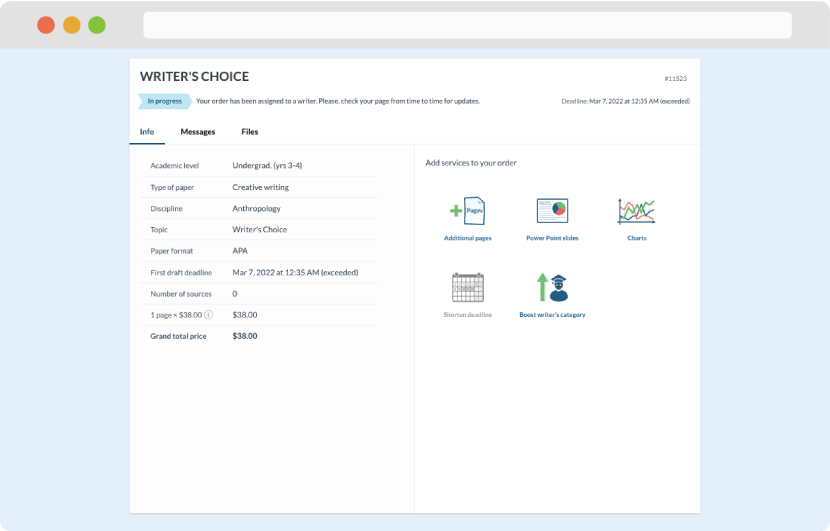
As soon as the writer has finished, it will be delivered both to the website and to your email address so that you will not miss it. If your deadline is close at hand, we will place a call to you to make sure that you receive the paper on time.
Completing the order and download