Using the empirical research article that your instructor approved in the Week 5 assignment, ask yourself: “Is this a quantitative research article or a qualitative research article?” Remember, in quantitative research, the emphasis is on measuring social phenomenon because it is assumed that everything can be observed, measured, and quantified. On the other hand, in qualitative research, it is assumed that social phenomenon cannot be easily reduced and broken down into concepts that can be measured and quantified. Instead, there may be different meanings to phenomenon and experiences. Often in qualitative research, researchers use interviews, focus groups and observations to gather data and then report their findings using words and quotations.
Consider how these different methods affect the sampling design and recruitment strategy, and ask yourself how the recruitment of research participants will affect the findings.
For this Assignment, submit a 3-4 page paper. Complete the following:
Describe the sampling methods in your own words (paraphrase, do not quote from the article).
Describe the generalizability or the transferability of the research finding based on the sampling method.
Discuss the limitations the article identified with the sample and how those limitations affect the reliability or credibility.
Explain one recommendation you would make to improve the sampling plan of the study that would address these limitations in future research.
Client Advocacy in Marriage
and Family Therapy:
A Qualitative Case Study
Diane R. Gehart
Brandy M. Lucas
ABSTRACT. Client advocacy and social justice are topics of increasing
importance in clinical practice. This study addresses the pragmatics
of client advocacy in daily MFT (Marriage and Family Therapy) prac-
tice using qualitative case analysis. Researchers used Kvale’s (1996)
interview and analysis procedures to access detailed descriptions of the
lived experience of advocacy from the client’s perspective. The client’s
descriptions identify subtle aspects of advocacy that expand its current
definition and challenge the suitability of certain clinical techniques, es-
pecially with diverse clients. Implications for practice include (1) con-
ceptualizing advocacy as an attitude; (2) providing flexibility in service
delivery; (3) collaborating with social services as a clinical intervention;
and (4) promoting self-advocacy. doi:10.1300/J085v18n01_04 [Article cop-
ies available for a fee from The Haworth Document Delivery Service: 1-800-
HAWORTH. E-mail address:
reserved.]
KEYWORDS. Advocacy, marriage and family therapy, case study,
qualitative research
Diane R. Gehart is Associate Professor, California State University, Northridge, CA.
Brandy M. Lucas is a doctoral student at Texas Tech University, Lubbock, TX.
Address correspondence to: Diane R. Gehart, Department of Educational Psychol-
ogy and Counseling, California State University, 18111 Nordhoff, Northridge, CA
91330 (E-mail: dgehart@csun.edu).
Journal of Family Psychotherapy, Vol. 18(1) 2007
Available online at http://jfp.haworthpress.com
© 2007 by The Haworth Press, Inc. All rights reserved.
doi:10.1300/J085v18n01_04 39
mailto:docdelivery@haworthpress.com
http://www.HaworthPress.com
mailto:dgehart@csun.edu
http://jfp.haworthpress.com
Client advocacy and the related issue of social justice are issues of
increasing importance in clinical practice. With few exceptions, mar-
riage and family therapists have not been on the forefront of these
movements (Laszloffy & Hardy, 2000; McGoldrick, 1998). Nonethe-
less, marriage and family therapists have begun to meaningfully wrestle
with questions related to social justice. Johnson (2001) challenges the
idea that marriage and family therapy (MFT) as a profession can affect
changes at the societal level because MFTs are not trained to intervene
at broader systemic levels. If family therapists are not positioned to di-
rectly intervene in matters of social injustice, then how is an individual
clinician to respond when these issues are brought into the therapy room
by clients experiencing injustice and challenges due to their ethnicity,
race, gender, sexual orientation, social economic class, country of ori-
gin, religion, language, or similar factors? Does an individual clinician
have an ethical responsibility to address issues of subtle and gross social
injustice in the lives of their clients? Is it possible to not address these
issues? After all, is no response in effect a response?
We propose that the pragmatic answers to these questions are best
conceptualized by clinicians not in terms of social justice but client
advocacy. For those who work closely with marginalized populations, it
is readily evident that family therapists can and do “heal the world in
50-min intervals” (Hardy, 2001, p. 22). Rather than ask can or should
family therapists affect societal change, this article addresses practical
ways in which a clinician can make a difference in everyday practice.
This article provides a real-world glimpse of client advocacy by describ-
ing the process in an MFT private practice setting based on case analysis.
CLIENT ADVOCACY IN CLINICAL PRACTICE
Client advocacy is most generally defined as helping clients to ad-
dress institutional and social barriers that impede their ability to achieve
goals or access needed services. Advocacy most often, but not always,
involves addressing issues of social justice, and therefore the two tend
to be discussed simultaneously. For the purposes of this article, client
advocacy is referred to in the broadest terms, helping all clients address
institutional and social barriers.
It must be conceded that as a discipline social work has long been at
the forefront of issues related to client advocacy and social justice
(Swenson, 1998). Social justice is easily recognizable as an organizing
value within social work, and advocacy is addressed at both the micro
40 JOURNAL OF FAMILY PSYCHOTHERAPY
and macro levels. However, Jordan (1987) argues that advocacy is “un-
characteristic of everyday social work practice” (p. 135), particularly
clinical social work. The apparent discrepancy may lie in the disci-
pline’s emphasis on developing sensitivity and awareness of social jus-
tice issues with fewer models for operationalizing these values in
clinical practice. A similar pattern replicates in counseling and family
therapy as well.
Professional counselors and counseling psychologists have begun pro-
moting client advocacy as a core value within their professions (Ivey &
Collins, 2003; Myers, Sweeney, & White, 2002). Similar to social
workers, their emphasis has been to develop sensitivity to social justice
issues: “Raising awareness about the needs of neglected populations
and fighting for the civil rights of exploited people are profound human
experiences that require counselors to be committed humanitarians”
(Kiselica & Robinson, 2001, p. 391). This goal is codified in multicul-
tural guidelines for the profession (Ivey & Collins, 2003). However,
there is less agreement on how to operationalize these values. Some call
for traditional political action at the broader social level (Kiselica &
Robinson, 2001; Lee, 1998; Lee & Waltz, 1998; Toporek, 2000), while
others call for more interdisciplinary collaboration (Bemak, 1998; Myers,
Sweeney, & White, 2002). Both alternatives emphasize broad sys-
tem-level interventions and do not address opportunities to intervene in
clinical settings.
Similar to social workers and counselors, family therapists have fo-
cused on increasing awareness of social justice issues with few models
for operationalizing client advocacy. Grounding their work in social
constructionist, critical, and feminist theories, McDowell and Shelton
(2002) outline strategies for raising student awareness of social justice
issues at various points in marriage and family therapy curricula. Simi-
larly, Laszloffy and Hardy (2000) outline steps for addressing racism
in family therapy, emphasizing the need to increase therapists’ racial
sensitivities and abilities to actively respond to incidents of racism.
Although they focus primarily on addressing forms of racism in the
therapeutic relationship and dialogue, they specifically identify advo-
cacy as a means to address racism when it is part of the presenting
problem: “Therapists can serve as advocates on behalf of clients to
address unjust situations, wherever these may occur (schools, the work-
place, etc.)” (p. 42).
Aponte (1994) includes advocacy in his work with the poor. He
warns that “in today’s politically correct atmosphere, many therapists
and professional associations have determined that they should be the
Diane R. Gehart and Brandy M. Lucas 41
source of solutions for today’s social problems” (p. 11) and thereby
impose their values on clients. Instead, he proposes that marginalized
populations such as the poor are more in need of reconnecting with tra-
ditional community resources and strengthening of spirit than they are
of social services. In working with the poor, he identifies two ap-
proaches to advocacy: direct and analogue interventions. In direct in-
terventions, the therapist actively participates in conversations with
outside systems related to the problem, such as schools, medical profes-
sionals, and social services. Analogue approaches involve intervening
on dysfunctional structural patterns at more accessible levels of the sys-
tem and allowing the changes at one level to transfer to others. For ex-
ample, by creating opportunities for a client to assertively interact with
a therapist in session, the client can transfer this style of relating to
other professionals.
Ecosystemic approaches have offered the most detailed models for
advocacy in MFT. Imber-Black (1988) details an ecosystemic model,
for working with families and larger systems, that provides a frame-
work for client advocacy. Her model includes systemic assessment of
broad system boundaries, triads, problem definitions, and binds and
prescribes interventions using isomorphism and various forms of rit-
uals. This ecosystemic model provides therapists with a model for ad-
vocating in cases involving labeling, stigmatism, and secrets. More
recent evolutions of ecosystemic theory incorporate postmodern con-
cepts, such as a strength-based perspective and collaborative relation-
ships with clients, to work with families and social service systems
(Pulleyblank Coffey, 2004).
Postmodern therapists offer a unique approach to social justice and
client advocacy. Narrative therapists have been active spokespersons
regarding issues of social justice (Zimmerman & Dickerson, 1994), and
the relational stance of narrative therapists often embodies a social
justice ethic (Author, 2003). Narrative therapy provides a theoretical
rationale and clinical approach for working with the effects of domi-
nant social discourses, a concept frequently neglected in many thera-
peutic models. Narrative therapists position themselves as advocates at
the individual level by changing how a person relates to oppressive
dominant discourses and increasing the person’s sense of community
(Freedman & Combs, 1996). However, descriptions of narrative ther-
apy generally focus on advocacy that occurs within session and with
friendly “audiences” rather than engaging broader social service sys-
tems (Freedman & Combs, 1996; White & Epston, 1990).
42 JOURNAL OF FAMILY PSYCHOTHERAPY
Grounding their work in social constructionism, collaborative thera-
pists have developed a postmodern approach to advocacy. Problems are
conceptualized as emerging through dialogue, and therefore, the thera-
peutic process requires that the therapist involve not only the client and
family but involved professionals, extended family, and others in dia-
logue about the problem (Anderson, 1997). Engaging multiple voices
allows for clients, therapists, social workers, and other professionals to
better understand each other. In this process, the client’s perspective is
considered equally alongside professional views of the situation, a pro-
cess that is referred to as acknowledging client expertise (Anderson &
Goolishian, 1992). Additionally, collaborative therapists are “public”
with their clients about the business of therapy including conversations
with other professionals, social services, and legal institutions. By mak-
ing these conversations public, therapists open many avenues for advo-
cacy. For example, St. George and Wulff (1998) work collaboratively
with clients in drafting letters to courts and other interested parties, in-
creasing clients’ sense of autonomy, initiative, and responsibility.
FROM AWARENESS TO ACTION
Mental health practitioners have made strides in raising awareness of
social injustice issues, and now the task is translating this increased
awareness into action. The majority of advocacy approaches are based
on existing theories, which are adapted and/or applied to advocacy work,
such as the work of Imber-Black (1988) and Aponte (1994). This study
represents an attempt to develop guidelines for advocacy based on one
client’s lived experience of what advocacy is and how it was enacted
over several years of treatment in private practice and social service set-
tings. The purpose of this study is not to produce generalizable results
but to systematically capture the richness and detail of one client’s lived
experience in order to generate client-informed guidelines for advocacy
practices. Such an approach is consistent with the ethic of advocacy,
which demands that the client’s voice be included in this work.
QUALITATIVE CASE STUDY IN ADVOCACY
The following case study involves an in-depth interview with a client
about her experiences of client advocacy. In an unusual departure from
most research interviews, this interview was initiated by the client whose
hopes were that therapists could learn from her experiences. One year
Diane R. Gehart and Brandy M. Lucas 43
after the termination of treatment, the client approached her former ther-
apist (DG) and asked if there was some way to share her knowledge in a
useful way with students in the therapist’s training courses. The client
said she did not feel able to prepare a formal lecture and asked if the
therapist could interview her. The client set the agenda for the interview,
which was the advocacy agenda.
The client had been in therapy for six-and-a-half years; during the last
four years of treatment, she was in individual therapy with a family thera-
pist in private practice (DG). She was a 17-year-old Caucasian living in a
homeless shelter with her mother at the start of treatment with this thera-
pist. She had been in and out of a county mental health system and non-
profit counseling since age 15 when a close relative was arrested for
sexually abusing her. Over the course of therapy, she was admitted four
times to a 24-hour crisis center for suicidal ideation and attempts; was in a
county day-treatment program for two months; received case manage-
ment from county mental health and Victims of Crime; was seen by a
county psychiatrist; was briefly involved in two sexual abuse groups and
day-treatment groups; and was in a welfare-to-work program.
The interview was conducted from a social constructionist perspective
(Gergen, 1994) using Kvale’s (1996) qualitative interview and analysis
techniques. Similar to Anderson’s (1997) conversational questions, the
interview questions were designed to obtain rich descriptions from the
client about her lived experience without structuring the interview from a
preconceived perspective on advocacy or predefined professional con-
structs. A social constructionist perspective recognizes that it is impossi-
ble for a researcher to be completely bias-free; however, every attempt
was made to set aside interviewer bias and ideas by taking a “not know-
ing” position (Anderson, 1997). The interview was transcribed and the
authors separately coded the interview using Kvale’s (1996) analysis pro-
cedures; particular attention was given to “reading against” emerging cat-
egories, and ensuring all dialogue was coded. The client reviewed the
results to ensure that her words and intentions were accurately repre-
sented; she made no corrections or additions to the results or manuscript.
RESULTS
Human Connection
The most frequently addressed theme in the interview was the pres-
ence of a “human connection”; the import of this factor is illustrated in
44 JOURNAL OF FAMILY PSYCHOTHERAPY
the relative volume of the interview dedicated to this concept compared
with the other two sets of themes, which address activities related to ad-
vocacy (see Figure 1). The client emphasized that she benefited from
services when she felt like she mattered to the therapist at a human level.
She said she felt that she was just a “paycheck” to many in the social ser-
vice system and that she believed those others were “not in it to help
other people.”
Failure of Connection
The client describes several failures to connect with social service
workers and therapists. The behaviors that she described as severing
connection are commonly taught and practiced within the field and are
not examples of unethical or professional behavior. The client’s com-
ments about the failure to connect addressed two areas: therapist/social
service worker expecting certain behaviors and the more general issue
of a rigid delivery system at a broader level.
Diane R. Gehart and Brandy M. Lucas 45
FIGURE 1. Summary of Themes
Therapist/Social Service Worker Expecting Certain Behaviors
One county mental health therapist “basically told me when I was
ready to talk to let her know. And she turned around at her desk
and started doing paperwork. . . . [that made me feel like] she wasn’t
on my side.”
I didn’t know how to say, “Hey, look, you know, I’m falling apart.”
And I didn’t know how to tell that to people.” [The suicide at-
tempts were actions that communicated this need when she couldn’t
say the words.]
Rigid Service Delivery
Mentally I felt like I was still you know, stuck back in childhood.
But I wasn’t a child. And I needed to be able to do therapy my
way, whatever worked for me. And I didn’t feel like I was getting
that, you know. I felt like they [social services] wanted me to do it
their way.
One of the therapists I was seeing over there [non-profit agency]
told me that she only dealt with the sexual abuse. . . . And she told
me that I needed a new therapist. “I can’t deal with all of this [her
other life problems]. I’m not that type of therapist.”
When assigned to day treatment group, I said, “This is stupid. You
know, if I want group therapy, I will go ask somebody for a smaller
group or something.”
After trying to commit suicide, I was lying in a hospital, and I was
scared to death thinking, “Oh, great, I finally found somebody I can
trust, and now she’s not even going to be my therapist anymore.” [A
fear based on prior experiences in the social service system where
therapists were changed due to her needing a new level of care.]
Successful Connection
The client described successful connection when the therapist or
social service worker not only saw her as a person but also was genuine in
challenging her during the therapy process. The connection she described
is not Pollyannaish but rather a balance of supportive and challenging
46 JOURNAL OF FAMILY PSYCHOTHERAPY
behaviors. This balance led the client to conclude that she needed to be
an advocate for her own progress in therapy.
Balance of Support and Challenge
Because I felt like if [the therapist] didn’t push me, it was never
going to be talked about. And I was never going to heal from it. It
was just going to destroy my life; destroy my family.
It was “just the way [the therapist] did therapy; that I had no choice
but to talk about what happened. [She] had a way to make me talk
about it and not make me feel like . . . it wasn’t my fault.”
Self-Advocacy
That’s when I realized that I needed to be the one to talk and not
wait until the last five minutes of session before we started talking
about something heavy.
And a lot of that came from [the therapist] telling me, you know,
that that I could fix these things, you know. And that I didn’t al-
ways need somebody to help me to fix all these problems.
Discussion
The client emphasized that the quality of the connection with a ser-
vice provider was the most critical aspect to advocacy. When service
providers had narrowly defined expectations and rigid treatment possi-
bilities, advocacy was impossible. Many traditionally sanctioned be-
haviors severed connection, such as waiting for the client to take initiative
to speak, transferring clients due to therapist expertise, and therapist-
directed treatment planning. On the other hand, successful connection
did not always fit neatly within traditional therapeutic boundaries. For
example, the client inquired about general details of the therapist’s life;
would comment on changes in the therapist’s personal appearance (e.g.,
change from glasses to contacts); and would comment about events
at the counseling setting. The relationship was down-to-earth and involved
a collaborative two-way exchange (Anderson, 1997) than more tradi-
tional approaches might advocate. Simply following standard practices
did not assure that the therapist was doing what is necessary to success-
ful connect with clients, and in fact common practice sometimes prohib-
ited what needed to occur.
Diane R. Gehart and Brandy M. Lucas 47
Active Advocacy with Outside Agents/Agencies
The client reported many struggles accessing social services and a
consistent sense of being misunderstood within the system. At the same
time, the client felt helpless in terms of advocating for herself in a com-
plex system of professionals given her emotional and social situations.
The client reported that active intervention on the part of the therapist
was necessary at certain points to help navigate the system.
Feeling Misunderstood by Social Services
They had a hard time seeing the depression. All they saw was the
ornery, non-cooperative [side].
I still felt suicidal and they [the crisis center] sent me home.
In the day-treatment program, she was put in a group with “a lot of
people that were in there with me were not people who had been
sexually abused. . . . And once again I felt like I was out of place.”
Discussion
In large social service systems, diagnoses are often made based on a
single diagnostic interview during which little emphasis is placed on build-
ing the type of human connection described above. This approach often
leads to misunderstanding clinical issues and underestimating strengths
of diverse clients because of misinterpreted behaviors and words during
the cross-cultural exchange. In this case, the client’s pervasive anger, par-
ticularly with the social service system, led to a diagnosis of borderline
personality disorder and subsequently the ineffective handling of more
significant mental health issues. When the therapist was able to intervene
by providing necessary diagnostic information (which included challeng-
ing the Axis II diagnosis) and identifying appropriate treatment strategies
for her more pressing mental health issues, the client was able to access
needed services and her relationship with social service workers greatly
improved. This type of advocacy requires marriage and family therapists
to be well versed and confident in diagnostic assessment, a skill not tradi-
tionally emphasized in the field.
Therapist Advocacy
At the time of my suicide attempt, “nobody asked me if I felt like I
needed medication. It was never brought up by anybody.”
48 JOURNAL OF FAMILY PSYCHOTHERAPY
Because I felt like if [the therapist] didn’t push meds, it was never
going to be talked about. And I was never going to heal from it.
And it was just going to destroy my life.
Discussion
At several points, the therapist intervened actively with social ser-
vices on behalf of the client. In an unusual departure from common
MFT practice, although a more common practice in social work, the
therapist accompanied the client during an emergency hospitalization
for active suicidal ideation in order to advocate for services the client
had not been able to access in two prior visits to the same unit. This
intervention enabled the client to safely continue in outpatient therapy,
better advocate for herself on future occasions, and ended a series
of emergency hospitalizations.
Client Agency Within Session
The client identified non-standard interventions as the most helpful
in her treatment. Several interventions occurred outside of the therapy
session, and many were spontaneous rather than planned.
Client-Generated Interventions
It was during that time when I would sit in the waiting room and
wait for my mom that I started doing a lot of drawings . . . and sit
in the waiting room and write poems. And, yeah. That was very
therapeutic to me, actually. . . . It was very therapeutic to me being
able to sit there and know everything would be okay [while writing].
And it was weird because I got the paper and I got the colored pen-
cils and it was, like, you know, I went from there. And I didn’t
even think about it. I just sat there and did it. It wasn’t something
that I really thought about.
“Out-of-the-Box” Treatments
I couldn’t stand to sit and just talk inside of a little, teeny-tiny of-
fice. Being outside, I felt like I was in control. . . . [and felt like I
had] more confidentiality at the park than in the building basically.
Diane R. Gehart and Brandy M. Lucas 49
And actually I think one of the other things that helped a lot was
when [she’d] bring her dog to therapy . . . I felt like I could talk
more having the dog in there.
I never thought I’d get to the point where I get to be able to actually
sit and talk to a bunch of other people about what happened. I
mean, I always wanted to. . . . I always pictured myself talking to
young girls, you know, who had been sexually abused.
Discussion
Client-generated and “out-of-the-box” treatments can be seen as an-
other form of advocacy in the sense that the therapist is flexible and
willing to do whatever is reasonably possible to meet the client where
she is at. In a sense, the therapist advocates for the client in relation to
the standardized treatment boxes and frameworks. The advocacy work
of Aponte (1994) and Anderson (1997) incorporate such interventions.
IMPLICATIONS FOR PRACTICE
This client’s experience of advocacy outlines a complex and multi-
level process that is perhaps best conceptualized as an attitude rather
than a set of specific activities. Therapists need to reexamine the com-
mon perception of client advocacy occurring primarily with external
systems. From the client perspective, advocacy is enacted on many lev-
els and is integrated throughout the therapeutic process, with the major-
ity of advocacy occurring within the immediate therapeutic relationship
rather than with external systems. Several guidelines can be derived
from this case study for integrating an attitude of advocacy into daily
MFT practice.
Advocacy as Attitude
Client advocacy is a mindset that is revealed in how the therapeutic
relationship is formed, how interventions are conceptualized and deliv-
ered, and how therapists work with clients and their social and service
delivery systems. Within the MFT literature, social constructionist con-
ceptualizations of the client-therapist relationship have made signifi-
cant movements towards embodying an attitude of advocacy and have
been incorporated into recent ecosystemic work (Pulleyblank Coffey,
2004). Anderson and Goolishian’s (1992) concept of the “client as
50 JOURNAL OF FAMILY PSYCHOTHERAPY
expert” has been particularly influential. Clients are recognized for their
expertise in terms of their life and what does and does not work for
them; the therapist’s expertise is facilitating a process that helps clients
resolve their problems utilizing client expertise and knowledge. Ac-
knowledging client expertise involves a sincere, non-evaluative curios-
ity in how clients construct and make sense of their world. Such an
attitude reduces the possibility of the rigid service delivery and unrealis-
tic expectations of clients, as was reported in this study. In terms of ad-
vocacy, the important byproduct of viewing the client as expert is not
the knowledge gleaned but that such a stance brings a more humane
and down-to-earth quality to the therapeutic relationship. As was illus-
trated in this study, following standards of practice and traditionally
sanctioned therapist behaviors is not always consistent with an attitude
of advocacy. If a therapist or the field as a whole wants to increase advo-
cacy in clinical work, therapists must scrutinize their habits of relating to
maximize opportunities for promoting client advocacy.
Advocacy Attitude versus Social Justice
There is an important distinction between an attitude guided by advo-
cacy as described by this client and attitudes of social justice that some-
times appears in the literature and professional dialogue (see Johnson,
2001). If social justice is interpreted as needing to change oppressive so-
cial systems, the human element is often overshadowed in the immediate
therapeutic situation by the agenda to address broad system changes. In-
stead, when embodying an attitude of advocacy, the therapist becomes an
agent for recognizing and bringing out a client’s dignity and humanity.
When therapists advocate for clients in traditional ways (e.g., working
with social services to find services) and less traditional ways (e.g., pro-
moting self-advocacy and flexible service delivery), clients learn to advo-
cate effectively and appropriately for themselves. In this way, both
therapist and client interactions affect the broader system. This is perhaps
a less direct means of addressing the social justice agenda, but it may be
more useful and realistic for those who work in 50-minute intervals.
Flexibility in Service Delivery
This case study highlights the importance of flexible service delivery
as a critical yet less visible element in client advocacy. In this case, ad-
vocacy involved the therapist’s willingness to work with the client
Diane R. Gehart and Brandy M. Lucas 51
to identify interventions that were meaningful and useful to her, such as
periodic sessions outdoors, creative use of waiting room time, appropri-
ate group assignments, and opportunities to address community audi-
ences. The therapist’s flexibility is an expression of a broader attitude of
advocacy and requires that the therapist be creative in finding ways to
tailor therapy to the client’s needs while remaining within legal and eth-
ical guidelines. For example, if the client requests sessions outside as
this client did, the therapist must discuss the risks to confidentiality.
Such conversations are not only a legal mandate; they position the client
to take a more proactive stance in the therapeutic process. Flexible mod-
els to treatment delivery have demonstrated excellent potential and
raise questions about the rigidity of many in- and out-patient treat-
ment protocols, including the 50-minute session, professional bound-
aries, and therapist role definition. For example, the highly flexible
Open Dialogue approach to working psychosis developed by Jaakko
Seikkula and his Finnish colleagues has resulted in reduced use of medi-
cation, reduced relapse rates for psychotic patients, and increased em-
ployment (Haarakangas, Seikkula, Alakare, & Aaltonen, 2004; Seikkula,
2002).
Collaborating with Social Services
Client advocacy is most commonly associated with collaborating with
the client’s larger social service delivery system, such as physicians, so-
cial workers, schoolteachers, and extended family. Although consid-
ered standard practice, such collaboration cannot be assumed and is less
frequent than would be ideal. Such contacts become a vehicle for advo-
cacy when they are viewed as more than an “exchange of information”
and are used as opportunities to intervene on each person’s construction
of the problem and the relational patterns within the system. Imber-
Black’s (1988) ecosystemic approach provides systemic family thera-
pists with a detailed model for such work, and Anderson’s (1997)
collaborative therapy provides postmodern therapists with a similar
framework for using each conversation to promote change.
Competency in the Medical Model
Advocacy in this case required sufficient competency in the medical
model, a model that is often at odds with the systemic and postmodern
practices common in MFT. Communicating with social service agen-
cies requires that therapists speak the institution’s language, which is
52 JOURNAL OF FAMILY PSYCHOTHERAPY
typically the medical model. As in this case, successful advocacy re-
quires the ability to make differential diagnoses and justify these diag-
noses with other professionals in the system. In this situation, the client
was not receiving proper treatment and was denied access to resources
(i.e., medication) because of the way she was diagnosed: the focus was
on Axis II rather than Axis I symptoms. In addition, crisis situations
often require the therapist to help the client navigate systems steeped in
the medical model. The therapist’s ability to explain these systems and
their practices to clients enables clients to better access these resources
and make sense of their experiences. Therefore, MFTs wanting to im-
prove their advocacy skills need to become more comfortable with and
competent in the medical model than is typical in the field.
Promoting Self-Advocacy
Ideally, client advocacy has the ultimate goal of teaching clients to
advocate for themselves. Learning how to negotiate large bureaucra-
cies, whether a public social system or managed health maintenance or-
ganization, requires a proactive approach and effective communication.
These skills transfer to more successful personal and work relation-
ships, a perennial goal for MFTs. Family therapists have several models
for promoting self-advocacy. Aponte (1994) describes how the thera-
pist can work with clients to advocate for themselves in session and help
them transfer this to other relationships. In a collaborative approach
(Anderson, 1997), the therapist invites the client to join conversations
with involved parties, giving clients an opportunity to experience the
process of advocacy in vivo and learn from role modeling and engaging
in the process with therapist support. Promoting self-advocacy should
be the preferred modality and the primary goal of any advocacy work to
ensure long-term benefits.
Training Implications
Increasingly social justice and advocacy are considered standard com-
ponents in training. The current draft of Core Competencies developed by
the American Association for Marriage and Family therapy includes ad-
vocacy: “Advocate for clients in obtaining quality care, appropriate re-
sources, and services in their community” (AAMFT, 2003, p. 5). This
definition emphasizes one aspect of advocacy as it has been defined
here: collaborating with social services. In addition, educators and super-
visors should attend to the more subtle aspects such as attitude, treatment
Diane R. Gehart and Brandy M. Lucas 53
flexibility, and promoting self-advocacy. The current trend in mental
health disciplines to emphasize awareness of social justice is an important
first step in developing an attitude of advocacy (see McDowell &
Shelton, 2002). Trainees must also be trained to transfer this awareness
into clinical behaviors using models provided by systemic (Imber-Black,
1988) and/or collaborative models (Anderson, 1997).
CONCLUDING THOUGHTS
As family therapists become more engaged and skilled in working
with diverse and multiproblem families, the need for client advocacy
becomes clearer. Intervening at the individual or family level is not al-
ways sufficient or the most efficient route to change. Therapists inter-
ested in increasing their client advocacy skills will find systemic and
postmodern foundations for such work. However, as the client in this
case study indicates, client advocacy involves more than engaging in
certain behaviors, such as making phone calls to social workers or writ-
ing letters to the courts. Instead, advocacy is an attitude that permeates
the client-therapist relationship and approach to treatment; it is a com-
mitment that is made to consider the family and the broader system in
which they and their problems are embedded and enacted. Such an atti-
tude requires therapists to revise their identities and treatment foci to en-
compass a broader terrain than a single family’s functioning by thinking
and working at the broader community and social levels. In that way,
therapists do “heal the world in 50-min intervals” (Hardy, 2001, p. 22).
REFERENCES
American Association for Marriage and Family Therapy. (2003). Core competencies
draft. Alexandria, VA: Author.
Anderson, H. (1997). Conversations, language, and possibilities: A postmodern ap-
proach to therapy. New York, NY: Basic.
Anderson, H. & Goolishian, H. (1992). The client is the expert: A not-knowing ap-
proach to therapy. In S. McNamee & K. Gergen (Eds.), Social construction and the
therapeutic process (pp. 25-39). Newbury Park, CA: Sage.
Aponte, H. (1994). Bread and spirit: Therapy with the new poor. New York, NY:
Norton.
Bemak, F. (1998). Interdisciplinary collaboration for social change: Redefining the
counseling profession. In C. C. Lee & G. R. Waltz (Eds.), Social action: A mandate
for counselors (pp. 279-292). Alexandria, VA: American Counseling Association.
54 JOURNAL OF FAMILY PSYCHOTHERAPY
Freedman, J. & Combs, G. (1996). Narrative therapy: The social construction of pre-
ferred realities. New York, NY: Norton.
Gergen, K. J. (1994). Realities and relationships: Soundings in social constructionism.
Cambridge, MA: Harvard.
Haarakangas, K., Seikkula, J., Alakare, B., & Aaltonen, J. (2004). Open dialogue: An
approach to psychotherapeutic treatment of psychosis in Northern Finland. Manu-
script submitted for publication.
Hardy, K. V. (2001). Healing the world in fifty-minute intervals: A response to “Fam-
ily therapy saves the planet.” Journal of Marital and Family Therapy, 27, 19-22.
Imber-Black, E. (1988). Families and larger systems: A family therapist’s guide
through the labyrinth. New York, NY: Guilford.
Ivey, A. E. & Collins, N. M. (2003). Social justice: A long term challenge for counsel-
ing psychology. Counseling Psychologist, 31, 290-298.
Johnson, S. (2001). Family therapy saves the planet: Messianic tendencies in the fam-
ily systems literature. Journal of Marital and Family Therapy, 27, 3-11.
Jordan, B. (1987). Counseling, advocacy, and negotiation. British Journal of Social
Work, 17, 135-146.
Kiselica, M. S. & Robinson, M. (2001). Bringing advocacy counseling to life: The his-
tory, issues, and human dramas of social justice work in counseling. Journal of
Counseling & Development, 79, 387-397.
Kvale, S. (1996). Interviews. Thousand Oaks, CA: Sage.
Laszloffy, T. A. & Hardy, K. V. (2000). Uncommon strategies for a common problem:
Addressing racism in family therapy. Family Process, 39, 35-50.
Lee, C. C. (1998). Professional counseling in a global context: Collaboration for inter-
national social action. In C. C. Lee & G. R. Walz (Eds.), Social action: A mandate
for counselors (pp. 293-304). Alexandria, VA: American Counseling Association.
McDowell, T. & Shelton, D. (2002). Valuing ideas of social justice in MFT curricula.
Contemporary Family Therapy: An International Journal, 24, 313-331.
McGoldrick, M. (Ed.). (1998). Re-visioning family therapy: Race, culture, and gender
in clinical practice. New York, NY: Guilford.
Myers, J. E., Sweeney, T. J., & White, V. E. (2002). Advocacy for counseling and
counselors: A professional imperative. Journal of Counseling and Development,
80, 394-402.
Pulleyblank Coffey, E. (2004). The heart of the matter 2: Integration of ecosystemic
family therapy practices with systems of care mental health services for children
and families. Family Process, 43, 161-174.
Seikkula, J. (2002). Open dialogues with good and poor outcomes for psychotic crises:
Examples from families with violence. Journal of Marital and Family Therapy, 28,
263-274.
St. George, S. & Wulff, D. (1998). Integrating the client’s voice within case reports.
Journal of Systemic Therapies, 17, 3-13.
Swenson, C. R. (1998). Clinical social work’s contribution to a social justice perspec-
tive. Social Work, 43, 527-537.
Toporek, R. L. (2000). Developing common language and framework for under-
standing advocacy in counseling. In J. Lewis & L. J. Bradley (Eds.), Advocacy in
Diane R. Gehart and Brandy M. Lucas 55
counseling: Counselors, clients, and community (pp. 5-14). Greensboro, NC: Caps
Publications.
White, M. & Epston, D. (1990). Narrative means to therapeutic ends. New York, NY:
Norton.
Zimmerman, J. L. & Dickerson, V. C. (1994). Using a narrative metaphor: Implica-
tions for theory and clinical practice. Family Process, 33, 233-245.
doi:10.1300/J085v18n01_04
56 JOURNAL OF FAMILY PSYCHOTHERAPY
Essay Writing Service Features
Our Experience
No matter how complex your assignment is, we can find the right professional for your specific task. Achiever Papers is an essay writing company that hires only the smartest minds to help you with your projects. Our expertise allows us to provide students with high-quality academic writing, editing & proofreading services.
Free Features
Free revision policy
$10Free bibliography & reference
$8Free title page
$8Free formatting
$8How Our Dissertation Writing Service Works
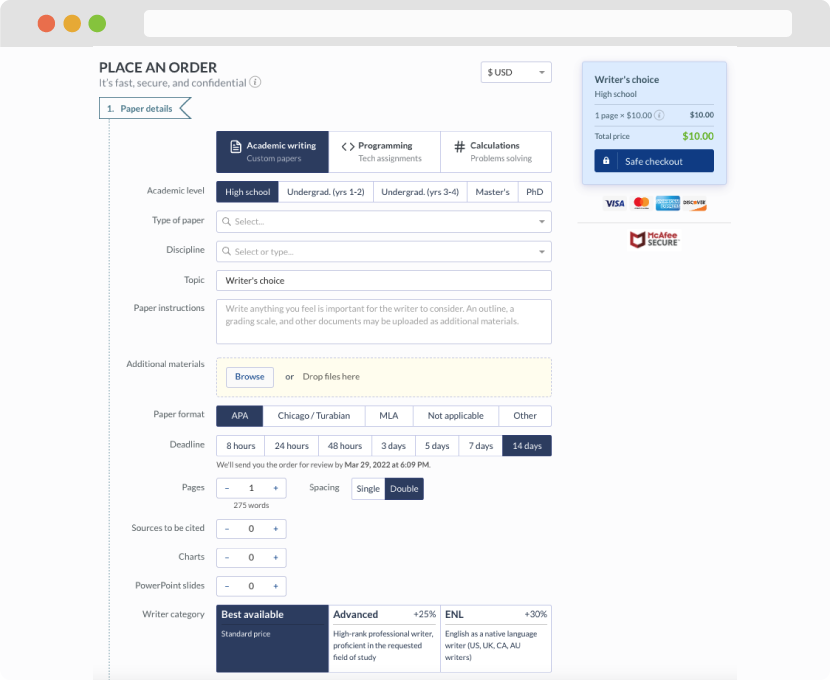
First, you will need to complete an order form. It's not difficult but, if anything is unclear, you may always chat with us so that we can guide you through it. On the order form, you will need to include some basic information concerning your order: subject, topic, number of pages, etc. We also encourage our clients to upload any relevant information or sources that will help.
Complete the order form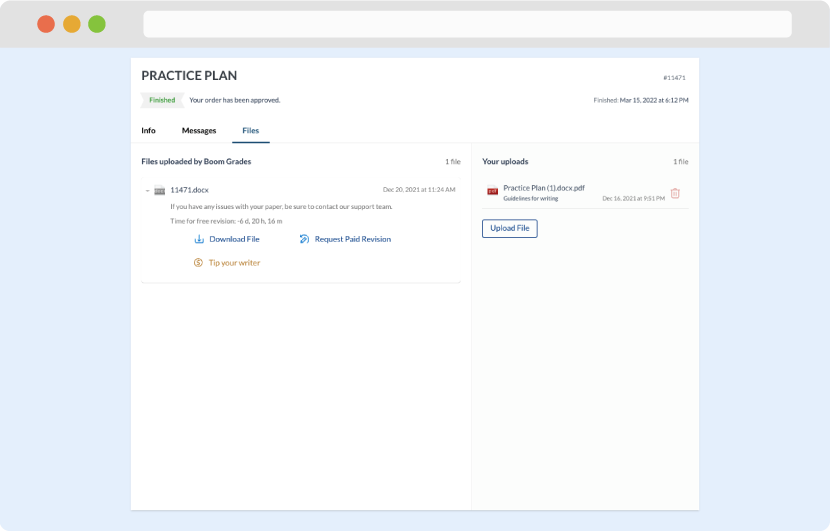
Once we have all the information and instructions that we need, we select the most suitable writer for your assignment. While everything seems to be clear, the writer, who has complete knowledge of the subject, may need clarification from you. It is at that point that you would receive a call or email from us.
Writer’s assignment
As soon as the writer has finished, it will be delivered both to the website and to your email address so that you will not miss it. If your deadline is close at hand, we will place a call to you to make sure that you receive the paper on time.
Completing the order and download